


Some coins are rare. A few are legendary. And then there are coins like the 1854 Type One Gold Dollar Proof, a piece so elusive that it stands alone in American numismatics.
Only one example is confirmed. No duplicates. No near equals. Just a single survivor that bridges mystery, history, and elite collecting.

Now, after decades out of public sale, this PR65 Deep Cameo, CAC-approved treasure returns to the spotlight, carrying with it one of the most fascinating backstories in U.S. coinage.
A Nation in Transition: Why the Gold Dollar Mattered
The story begins in the aftermath of the California Gold Rush.
Gold flooded the economy after 1849. As a result, silver became more valuable relative to gold. Soon, the intrinsic value of U.S. silver coins exceeded their face value. Naturally, people hoarded and melted them.
Consequently, small change vanished from circulation.
To fix this, Congress reduced the weight of silver coins in 1853. At the same time, alternative denominations stepped in. Notably, the gold dollar and the silver three-cent piece helped fill the gap.
Demand surged. In 1854 alone, the Philadelphia Mint struck:
- 855,502 Type One gold dollars
- 783,943 Type Two gold dollars
However, there was a problem.
The coins were too small.
The Design Change, and an Overlooked Detail
Collectors and the public complained that gold dollars were easy to lose. Therefore, the Mint introduced the Type Two design mid-year in 1854.
The Liberty Head gave way to an Indian Princess portrait. The planchet became thinner but wider. This change improved visibility in everyday use.
Yet, while business strikes thrived, something else quietly happened.
Proof coin production nearly vanished.
The Forgotten Proof Era (1851–1854)
During the early 1850s, the Mint focused heavily on processing gold bullion. As a result, collector coins received little attention.
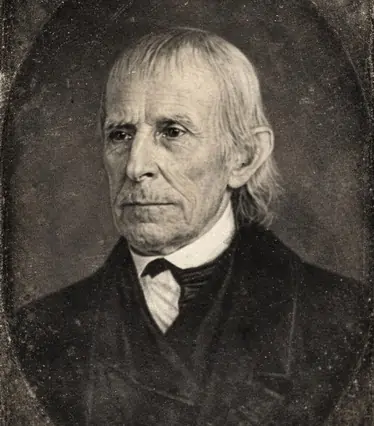
Moreover, the death of longtime Mint figure Adam Eckfeldt in 1851 removed a key advocate for preserving high-quality specimens.
A revealing 1852 letter from Mint official William E. DuBois confirmed the shift. He admitted that no effort remained to produce “master coins” or polished proofs.
Modern research supports this. Numismatist John Dannreuther concluded that:
- No gold proofs were likely struck from 1851 to 1853
- Proof production resumed in 1854, but at extremely low levels
For the 1854 Type One gold dollar, he estimates no more than two proofs were struck.
Today, only one survives.
The Mystery That Won’t Die
Where did this coin come from?
That question has puzzled experts for decades.
The Bremen Theory
Numismatist Walter Breen reported that a proof set was sent to Bremen, Germany, in 1854. In exchange, the Mint received foreign coins for its cabinet.
This set allegedly resurfaced in Europe after World War II. A proof gold dollar from that group appeared in Switzerland and was later seen at the 1975 ANA Convention.
Many believe this is the very coin offered today.
The Kline Sale Possibility
Another theory points to an 1855 auction by Moses Thomas & Sons. A complete 1854 “proof set” appeared there.
However, the catalog likely mislabeled ordinary Uncirculated coins as proofs. Most experts now dismiss this origin.
A Vanishing Act
Adding to the intrigue, dealer Wayte Raymond reported seeing a proof example before 1951.
Still, no firm chain of ownership exists before the 1980s.
In short, the coin’s early life remains one of numismatics’ greatest unsolved mysteries.
A Coin Reappears
The modern story begins in the early 1980s.
Dealer Lester Merkin displayed the coin at a convention in Los Angeles. It sat casually in a paper envelope—priced at $35,000.
Soon after, it appeared publicly for the first confirmed time:
Auction ’85 (Stack’s, July 1985), Lot 1874 and Sold for $68,750
The buyer: Harry W. Bass, Jr.
Since then, the coin has remained in the famed Bass Core Collection. Millions have seen it on display. Yet it has not returned to auction—until now.
A Closer Look: The Only Known Example
This specimen is graded PR65 Deep Cameo by PCGS and approved by CAC. Importantly, it stands alone:
- Population: 1
- None finer
The coin displays:
- Razor-sharp strike details
- Bold definition in Liberty’s hair and tiara
- Deep mirrored fields with frosted devices
- Rich yellow-gold surfaces with orange highlights
- Minor die file marks and traces of die rust confirm its authenticity and early Mint production methods.
Overall, eye appeal is exceptional.
A Record Waiting to Be Broken
The 1854 G$1 Type One PR65 Deep Cameo PCGS. CAC. JD-1 is Unique and was Sold by Heritage Auctions on Sep 29, 2022 for: $720,000.00
The current auction record for an 1854 Proof Type Two gold dollar belongs to a PCGS PR64+ example sold by Bowers and Merena auctions in 2009 for $218,500
Why This Coin Matters
This is not just another rarity.
It represents:
- A transitional moment in U.S. monetary history
- undocumented proof production era
- The singular survivor of a possibly two-coin mintage
Simply put, it is a coin that should not exist, yet does.
A Coin Lost, Found, and Still Unexplained
Imagine this.
A single gold coin leaves the Philadelphia Mint in 1854. It travels, possibly to Europe. It survives war, obscurity, and decades of uncertainty.
Then, it quietly reappears in a dealer’s case in Los Angeles.
No fanfare. No headlines.
Just a paper envelope holding one of the greatest numismatic treasures ever struck.
That is the magic of this coin.
And that is why, whenever it becomes available again, the world will be watching.






Wow i wish had one of those. Dream on
I’m in love with 1800s coins
how cool
Nice coin
Beautiful coin!
nice
Wish I had one.
Very Nice Coin.
Such beautiful coins from the past
Lovely coin. I’d better check my change
Wow. Fabulous coin!
Thanks for the back story. Pretty amazing to hear about a coin this rare.