By Roger W. Burdette
Politics, Principle, and Power at the Philadelphia Mint
Archibald Loudon Snowden stood at the center of American coinage for nearly three decades. He mastered Mint operations. He modernized production. And in 1885, he chose principle over power.
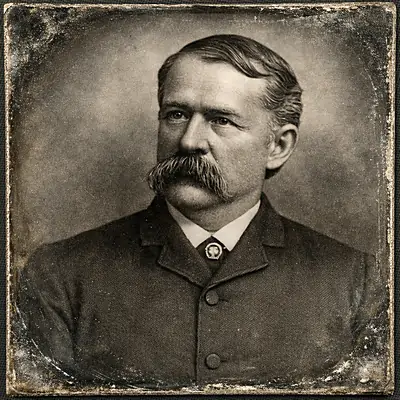
His resignation as Superintendent of the Philadelphia Mint marked a decisive moment in U.S. Mint history. The letter reproduced below, discovered in National Archives records in 2026, provides rare insight into the politics of the Mint Bureau during the Cleveland administration. As far as the author is aware, this letter has never before been published.⁷
A Career Forged Inside the Mint
Archibald Loudon Snowden began his Mint career on May 7, 1857, when he received appointment as Register of Deposits in the Treasurer’s Office at the Philadelphia Mint.[1] He was the nephew of former Mint Director James Ross Snowden and had graduated from Jefferson College the previous year.
He worked alongside future Mint leaders and technical experts, including Henry R. Linderman, Robert Patterson, Die Forger George Eckfeldt, Assayer Fred Eckfeldt, William Steele, Engraver James Longacre, Assistant Engraver Anthony Paquet, and Machinist Robert Jefferson. These associations shaped his technical foundation and administrative skill.
When the Civil War erupted in 1861, Snowden left the Mint to organize a Pennsylvania volunteer regiment. He succeeded and was elected Lieutenant Colonel by the men. However, once federal authorities mustered the regiment into service, officials divided the companies among established units. Snowden received no command.[2]
Mint Director James Pollock soon invited him back to Philadelphia. Snowden returned carrying the honorary title “Colonel,” which remained attached to his name thereafter.
Chief Coiner and Industrial Modernizer
In late August 1866, Chief Coiner John G. Butler resigned to accept appointment as Clerk of the Court of Quarter Sessions. [3] Snowden received appointment as Chief Coiner on October 1, 1866.[4]
Working in close cooperation with , Snowden reorganized and modernized the Coiner’s Department. He oversaw the purchase of a Hill Reducing Lathe from London. In addition, the Mint imported Ziess automatic weighing and sorting machines from Germany to detect underweight gold blanks.
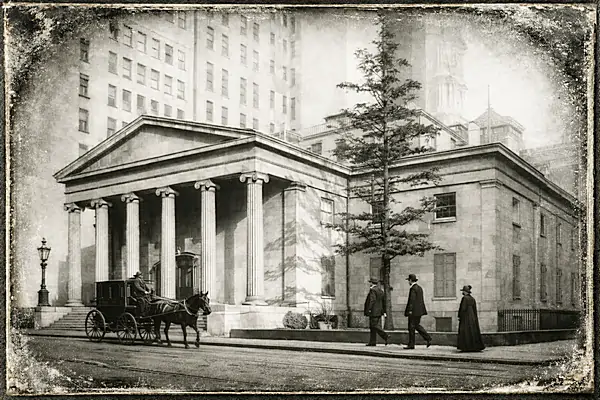
These improvements transformed efficiency and precision. Consequently, the Philadelphia Mint achieved a new standard in mechanical excellence.
Snowden resigned as Chief Coiner on December 13, 1876. President Ulysses S. Grant immediately appointed him Postmaster of Philadelphia.[5] His mandate was reform. He imposed business discipline and addressed pervasive drunkenness within the office. His rule was simple: “All employees who do their duty will be retained, those who do not will be removed.”
Although lucrative, the Postmaster’s office never satisfied Snowden’s long-standing ambition to lead the Mint.
The Director’s Offer – and a Personal Sacrifice
On December 5, 1878, Snowden received an offer to replace the terminally ill Henry R. Linderman as Director of the United States Mint. He deliberated for nearly two months before declining.[6]
His letter to Treasury Secretary John Sherman reveals the emotional weight of that decision.
My dear Mr. Secretary,
I have written to the President declining the position of Director of the United States Mint, which, through his and your generous confidence, was voluntarily proffered me on the 5th of December last.
“Until the last moment:… I ‘ve anxiously hoped that I might be able to see my way clear to accept this high office. I have shut my eyes to pecuniary interests – inconvenience in living, and separation from friends, in my anxiety to serve you, and administer an office, in which I felt I could render some service to the Government, accomplish results that I have long hoped to see realized, and gratify the ambition of my life. But I have failed to satisfy my judgment that, in its acceptance, I would be doing my whole duty to my wife and children. Failing in this, all fails, and I yield up the hope of more than twenty years in these brief lines.
I have had long and varied experience in the service of the Mint. The days passed therein were the happiest of my life, and the equipment I possess in that direction I would gladly pledge at the disposal of the Government, but under all the circumstances I cannot do so, in the high office you have tendered me. You can perhaps never comprehend how great a personal sacrifice I make in this declination. The hopes of a life time are subordinated to a sense of duty.
In concluding, my dear sir, permit me to say, it will afford me great pleasure at any time to serve you, either officially or personally. I mean this in its fullest sense
I am Most Faithfully Your Obdt Serv’t
A. Loudon Snowden
Thus, Snowden surrendered a twenty-year ambition for family duty.
Superintendent Under Cleveland
Snowden soon returned to the Philadelphia Mint as Superintendent. With political support from Presidents Grant and Hayes, and deep operational experience, he exercised significant practical control over mint operations.
On March 5, 1879, President Hayes appointed Horatio C. Burchard as Director. Burchard possessed political credentials but lacked mint manufacturing experience. As a result, Snowden became the effective operational authority between Mint facilities and Treasury Secretary Sherman, later William Windom.
By 1885, the political landscape shifted again. President Grover Cleveland entered office committed publicly to civil service reform, though he also used patronage when expedient.
Snowden anticipated change.
The 1885 Resignation Letter
On May 28, 1885, Snowden formally submitted his resignation as Superintendent of the Philadelphia Mint.[7] He remained in office until July 1, 1885, when his successor qualified.
Mint of the United States at Philadelphia, Pa.,
SUPERINTENDENT’S OFFICE,
May 28, 1885.
[Hon. Grover Cleveland,
President of the United States
Washington, D.C.]
Sir.
You will remember that some weeks since I personally expressed to you, and the Secretary of the Treasury, my entire willingness to retire from my present post of duty, whenever you desired to succeed me by a gentleman of your own political faith. I took this course, not because I am in accord, for I am not, as I trust you are not, with the pernicious doctrine, that a change in the personnel of the Executive of the Nation makes every office in the land, from the village Post Office to the Directorship of the National Mints, his perquisite, to be handed over to partisans, as the legitimate spoils of a campaign, but because I felt, under all the circumstances this much was due to you, as well as to my own self-respect.
The Interview
Since that interview I have carefully considered the situation, and am irresistibly led to the conclusion, that to remain in my present position, under your administration, even if you so desired, might occasion misunderstanding and criticism from those whose good opinion I value,might also hamper me in the discharge of my official duties, in which for years I have been untrammelled [sic], might add to my already grave responsibilities, without the corresponding pleasure I have heretofore felt in performing an agreeable and congenial service, and beyond any of these, and more important to me than all combined, is the consciousness that in remaining in office under existing circumstances, it might be expected that I should surrender, to some extent, that freedom of thought, speech and action, which are among the most precious rights and privileges of our American citizenship. This I could not do.
The Resignation
Entertaining this view of the situation, I must, in justice to myself, formally present my resignation as Superintendent of the Mint of the United States at Philadelphia, to take effect at such time as my successor may qualify, or as will occasion the least inconvenience or expense to the Government. This period, I presume, would be at the close of the present fiscal year, when the annual settlement required by law will occur.
In retiring from a service into which I entered as a youth, more than twenty-eight years ago, I carry with me the consciousness, that in the several positions which I have held, by the voluntary action of my superiors in the Mint, or by the President, I have endeavored faithfully to discharge my duty; I leave to my successor perhaps the best equipped Mint, in its mechanical appliances, in this or any other country. Upon this point, for nearly twenty years, I have been earnest, and exacting, and am today quite satisfied with the results.
The Politics
In addition to this, he will find an efficient and thorough organization, in which merit has been the law of promotion, and in which every officer and foreman, in all the departments has been advanced under this law, from subordinate positions, after years of faithful service. No employe [sic], under my authority, has ever been promoted for a political reason, as no one has ever been displaced, except for a cause that would have justified his removal from any well organized business establishment.
Breaking up the habits, associations and congenial employment of a lifetime, must of necessity be a serious matter, but to me that which is most painful in my retirement from the Mint, is the separation from those faithful and efficient co-workers, with many of whom I have been associated from boyhood, and for all of whom I have an affectionate regard.
For these I bespeak that generous consideration to which they are entitled, after long years of devotion to duty, and fidelity to important trusts.
The Conclusion
In conclusion I beg to say that I shall be glad to render any assistance to my successor that he may require in the technical work of this Office.
Trusting that your administration may be alike honorable to yourself and our country,
I remain Respectfully
A. Loudon Snowden
Superintendent.
After the Mint
After 1885, no further Mint Bureau offers followed. The new Mint Director, James Kimball, brought a formal engineering background and stricter regulatory emphasis.
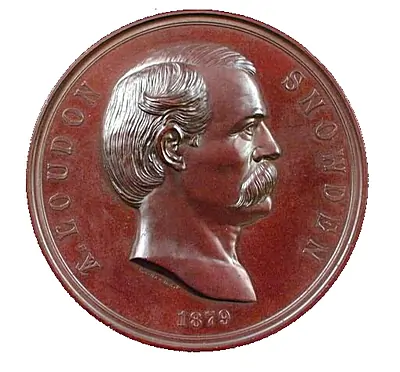
Nevertheless, Snowden continued in public service. President Benjamin Harrison appointed him Minister Resident and Consul General to Greece, Romania, and Serbia on July 1, 1889. He later served as Envoy Extraordinary and Minister Plenipotentiary, and subsequently in Spain from July 22, 1892 through June 3, 1893.
Following diplomatic service, Snowden remained active in numismatic circles. He negotiated coin exchanges between the Mint Cabinet collection in Philadelphia and prominent collectors until his death in 1912.
Why the 1885 Snowden Resignation Matters
Snowden left behind more than administrative reforms. He left a model of merit-based advancement and mechanical modernization. Moreover, he rejected partisan pressure when it conflicted with independence.
His 1885 resignation letter stands as a rare and candid statement of political principle within the Mint Bureau.
For collectors, historians, and students of American coinage, it provides critical context. For leaders, it offers something more enduring: integrity in office.
Citations
[1] This coincided with the removal of his uncle as Mint Director and appointment of former Pennsylvania Governor James Pollock in his place.
[2] Andrew Madsen Smith. Coins and Coinage. Philadelphia, 1881, pp. 51–52. It was not unusual for elected officers of volunteer units to be replaced by experienced officers and West Point graduates.
[3] “City Officers,” [Philadelphia] Evening Telegraph, August 31, 1866, p. 5.
[4] Andrew Madsen Smith. Coins and Coinage. Philadelphia, 1881, p. 50.
[5] Department of Interior. Official Register of the United States, 1878. Post Office; Postmaster (First Class) Philadelphia, p. 697. Base compensation was $4,000 plus commissions. Estimated total compensation approximately $6,000 annually.
[6] Library of Congress, MMS 39784 Sherman Vol. 168. Letter dated February 3, 1879 to Sherman from Snowden.
[7] National Archives and Records Administration (NARA), RG-56 E-289 Box 6. Letter dated May 28, 1885 to President Cleveland from Snowden. Located among Treasury Department correspondence in “Subordinate mints and Treas officers,” examined February 12, 2026. As far as the author is aware, this letter has never been published before.