


By Jeff Garrett for Numismatic Guaranty Company (NGC) ……
 Keeping your coins secure has become more difficult in recent years, but there are steps you can take to protect your collection.
A few weeks ago, Chase Bank sent the letter below stating that they would be closing our safe deposit box and that we needed to remove the contents. To my surprise, we later found out that this was not just a local issue, but a nationwide decision by Chase. I have seen advertisements online from coin companies offering to purchase rare coins and bullion from customers who have lost their safe deposit boxes.
Sadly, Chase Bank is not the only financial institution to have taken this direction. In addition to banks closing out safe deposit boxes, many have closed their branches as fewer and fewer people visit banks to conduct business. Our local bank’s main branch, which was once a bustling office, now looks like a ghost town most days.

After conducting some research and speaking with a few bankers, most attribute the decision to the world’s shift to digital banking and the reduced need for bank branches. Maintaining vaults, security systems, and the staff to manage them has become very expensive. Increased legal liability for stored items is another factor.
Unlike most rare coin companies that have vaults, high-security safes, and other means of securing valuables, collectors now have fewer choices for storing their collections safely. Some bigger cities have private vault companies that may be an option. These companies are unregulated, and you should carefully research their history before storing valuable items.
I find it somewhat awkward writing about a subject on which I am not an expert. Unfortunately, in the last several years, my knowledge on the topic of security has increased tremendously. About 10 years ago, my business was the victim of a burglary. The robbery was a huge wakeup call! I frankly had become lax and suffered the consequences.
The good news about the robbery is that I learned a great deal about how to protect myself in the future. I also became familiar with the fine print of my insurance coverage. Sometimes, the most valuable lessons are the hardest ones.
The biggest lesson I learned from the robbery is the danger of leaving anything of value outside of a safe. The police told me that smash-and-grab robberies have become much more common. People have become more desperate and willing to steal. Some are addicted to drugs and need cash to feed their habits. Others know that if they smash into a place with valuables and steal as much as possible in less than two minutes, the police are unlikely to arrive before they have escaped.
Do not leave valuables around for the taking! If possible, store your coins in a safe of some kind or, better yet, store them in your bank safe deposit box, if you can find one. Most people are the victims of their carelessness.
Another lesson I learned was to be more “low key” about what we do. No need for the pizza delivery guy to know you have rare coins in your home or office. Do not spread the word in your community about your interest in rare coins. Discussing your collecting interest can spread quickly and may end up being shared with the wrong person.
I am not endorsing paranoia, but caution should be exercised based on increases in numismatic crimes. Maybe you should consider having numismatic periodicals delivered to a P.O. Box instead, as well. Anything that could reveal your collecting activities is suggested.
Most professional rare coin dealers carry some form of numismatic insurance. I had been paying for theft insurance for decades without a claim. I have usually just signed the contract and sent along a check. It was not until my robbery that I read through my policy.
My deductible was higher than I anticipated, and there were other surprises. An insurance contract is complicated and full of fine print. I’m truly blessed that I was covered for the robbery, but after going through one, I made several changes to my policy. I added higher coverage limits and lower deductibles, among other enhancements.
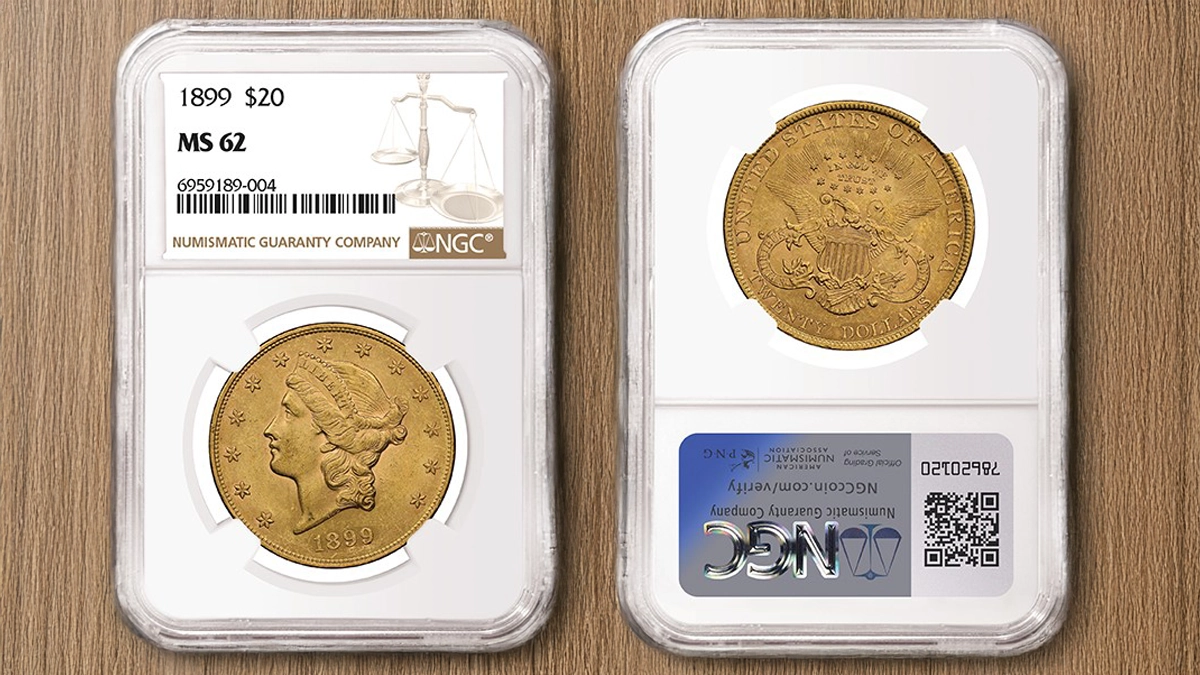
Many collectors do not have specific numismatic insurance. Many think that their homeowner’s policy will cover them. Hint: In many cases, it probably won’t. I strongly urge everyone to go over their insurance needs. If you already have insurance, you need to know precisely what coverage you have.
For those without insurance, consider checking with your current agent or contacting the American Numismatic Association (ANA) for guidance. They have companies that work with the ANA membership to insure the rare coins. Rare coin insurance can be expensive, but the peace of mind it offers is priceless.
An image of the aftermath of a California bank destroyed by the Palisades fires.
The above picture is from a client in California who had their collection stored at a bank that was completely destroyed by the Palisades fires. As you can see, the only thing standing was the vaults inside the bank. Miraculously, the client’s collection survived the fire, but other collectors in California were not so lucky. Dangers such as these are why having your collection insured is so important, even if it is stored in a safe deposit box. It’s another reason you should read the fine print.
I wish I could offer more detailed advice on how to protect your rare coin collection. As I stated earlier, I am not a security expert. I have learned many lessons on the subject in the last several years, though. The recent closure of bank branches and banks discontinuing safe deposit boxes has made securing your collection more difficult.
Bottom line: Better to be safe than sorry! Hopefully, some of the advice provided in this article will be helpful and increase awareness of these dangers.
* * *
Want to see more articles like this? Subscribe to the free NGC Weekly Market Report.







Learned a lot. I have had quite a bit of silver stolen, all by family members.
Wow, this type of insurance is definitely not something I had thought of. This article was great to alter perspective a bit.
Great article that highlights safe storage of valuable coins. Very helpful.
Jeff gave much practical advice. We still have safe deposit boxes at our bank, but I am moving all of my coins there instead of a majority. Why take chances? Thanks, Jeff.
Collectors insurance is quite expensive. I have a modest collection worth ~300K and got a quote for insurance, but it would be thousands each year. I declined. Fingers crossed.
My mother had a lot of silver coins that were stolen back in the 70’s wen someone broke-in and ransacked our house. We had an idea as to who it was but never had proof. The kid was an idiot, so he most likely took them out of their holders and just spent it.