


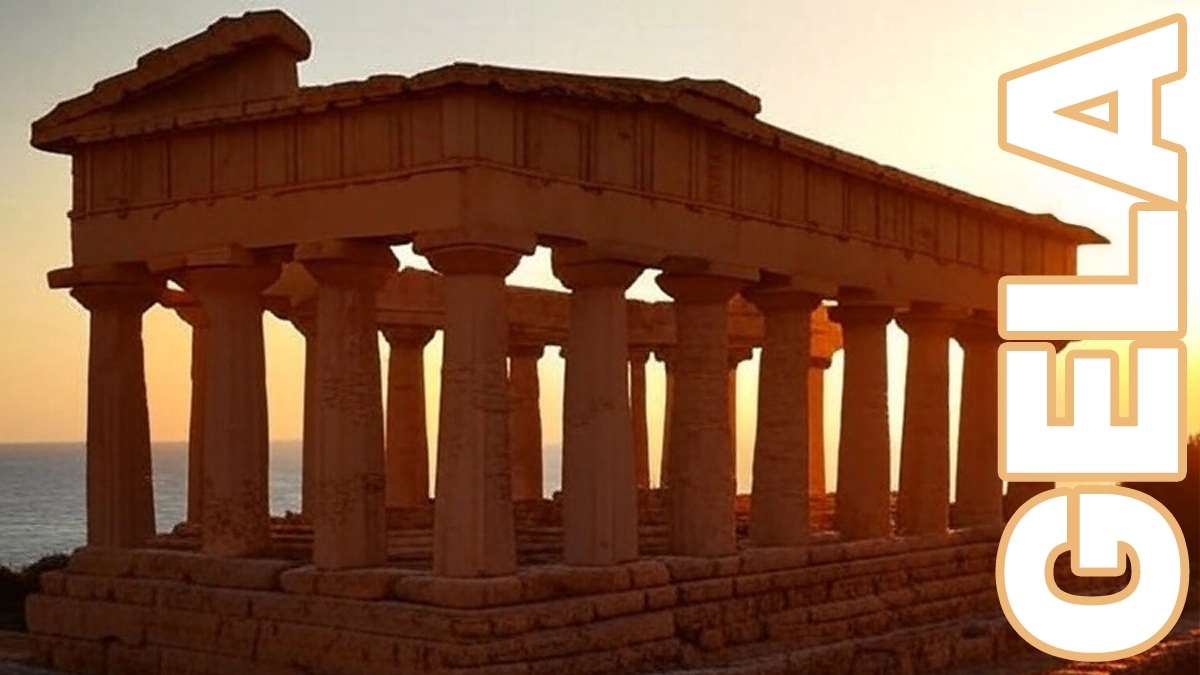
By Mike Markowitz for CoinWeek …..
Founded by colonists from Rhodes and Crete in 698 BCE, Gela, a city on Sicily’s southern coast, took its name from a nearby river. The city prospered, beginning to issue its silver coinage around 490 BCE. Among the Greek cities of Sicily and southern Italy in the fifth century BCE, coin die engraving achieved an artistic excellence unmatched until the 18th century in Europe, and Gela quickly became a leader in this trend, second only to Syracuse.
This was an age of “tyrants,” autocratic strongmen who seized power from the oligarchic or democratic regimes of city-states in the region. In 505 BCE, Kleandros, son of Pantares, became tyrant of Gela. Pantares was the first Sicilian Greek to win an Olympic chariot race, which may explain the frequent appearance of racing chariots on the coins. When Kleandros was murdered in 498 BCE, his brother Hippokrates took power. “Hippokrates,” literally meaning “horse power,” was a common Greek personal name and should not be confused with his near-contemporary, the famous “father of medicine,” Hippokrates of Kos (c. 460 – 370 BCE). Hippokrates of Gela died in battle against the Sicels, an inland tribe, in 491 BCE. He designated his sons as successors, but instead, his cavalry commander, Gelon, seized power, ruling from 491 to 478 BCE. Gelon became tyrant of a powerful state that included Naxos, Zancle, Kamarina, and eventually the great city of Syracuse. Gelon may have initiated Gela’s civic coinage, and his success as a horse soldier might explain the cavalry trooper that appears on Gela’s earliest didrachms.
Early Coinage: Didrachms and Their Designs
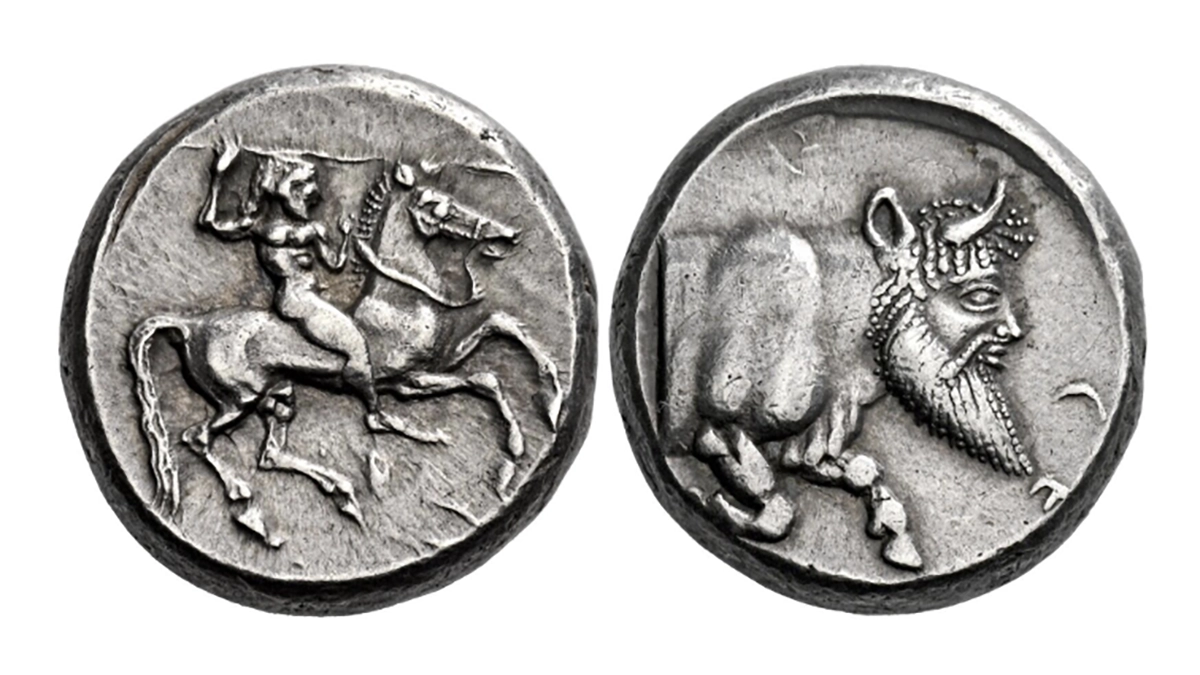
These didrachms, weighing approximately 8.6 grams, feature a naked horseman hurling a javelin to the right on the obverse. The reverse depicts the forepart of a bull, facing right with a human face. This face, with its pointed beard and “almond-shaped eyes,” showcases features typical of archaic art. This striking image represents the local river god, Gelas, who became the city’s emblem. An example, described as “of superb Archaic style and with a lovely light iridescent tone,” sold for over $47,000 in a recent Swiss auction.
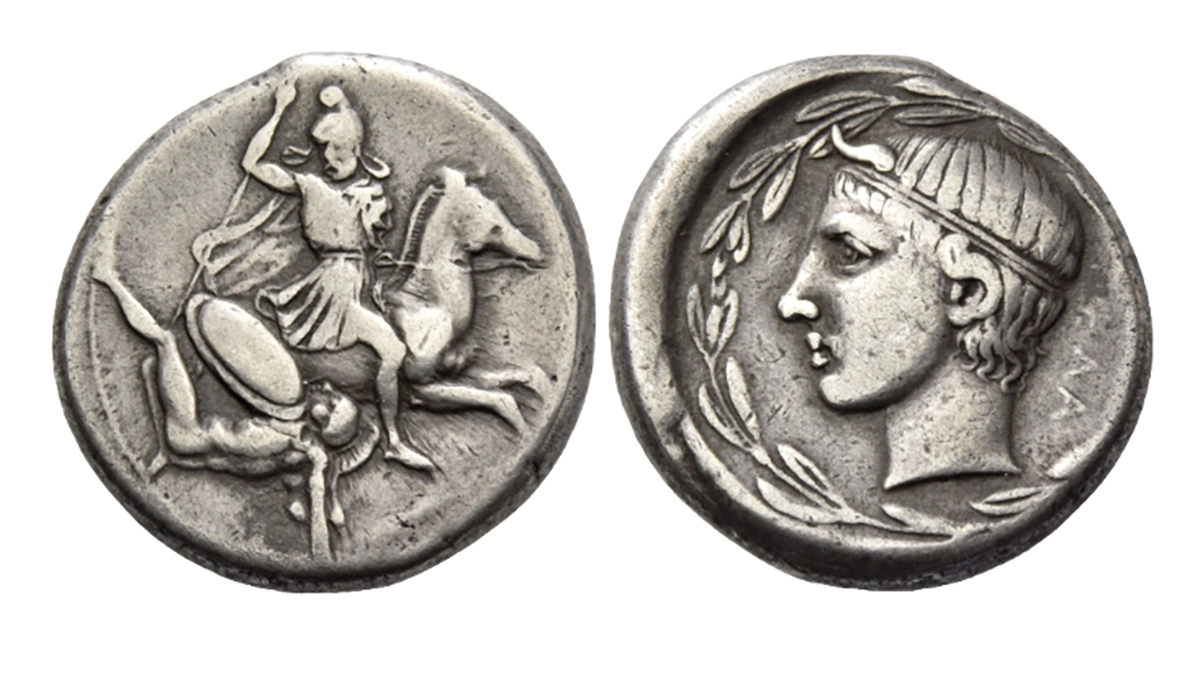
Around 425 BCE, a significant shift in the didrachm design introduced a dynamic scene in fine classical style. The horseman on the obverse now turns to spear a fallen enemy warrior. The bearded man-headed bull on the reverse is replaced by a youthful head, surrounded by an olive wreath. This head is identified as the river god by a small horn on his forehead and his name inscribed in the field. Described as “very rare. A very intriguing issue with a finely executed obverse composition,” an example brought almost $7,000 in a 2018 Swiss auction.
Tetradrachms: Larger Denominations and Artistic Expression
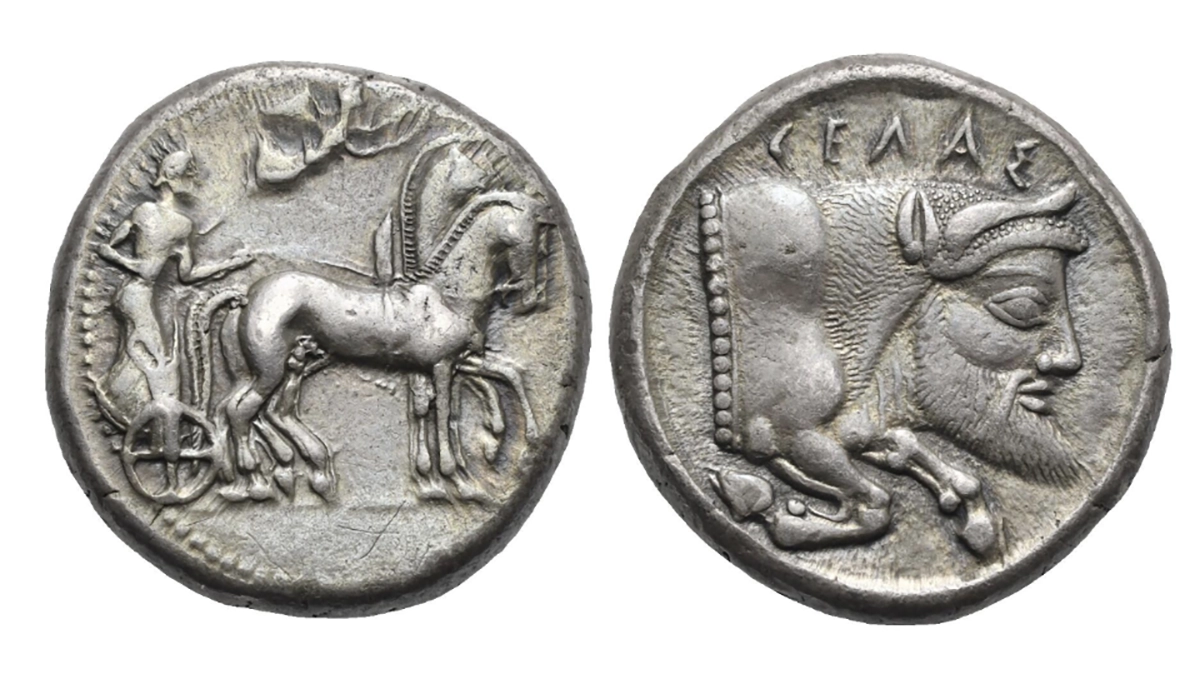
Gela’s growing prosperity fueled a demand for higher denomination coins. Around 475 BCE, the city began producing silver tetradrachms, weighing twice as much as the didrachm. This larger coin provided the die engraver with a more expansive surface for ambitious artwork. Chariot racing was a popular sport among the ancient Greek elite. Only the wealthy could afford to maintain a team of two (biga) or four (quadriga) horses, along with the costly, fragile vehicle itself. In art, chariots are described as “slow” if the horses walk and “fast” if they gallop. An early tetradrachm from Gela depicts a slow biga, with a small winged Victory soaring above the horses, perhaps celebrating a local team’s victory in the Olympics or another major ancient Greek game. The man-headed bull appears on the reverse.
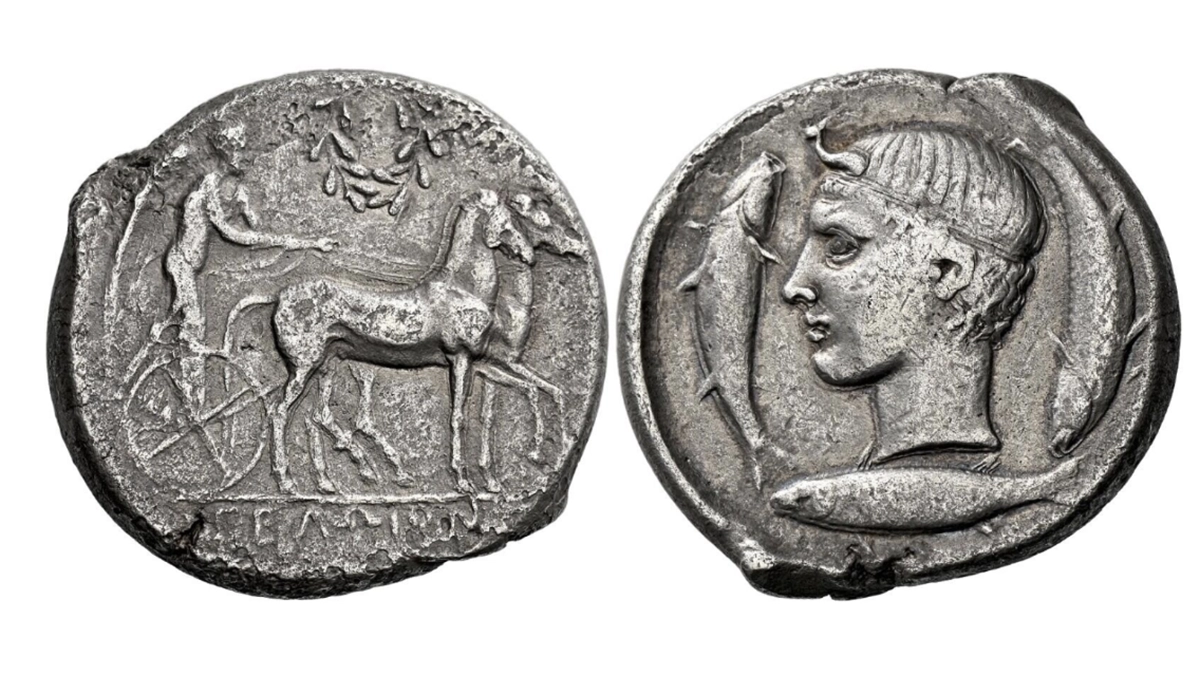
An exceptional Gela tetradrachm, was issued around 425 BCE. On the obverse Nike drives a slow quadriga, below a victory wreath. Three freshwater fish swim around the youthful head of the river god on the reverse. On Harlan Berk’s list of the 100 greatest ancient coins, this type is #18. Berk writes: “Here we are in the presence of classical Greek art at its finest, combining idealism and realism, striving for innovation, but retaining a sense of order and balance.” He notes that only about 20 examples are known, most quite worn from circulation.
An exceptional Gela tetradrachm, issued around 425 BCE, features Nike driving a slow quadriga on the obverse, below a victory wreath. Three freshwater fish swim around the youthful head of the river god on the reverse. This type is ranked #18 on Harlan Berk’s list of the 100 greatest ancient coins. Berk writes: “Here we are in the presence of classical Greek art at its finest, combining idealism and realism, striving for innovation, but retaining a sense of order and balance.” He notes that only about 20 examples are known, most quite worn from circulation.
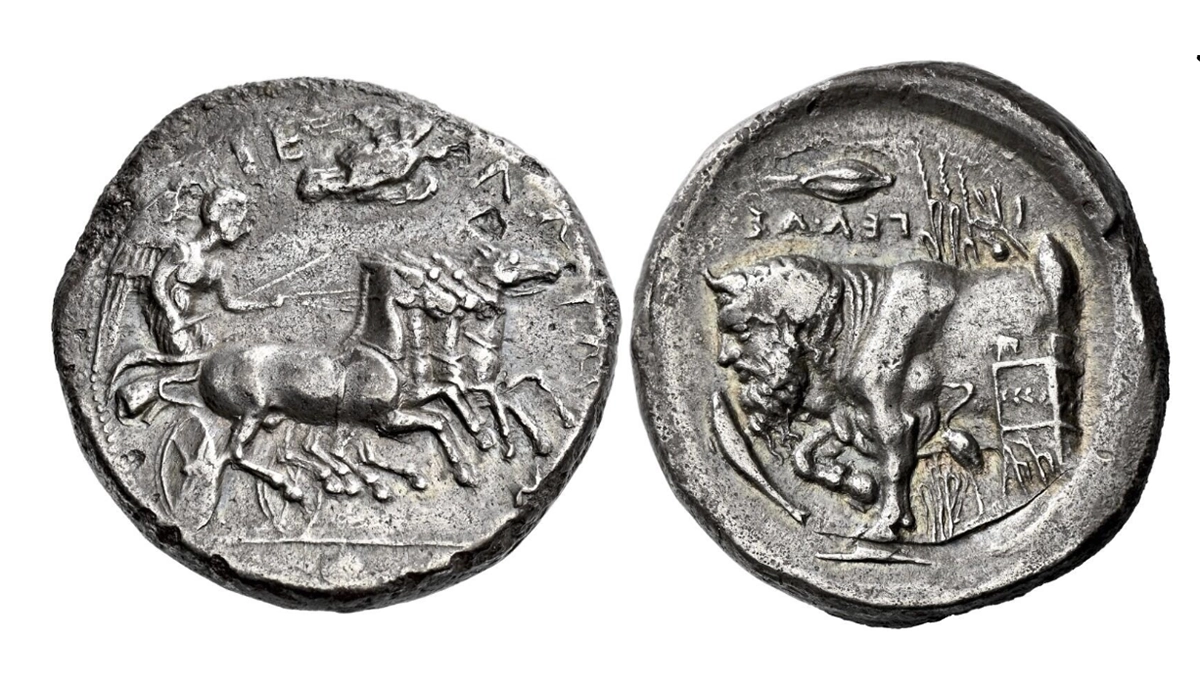
One of the last tetradrachms struck by Gela, in the decade before the Carthaginians destroyed the city (415-405 BCE), presents a fast quadriga driven by Nike. Rounding a turn, the galloping horses appear to defy gravity, their hooves rising sharply above the ground line. On the reverse, the man-headed bull paces to the left through a stand of reeds, past a small altar. A fish swims upward, and a grain of barley appears above, symbolizing agricultural abundance. Below the grain, “ΓΕΛΑΣ” is written in small, retrograde letters. Such “retrograde” inscriptions are common on Gela’s coins. The cataloguer enthusiastically describes it as: “Of the highest rarity, the finest of only two specimens known. A spectacular reverse composition, undoubtedly one of the most interesting of the mint of Gela. Perfectly struck on a full flan.”
Smaller Denominations and Gold Coinage
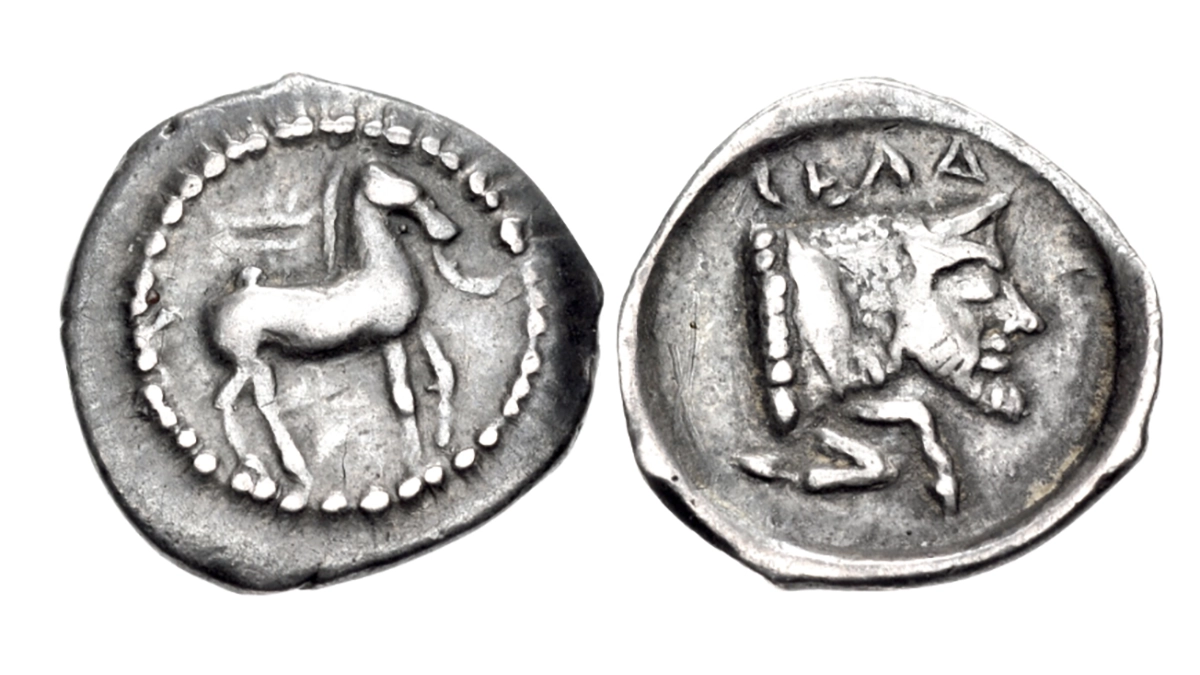
Weighing less than a gram, the little silver litra helped meet the need for small change. An example dated to c. 465-450 BCE features a riderless horse on the obverse and the characteristic man-headed bull on the reverse.
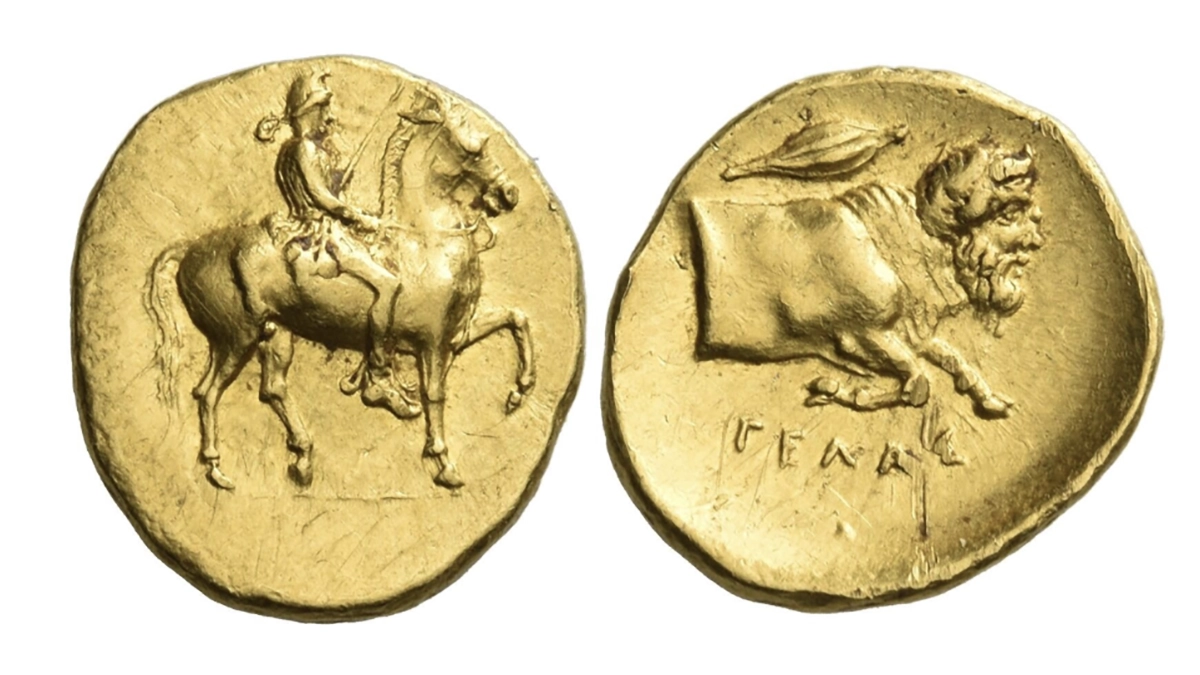
Gold was not a regular part of Gela’s currency. It was usually hoarded by ancient Greek cities as an emergency reserve, to hire mercenaries in time of war. A gold dilitron or two-litra piece dated to c. 416-405 BCE, and weighing 1.74 grams, bears a mounted cavalry trooper on the obverse, and the usual man-headed bull with city name on the reverse. Described as “of the highest rarity, the fifth specimen known and one of only three in private hands” this little coin brought over $50,000 in a 2022 Swiss auction.
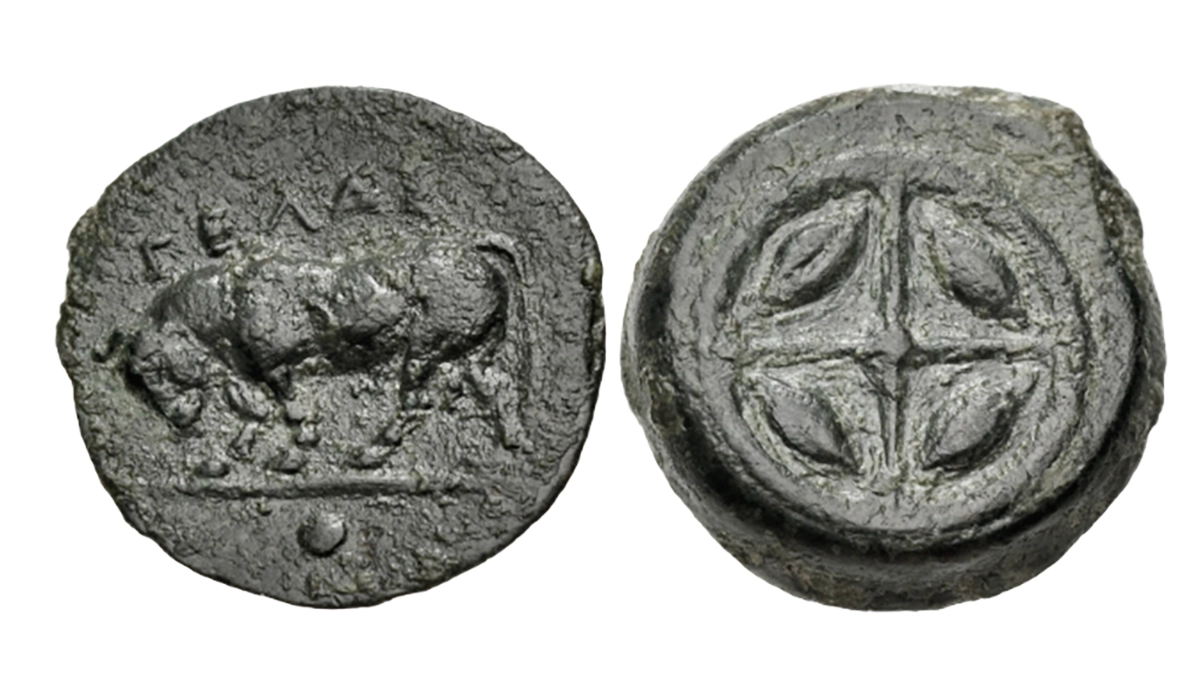
Beginning around 420 BCE, Gela issued an extensive series of bronze coins to meet the needs of an urban economy, where people need to make small daily purchases. The common denominations were the onkia weighing about 1.5 grams and the tetras of about 4.5 grams. A typical little onkia has the usual bull on the obverse and a chariot wheel on the obverse with four barley grains between the spokes.
Beginning around 420 BCE, Gela issued an extensive series of bronze coins to meet the demands of an urban economy, where people needed to make small daily purchases. Common denominations included the onkia, weighing about 1.5 grams, and the tetras, of approximately 4.5 grams. A typical small onkia features the usual bull on the obverse and a chariot wheel on the reverse with four barley grains between the spokes.
Collecting Gela
The standard reference for Gela’s coinage is Jenkins (1970) in two volumes, long out of print and hard to find (used copies typically sell for over $500!). The English numismatist G. Kenneth Jenkins (1918-2005) became Keeper of Coins and Medals at the British Museum in 1965. A more accessible reference is the section on Gela in Hoover (2018). On the CoinArchives Pro database, which lists over 2.5 million auction records, a search on “Gela” in June 2025 produced 7,247 hits. The IRIS database of ancient Greek coins is a useful online reference, illustrating types in a number of major museum collections, listed by Jenkins number. Coins of Gela appear in most US and European ancient coin auctions, and can be found in the stock of major dealers. In auction catalogs, coins of Gela appear with other Sicilian issues, usually listed alphabetically by city name, early in the Greek section.
The standard reference for Gela’s coinage is Jenkins (1970) in two volumes, which is now out of print and difficult to find (used copies typically sell for over $500!). The English numismatist G. Kenneth Jenkins (1918-2005) became Keeper of Coins and Medals at the British Museum in 1965. A more accessible reference is the section on Gela in Hoover (2018). On the CoinArchives Pro database, which lists over 2.5 million auction records, a search for “Gela” in June 2025 yielded 7,247 hits. The IRIS database of ancient Greek coins is a useful online reference, illustrating types in a number of major museum collections, listed by Jenkins number. Coins of Gela appear in most US and European ancient coin auctions and can be found in the stock of major dealers. In auction catalogs, Gela’s coins are typically listed with other Sicilian issues, usually alphabetically by city name, early in the Greek section.
References
- Arnold-Biucchi, Carmen. The Randazzo Hoard 1980 and Sicilian Chronology in the Early Fifth Century B.C. New York (1990)
- Beard, Roser. The Man-Faced Bull of Gela. (MA thesis, George Mason University) Fairfax, VA (2023)
- Berk, Harlan J. 100 Greatest Ancient Coins, 3rd edition. Pelham, AL (2023)
- Hill, G. F. Coins of Ancient Sicily. Westminster (1903)
- Hoover, Oliver. Handbook of Coins of Italy and Magna Graecia, Sixth to First Centuries BC. Lancaster, PA (2018)
- Jenkins, G. K. Ancient Greek Coins. New York (1972)
- Jenkins, G. K. The Coinage of Gela. Berlin (1970)
- Kraay, Colin. Archaic and Classical Greek Coins. New York (1976)
- Sayles, Wayne. Ancient Coin Collecting II: Numismatic Art of the Greek World. 2nd edition. Iola, WI (2007)
- Seltman, Charles. Greek Coins, 2nd edition. London (1955)







Another interesting article Mike. I’ve always liked these man-headed bull issues of Gela. I need to add more to my collection.
Ivwad unacquainted with this coinage. Intriguing article and fantastic looking coins.
Interesting read. Hadn’t heard of this before. Entered this weeks coin giveaway.
Ancient coins are fascinating
Beautiful coins. So interesting!