


By Jack D. Young, EAC 5050 — Fun with Fakes
Collectors often talk about “generational coins.” These pieces pass through families and carry emotional weight. Moreover, they often command strong prices due to rarity and demand.
However, many collectors build something just as meaningful. I call them “foundation coins.” These coins anchor a collection. They define its character. Most importantly, they capture the owner’s imagination.
In this article, I present my five foundation coins. Each piece forms part of the core of my eclectic collection. I would not part with any of them. I list them in no particular order—except the final coin. That piece stands as the undisputed flagship.
1. 1804 “Restrike” Large Cent (Struck Counterfeit)
The first coin exists far from the world of top-pop examples. In fact, it likely ranks as the lowest-graded third-party example known.
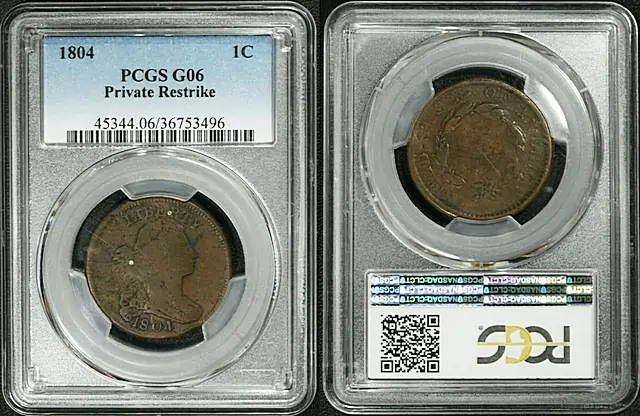
According to published population data from both Professional Coin Grading Service (PCGS) and Numismatic Guaranty Company (NGC), this piece represents the lowest graded example at PCGS, certified at 6. NGC lists its lowest example at the Very Good (VG) level.
Why does this coin show such heavy wear? It may have served as a pocket piece. Nevertheless, that remains speculation.
Importantly, this coin stands as one of three counterfeits in this foundation group. Evidence indicates that someone struck it outside the U.S. Mint. The maker reportedly used a scrapped 1803 obverse die paired with an 1820 reverse die. Collectors familiar with early large cents recognize the mismatch immediately.
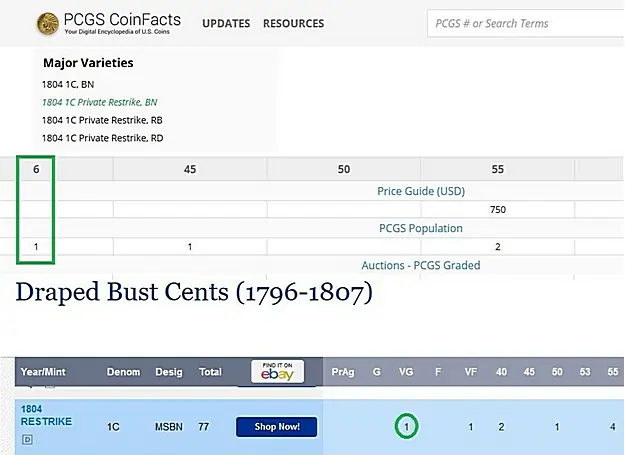
This coin demonstrates how counterfeiters operated. It also highlights the importance of die study and series knowledge. Even so, its story and survival fascinate me.
2. 1795 Double-Struck Off-Center Countermarked Large Cent (Sheldon-76b)
This coin carries complexity. In fact, it demands attention.
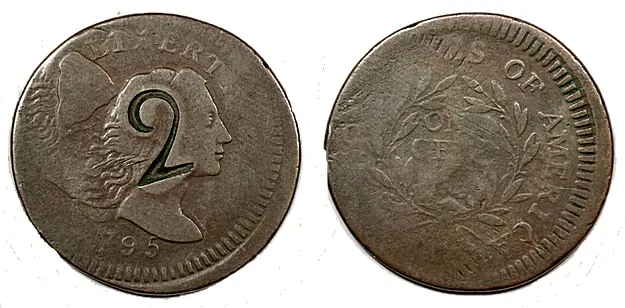
The piece features a double strike, off-center alignment, and a countermark. Moreover, auction records trace its provenance to the House of David McKinney, as described in a past sale conducted by Heritage Auctions.
The mystery surrounding this coin deepens its appeal.
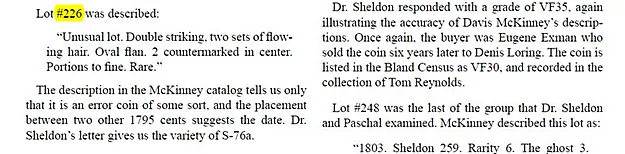
The intrigue centers on its attribution. The coin matches Sheldon-76b, not Sheldon-76a as previously described by Dr. William H. Sheldon. It shows a plain edge. In addition, its weight aligns with the thinner planchets used for this and subsequent varieties.
This distinction matters. Early American copper specialists rely on edge devices and planchet specifications for accurate attribution. Therefore, correcting the record strengthens our understanding of the variety.
3. 1875 “Beer” Counterstamped Half Dollar
Anyone who knows me understands my appreciation for beer. Therefore, this piece belongs in my foundation group.
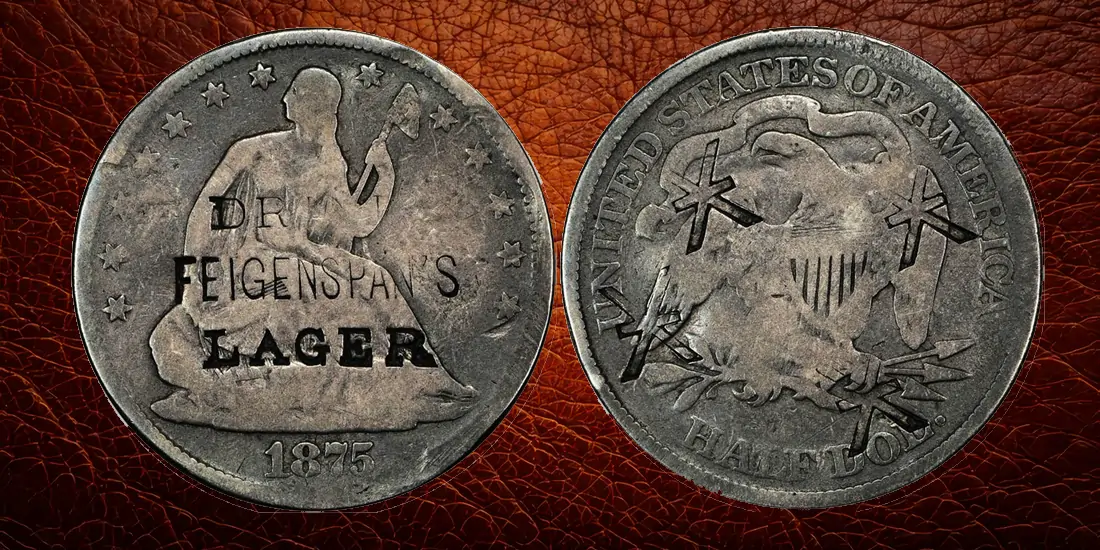
Unlike the others, this coin contains silver rather than copper. It also launched a research journey.
I traced the counterstamp to a brewery reportedly founded in 1869. When I last verified the information, the company still operated. That continuity adds charm and historical depth.
Furthermore, I submitted the coin to Numismatic Guaranty Company (NGC) for certification. The holder reflects the proper counterstamp designation.
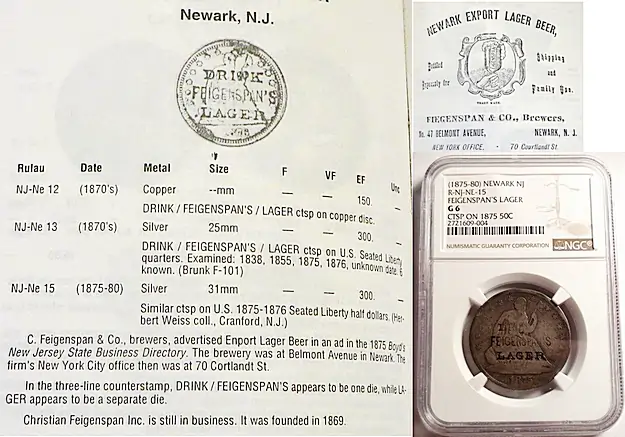
Counterstamped coins tell stories of commerce and advertising. In this case, the piece connects numismatics with brewing history. That intersection makes it indispensable to my collection.
4. 1798 S-158 Large Cent (Struck Counterfeit from False Dies)
The 1798 S-158 large cent launched my deep involvement in counterfeit research. I began documenting these pieces in 2015. Since then, I have written multiple articles on the subject.
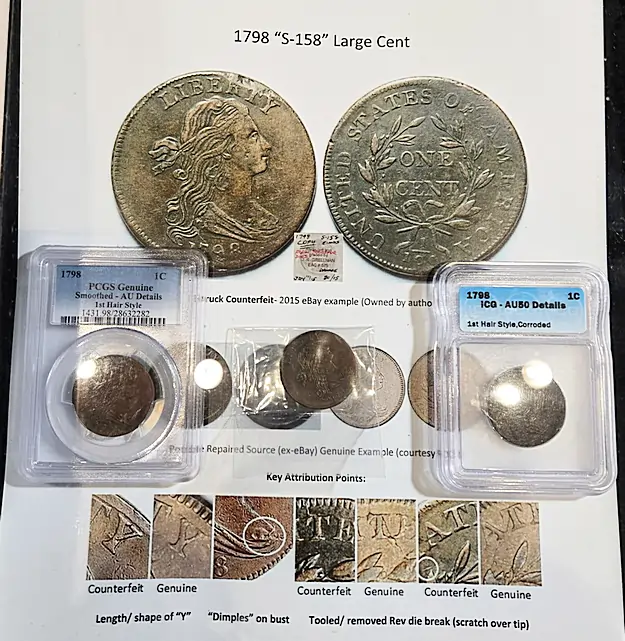
A fellow Early American Coppers (EAC) member first reported seeing an example certified as genuine in a third-party holder. Shortly thereafter, I located the imaged example on eBay.
This piece represents a struck counterfeit. Counterfeiters created false dies using a genuine source coin. As a result, known examples share identical circulation marks and tooling characteristics.
I currently own three examples. I displayed them at the Indiana State Coin Show.
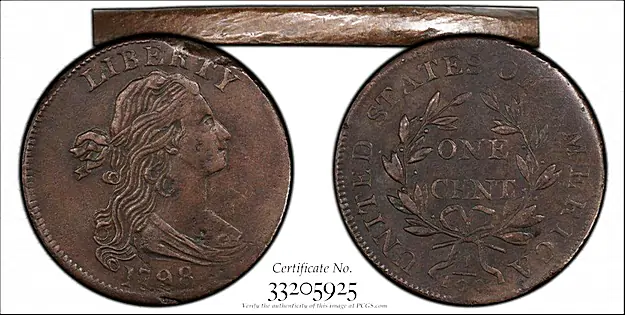
Interestingly, my raw example passed third-party grading at one point. However, I later removed it from the holder. The certification number no longer exists.
This coin represents the rabbit hole. It drew me into research, documentation, and collaboration with fellow specialists. Few pieces carry that level of impact.
5. 1796 S-85 Large Cent — Struck Counterfeit Overstruck on Later-Date Large Cent (Flagship)
Now we arrive at the flagship.
This 1796 S-85 large cent stands as a struck counterfeit produced from false dies by the same group responsible for the 1798 S-158 pieces. However, this coin offers something more.
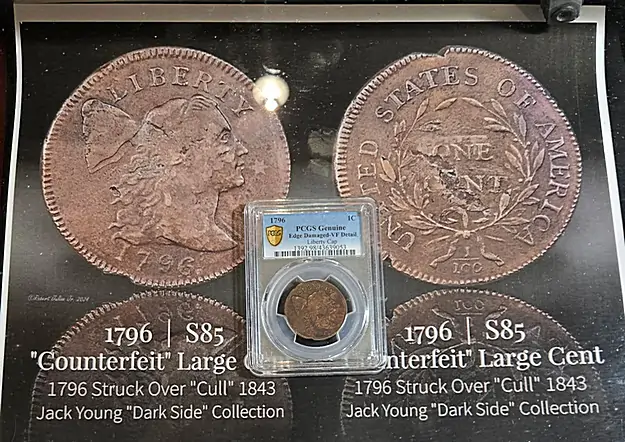
It shows clear evidence of an undertype. Specifically, the counterfeiters struck it over a later-date large cent. Careful examination reveals underlying details. Notably, a visible “star” escaped my notice for years. Once visible, it becomes impossible to ignore.
Numismatic artist Bob Julien documented the piece and illustrated the undertype details with remarkable precision.
This example remains the only piece I have definitively proven to be struck over a cull large cent. Because the undertype used genuine U.S. Mint metal, metallurgical testing suggested authenticity. Nevertheless, context and die analysis tell the true story.
As with the prior example, the certification number no longer exists.
Why Foundation Coins Matter
Each of these five coins forms a collection within a collection. Together, they define my numismatic journey.
They also demonstrate critical lessons:
- Study dies carefully.
- Verify attribution through weight and edge diagnostics.
- Question third-party certifications when evidence demands it.
- Document findings for the benefit of the hobby.
Most importantly, follow curiosity. Foundation coins do not require rarity or high grades. Instead, they demand significance.
For me, these five pieces provide that foundation.
Best as always,
Jack D. Young, EAC 5050







Nice article.
Interesting history lesson.
Thank you Lou!