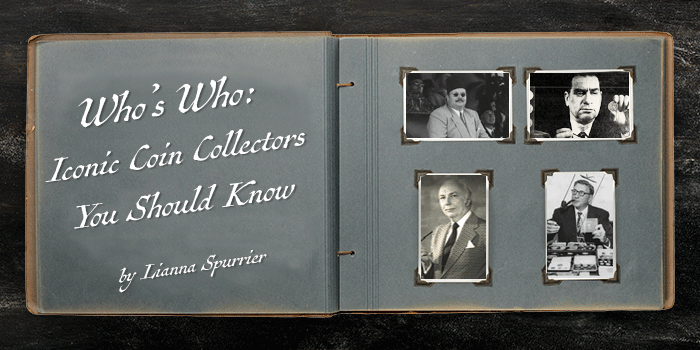
Four Legendary Coin Collections That Changed Numismatics Forever
By Lianna Spurrier for CoinWeek
Collectors encounter these names everywhere in numismatics. They appear on slab labels, in auction catalogs, and throughout numismatic literature. Yet many collectors know them only as “important collections”.
Each name represents far more than provenance. Each collector built a remarkable collection and shaped the modern numismatic world.
This introduction explores four of the most influential coin collections ever sold at auction. When you next see one of these pedigrees on a slab, you will understand the deeper story behind the name.
Eric P. Newman: Scholar, Collector, and Numismatic Philanthropist
Eric P. Newman ranks among the most respected figures in American numismatics.
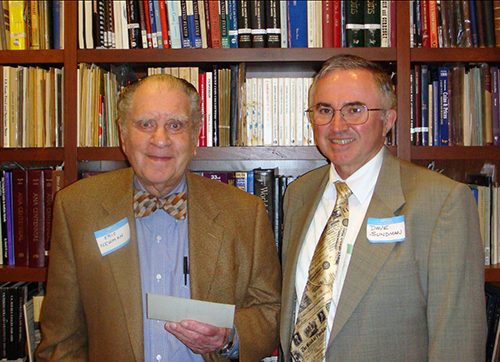
Newman was born in Missouri in 1911. His interest in coins began early. At just seven years old, his grandfather gave him an 1859 Indian Head cent, which sparked a lifelong passion.
Soon after, Newman began visiting the coin shop of Burdette G. Johnson. Johnson became his mentor and helped guide the young collector’s early numismatic education.
Education and Early Career
Newman pursued an impressive academic career while continuing to collect coins.
He earned a Bachelor of Science degree from MIT and later received a Doctor of Law degree from Washington University. During his college years, he met Colonel E. H. R. Green, one of the most famous collectors of the early 20th century.
Green died in 1936. Newman hoped to purchase a specific Missouri banknote from Green’s estate. His family helped him raise the necessary funds. After learning of the purchase, Johnson offered financial backing so Newman could acquire a much larger portion of the collection. The two collectors later divided the material between them.
Professional Life and Numismatic Research
Newman practiced law early in his career. Later, he joined Edison Brothers Stores, where he worked until retiring in 1987.
However, collecting never remained his only contribution to numismatics.
Newman became one of the most prolific numismatic researchers of his generation. Over his lifetime, he published 13 books and countless articles.
His most influential works include:
- The Early Paper Money of America
- The 1776 Continental Currency Coinage: Varieties of the Fugio Cent
These publications remain essential references for researchers today.
A Legacy of Education
Newman lived an extraordinary life. He died in 2017 at the age of 106.
Together with his wife Evelyn Edison Newman, he established the Eric P. Newman Numismatic Education Society (EPNNES). The organization funds research and supports the advancement of numismatic education.
Through EPNNES, Newman also helped create the Newman Numismatic Portal (NNP). The portal provides a free online archive of numismatic publications and has become one of the most important research resources in the hobby.
The Eric P. Newman Collection
In 2003, Washington University opened the Newman Money Museum, which displayed many pieces from Newman’s personal collection. The museum remained open until April 2018.
Newman’s vast collection included:
- United States federal coinage
- Colonial coins
- American paper money
The collection sold at auction between 2013 and 2018. In total, the sales realized nearly $77 million.
All proceeds funded the educational work of the EPNNES.
NGC certified the coins with special pedigree labels identifying the Newman Collection. Coins originally owned by Colonel Green received additional designation on their labels. Many older collections lack this level of traceable provenance.
John J. Ford Jr.: The Cataloger Who Transformed Numismatic Auctions
John J. Ford Jr. shaped modern numismatic auction cataloging.
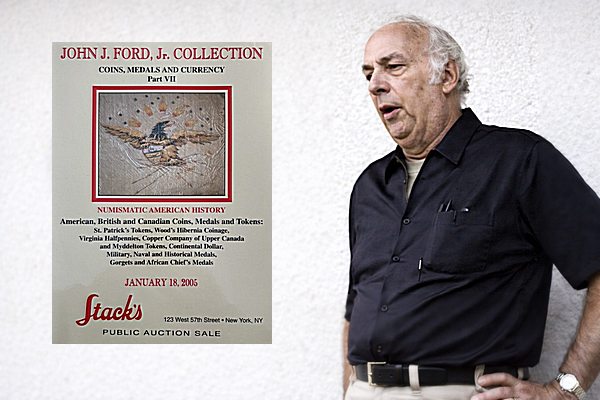 Ford was born in California in 1924. He began collecting coins at around 10 years old.
In 1939, he accepted his first numismatic job with Stack’s, cataloging stamps. By 1941, he worked there full time.
Revolutionizing the Auction Catalog
During the 1940s, Ford began dealing coins and publishing auction catalogs under his own name.
His catalogs differed dramatically from others of the period.
Most auction catalogs at the time contained limited information. Only experienced collectors could interpret the descriptions.
Ford changed that approach. He wrote extremely detailed descriptions that explained each coin’s grade, appearance, and significance. As a result, collectors gained greater confidence when bidding.
His work fundamentally improved transparency in coin auctions.
New Netherlands Coin Company
In 1951, Ford joined the New Netherlands Coin Company. There he continued producing detailed catalogs that remain essential references today.
During this period, he also worked closely with Walter Breen, the author of Walter Breen’s Complete Encyclopedia of U.S. and Colonial Coins. Ford served as a mentor during Breen’s early research career.
Military Service
Ford also served his country.
During World War II, the U.S. Army drafted him as a cryptographer. Later, he served in the U.S. Marine Corps Reserve from 1948 to 1950. Afterward, he worked in Army Counter Intelligence from 1950 to 1959.
A Collector of Rare and Unusual Material
Ford’s collecting interests differed from those of many collectors.
He began with Lincoln cents, but he soon focused on unusual numismatic material. His collection eventually included:
- Pattern coins
- Confederate currency
- Colonial coinage
- Pioneer and territorial gold
- Indian peace medals
- Rare numismatic books
Controversy and Legacy
Ford’s career included controversy.
Some experts accused him of selling fake Western assay bars. For many years, debate surrounded their authenticity. Later research confirmed that many examples were indeed replicas.
Ford also followed an unusual cataloging strategy. He often underrated coins rather than exaggerating their quality. Most auction houses preferred promotional descriptions, but Ford believed understatement would generate more interest from serious collectors.
The Ford Collection Auctions
Ford collected for nearly 70 years.
His collection began selling in 2003 through a series of 21 auctions, which concluded in 2007. Including numismatic books, the sales realized more than $58 million.
The auction catalogs from these sales remain critical research references today.
Ford also helped found the Numismatic Bibliomania Society, an organization dedicated to numismatic literature.
He died in Phoenix, Arizona, in 2005.
Louis E. Eliasberg Sr.: The Only Complete U.S. Coin Collection
Louis E. Eliasberg Sr. achieved something no other collector has ever accomplished.
He built the only complete collection of circulating United States coins by date and mint mark.
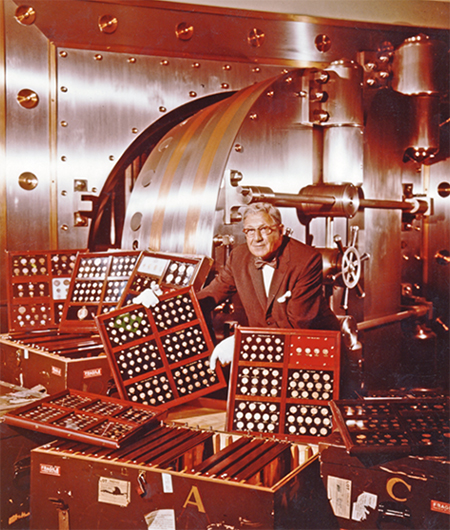
Building the Collection
Eliasberg was born in 1896 and worked as a Baltimore financier.
He began collecting coins in 1925. His interest grew significantly during the Great Depression and the 1933 U.S. gold ownership restrictions.
At the time, private citizens could only legally own gold coins with recognized numismatic value. Eliasberg considered rare coins a reliable store of wealth after losing confidence in paper currency.
Expanding Through Major Collections
Eliasberg purchased several established collections while assembling his set.
One of the most important acquisitions came in 1942, when he purchased the Clapp Estate Collection.
John M. Clapp began assembling that collection in the 1880s. His son later continued it. Even so, the collection remained incomplete when Eliasberg acquired it.
The 1933 Double Eagle
At one point, Eliasberg privately owned one of the famous 1933 double eagles.
However, once he learned that the coin had never been legally issued and that the government demanded their return, he voluntarily surrendered the coin without compensation.
Completing the Greatest U.S. Coin Collection
Eliasberg completed his historic collection in 1950.
The final coin he needed was the 1873-CC No Arrows dime.
After completing the set, he displayed it widely. Institutions that hosted portions of the collection included:
- Banks across the United States
- The Smithsonian Institution
- The Philadelphia Mint
The achievement earned Eliasberg the nickname “King of Coins.” Life magazine even featured him and his collection.
Auctions After His Death
Eliasberg continued collecting until his death in 1976. He constantly upgraded coins while maintaining the collection’s completeness as new issues appeared.
When the family prepared the collection for auction in 1982, they discovered that one coin was missing: the 1866 No Motto double eagle.
Before the auction began, the family purchased an example to restore the collection’s completeness.
Earlier collectors often did not separate Proofs from circulation strikes, which was standard practice before the 1980s. Even so, Eliasberg’s achievement remains unmatched.
King Farouk: The Extravagant Collector King
King Farouk I of Egypt also built one of the most famous coin collections in history.
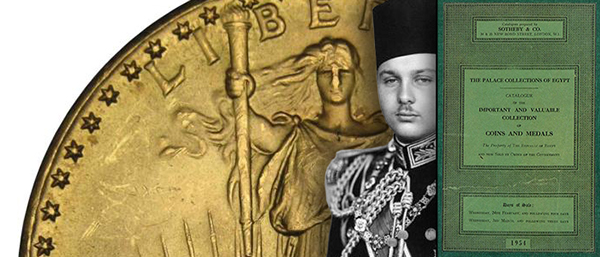
Unlike Eliasberg’s methodical pursuit of completeness, Farouk collected with enormous wealth and enthusiasm.
A King with Lavish Tastes
Farouk was born in Egypt in 1920.
He became King of Egypt in 1936, when he was only 16 years old.
Observers often described him as immature. Nevertheless, he remained popular for much of his reign.
Farouk lived extravagantly. He spent evenings in nightclubs, traveled frequently to Europe, and often made extravagant purchases. During public tours, he even threw gold coins to the poor.
A Vast Collection of Coins
Farouk collected almost everything.
His possessions ranged from Fabergé eggs to paper clips. However, his coin collection became the most famous part of his holdings.
During the 1940s, he purchased large quantities of coins from American dealers. Often, he bought entire collections at once.
However, dealers learned an important lesson. Any payment over $10,000 required processing through Egypt’s treasury. As a result, large payments sometimes arrived slowly.
Despite the logistical challenges, Farouk assembled a collection of more than 8,500 copper, silver, and gold coins and medals.
Among the highlights were:
- Two 1913 Liberty Head nickels
- A 1933 double eagle
The Fall of a King
Public opinion began shifting around 1945.
Egyptians increasingly demanded economic reforms to address poverty. Eventually, political tensions reached a breaking point.
In 1952, a military coup overthrew Farouk. The new government forced him into exile in Italy, where he died in 1965.
His coin collection remained the property of the Egyptian government.
The Famous 1954 Cairo Auction
The Egyptian government auctioned the collection in 1954 under difficult circumstances.
A London firm received the task of cataloging the coins. Unfortunately, the firm had very little time to complete the work.
As a result:
- Catalog descriptions remained minimal
- Photography quality remained poor
- Viewing conditions before the sale were inadequate
Even worse, catalogers grouped coins by denomination into lots of 15–20 pieces. They ignored dates and mint marks.
Rare coins often appeared alongside common examples. Some catalog entries did not even list dates or condition.
A Historic Missed Opportunity
The auction took place in Cairo, where political conditions remained unstable. Financial arrangements also created uncertainty for bidders.
Because the collection consisted primarily of American coins, the location discouraged many potential buyers.
Attendance remained very low.
As a result, many lots sold for about 10% of their actual market value.
Experts believe the collection might have realized more than $150 million in today’s market if the sale had been properly organized.
The Fate of the 1933 Double Eagle
The most famous coin in the Farouk collection was the 1933 double eagle.
After the auction announcement, the U.S. government requested its return, because private ownership of that date was illegal.
Egypt agreed to return the coin, but it disappeared shortly afterward.
The coin resurfaced in 1996. The U.S. government eventually seized it and later authorized its sale.
In 2002, the coin sold at auction for more than $7 million, setting a record at the time for the most valuable coin ever sold.
Why Provenance Matters in Coin Collecting
The names Newman, Ford, Eliasberg, and Farouk represent far more than wealthy collectors.
Each left a lasting impact on numismatics:
- Eric P. Newman expanded research and education.
- John J. Ford Jr. transformed auction cataloging standards.
- Louis Eliasberg Sr. assembled the only complete U.S. coin collection.
- King Farouk created one of the largest royal coin collections ever assembled.
Today, collectors often pay a premium for coins from famous collections.
Provenance adds history. It connects modern collectors to the people who shaped the hobby.
And sometimes, a simple name on a slab tells a remarkable story.