Giant Gold Coin from Japan’s Golden Age Could Bring $350,000
A massive gold coin from Japan’s celebrated Genroku era will headline the upcoming Stack’s Bowers Galleries April 2026 Hong Kong Showcase Auction.
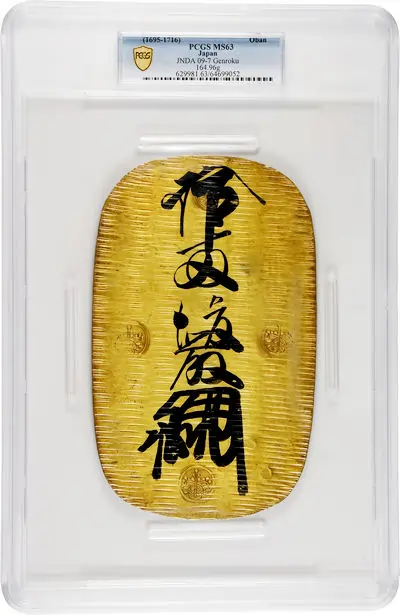
The extraordinary piece is a Genroku-era Oban (10 Ryo) certified PCGS MS-63, and it stands as the finest certified example of its era.
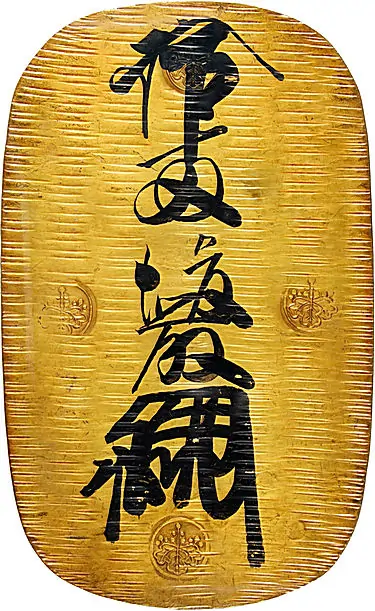
Genroku Era. PCGS MS-63.
Few coins capture the intersection of political power, economic change, and cultural brilliance as vividly as this monumental gold issue of Tokugawa Japan.
A Monumental Gold Coin of the Edo Period
The offered piece is a Japan Oban (10 Ryo), Genroku Era, ND (ca. 1695-1716).
Certified by Professional Coin Grading Service as MS-63, the coin weighs 164.96 grams and measures 154 x 92.98 millimeters.
Catalog references include:
- Fr-4
- JNDA-09-7
- JC-02-7
- JV-A4
- Hartill-8.9
- Hibiki Pg. 13
Only about 30,000 examples were struck, making the type rare even in lower grades. However, the present coin occupies a different category entirely. It is the single finest certified example known for the era.
Exceptional Preservation and Visual Appeal
Large-format Japanese gold coins rarely survive in high grade. Nevertheless, this example displays exceptional eye appeal.
Faint sunset-toned coloration appears around the peripheries and recesses. Meanwhile, the high points show brighter pale gold surfaces.
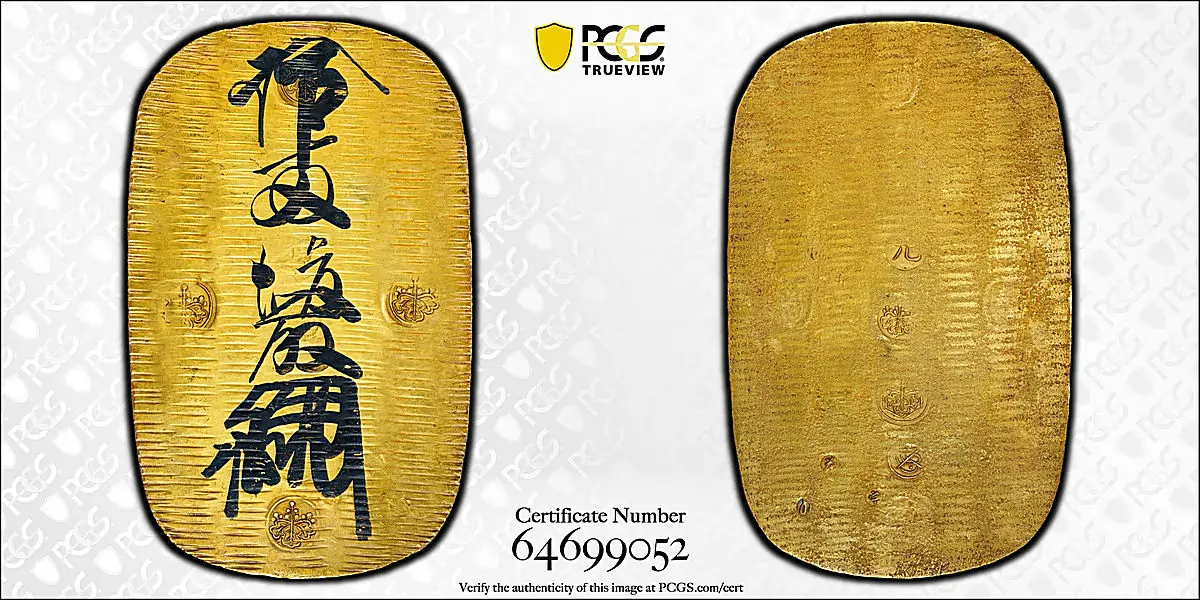
The coin also retains nearly all of its original ink inscription, with only minor flaking visible. This ink signature played a crucial role in guaranteeing authenticity and value.
Several design elements stand out clearly:
- Paulownia (kiri) flower stamps, the official government crest
- An era stamp identifying the period
- Mint official punches applied by the issuing authority
Importantly, the stamps appear slightly uneven. That feature is normal for these massive hammered gold pieces. Their size and production method often produced irregular impressions.
Because such coins rarely circulate outside Japan, collectors encounter them only occasionally on the international market. As a result, elite examples generate intense interest among specialists in Asian numismatics.
The Genroku Oban: A Coin of Ceremony and Power
The Genroku Oban served a very different role from everyday coinage.
Instead of daily commerce, these large gold pieces functioned primarily as:
- Ceremonial gifts
- Rewards for samurai retainers
- High-value payments between powerful merchants
Their imposing size reinforced their prestige. Each piece carried a hammered gold surface with horizontal “goza-me” patterns, which resemble woven tatami mats.
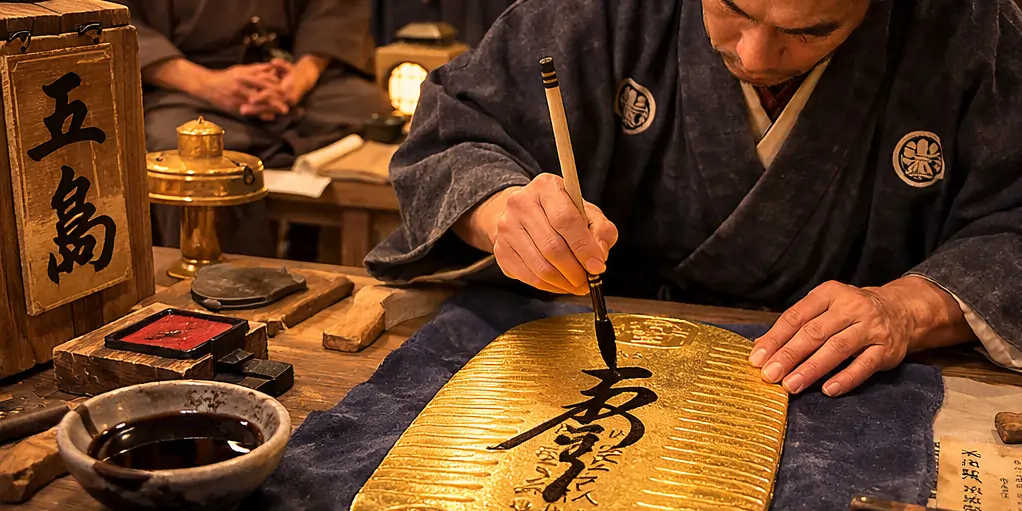
Government authority appeared through four circular paulownia crests, while the Goto family, hereditary mint masters of the Tokugawa shogunate, added a handwritten sumi ink signature. That inscription certified both weight and value.
The reverse also bears the engraved character 元 (“Gen”), which identifies the coin as part of the Genroku era coinage.
A Turning Point in Japan’s Monetary History
The Genroku Oban also reflects an important economic shift.
Earlier Japanese gold coinage contained roughly 86% gold. However, during the Genroku coinage reforms, purity dropped to roughly 52–56%.
The Tokugawa government adopted this change to finance growing state expenses. Although the policy filled the treasury, it also contributed to inflation and long-term fiscal challenges. These issues would shape Japanese monetary policy throughout the remainder of the Edo period.
Therefore, each Genroku Oban represents more than a large gold coin. It marks the beginning of a major transformation in Japan’s economic system.
The Genroku Era: Japan’s Cultural Golden Age
The Genroku era (1688–1704) stands among the most celebrated periods in Japanese history.
During this time, Japanese cities experienced extraordinary prosperity. Cultural life flourished. New artistic traditions emerged that still define Japanese aesthetics today.
Kabuki theater gained widespread popularity. Bunraku puppet drama captivated audiences. Meanwhile, ukiyo-e woodblock prints spread vibrant images of the urban “Floating World.”
Economic power also shifted. Samurai held political authority, yet wealthy merchant families increasingly controlled the flow of money. In cities such as Osaka and Edo (modern Tokyo), these merchants spent heavily on art, fashion, and entertainment.
The era unfolded under the rule of Tokugawa Tsunayoshi, the fifth shogun of the Tokugawa dynasty. He became famous, sometimes infamous, for his unusual “Edicts on Compassion for Living Things,” laws that protected dogs and other animals.
The Age of the 47 Ronin
The Genroku period also produced one of Japan’s most enduring legends.
In 1702, forty-seven masterless samurai carried out a carefully planned act of revenge. Their lord had been forced to commit seppuku after a conflict with the court official Yoshinaka Kira.
For nearly two years, the ronin secretly prepared their retaliation. Then, on December 14, 1702, they attacked Kira’s residence and avenged their master.
They knew the consequences. Afterward, authorities ordered the ronin themselves to commit ritual suicide. Their loyalty and sacrifice became a powerful symbol of samurai honor and duty.
The story of the 47 Ronin still appears in literature, theater, and film today.
A Trophy for Advanced Collectors
Against this dramatic historical backdrop, the offered Genroku Oban stands as both a numismatic masterpiece and a cultural artifact.
Its PCGS MS-63 grade, combined with its status as the finest certified of the era, elevates the coin to trophy status among collectors of Asian rarities.
Furthermore, its provenance traces to Masatomo Komori’s celebrated “Hibiki” collection, a name widely respected among specialists in Japanese coinage.
Auction Information
This remarkable coin will appear in the:
April 2026 Hong Kong Showcase Auction – Session 5
Ancient and World Coins: Annam to Zambia
Lot 44278
The sale will take place through Stack’s Bowers Galleries, with live bidding beginning April 16, 2026.
The Genroku Oban carries a pre-sale estimate of $250,000 to $350,000.
Given its rarity, historical importance, and elite preservation, the coin should command strong attention from advanced collectors around the world.