


In the absence of mass media, ancient rulers relied on coinage to project authority. Coins moved effortlessly across borders, circulated among soldiers and merchants, and carried messages of power far beyond the reach of monuments or decrees. For this reason, coinage became one of the most effective tools of ancient propaganda.
Every element mattered. Rulers deliberately chose types, knowing that imagery could legitimize authority, assert divine favor, and reinforce political stability. No figure understood this better than Alexander the Great.
Alexander and the Language of Coinage
Alexander carefully controlled his public image. Sculptors and engravers alike portrayed him in accordance with a calculated ideal. On his silver tetradrachms, he appeared as Herakles, the quintessential Greek hero. This association carried enormous weight.
Herakles embodied strength, perseverance, and divine lineage. By aligning himself with this figure, Alexander presented his conquests as both heroic and inevitable. At the same time, the imagery reinforced his claim to universal rule across the Greek and non-Greek worlds.
Death Without a Successor
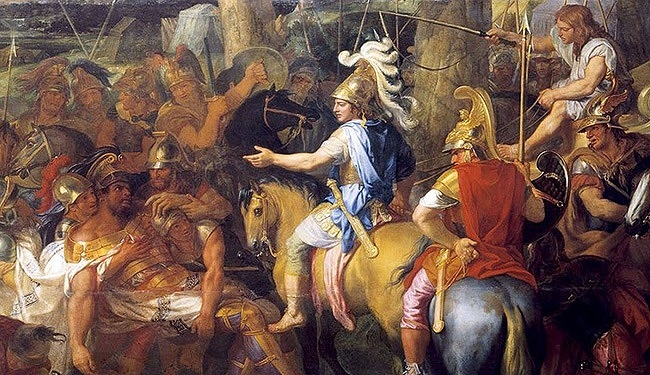
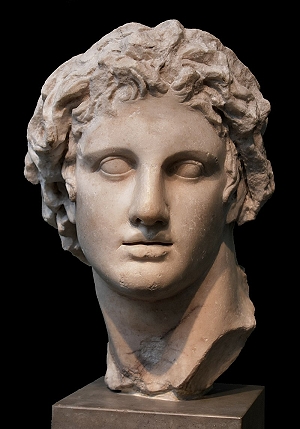 After Alexander died suddenly at the age of 32, the future of his vast empire was unknown. His generals scrambled to determine who should succeed him as Alexander had no heir.
Alexander’s sudden death in 323 BCE shattered the fragile unity of his empire. At just 32 years old, he left behind no clear successor and no established plan for succession. Immediately, uncertainty followed.
On his deathbed, Alexander handed his signet ring to Perdiccas, commander of the Companion Cavalry. However, Perdiccas refrained from declaring himself king. Complicating matters further, Roxana of Bactria, Alexander’s wife, was pregnant, and no one yet knew whether the child would be male.
Perdiccas urged patience, arguing that a legitimate heir might soon be born. Meanwhile, the infantry faction supported Philip III Arrhidaios, Alexander’s half-brother. Ultimately, compromise prevailed.
When Alexander IV was born later that year, the Macedonians declared both Philip III and the infant king joint rulers. In practice, however, Perdiccas governed the empire as regent.
A Coinage Born of Crisis
Within a year of Alexander’s death, an extraordinary gold stater entered circulation. Although the type followed a format introduced under Philip II, its artistic execution marked a dramatic departure from earlier Macedonian issues.
The obverse presented a portrait head, while the reverse depicted a charioteer driving a fast biga. Yet this issue stood apart immediately. The style, relief, and engraving surpassed anything previously struck on Macedonian gold.
Strikingly, the mints of Kolophon and Magnesia both used the same obverse die. Artisans physically transported the die between mints, underscoring the design’s importance. The portrait’s complexity and refinement demanded a singular artistic vision.
The Earliest Face of Alexander
Unlike most Macedonian staters, which depict Apollo, this coin bears the portrait of Alexander himself. As a result, it preserves one of the earliest surviving numismatic likenesses of the conqueror.
An exceptionally skilled engraver executed the portrait in high relief, giving it a sculptural, almost gem-like quality. The facial structure closely mirrors known sculptural representations of Alexander. The result is unmistakable.
This was no generic hero. This was Alexander.
Legitimacy Struck in Gold
The decision to place Alexander’s portrait on the obverse served a clear political purpose. The image linked the new and unstable regime directly to the memory of the conqueror. In effect, the coin asserted continuity at a moment of profound uncertainty.
By replacing Apollo, the traditional “bringer of light”, with Alexander, the design conveyed a powerful message. It suggested that Alexander himself carried the light of Hellenistic civilization across the known world. Through this imagery, the regency claimed his authority, vision, and legacy.
A Coin That Outlived Its Moment
Collectors today prize this stater for both its artistry and its historical significance. It represents a brief but pivotal moment when imagery attempted to stabilize an empire on the brink of collapse.
Despite these efforts, the regency failed. In 321 BCE, rivals assassinated Perdiccas. What followed were decades of warfare among Alexander’s former generals. Eventually, the empire fractured into the Ptolemaic Kingdom, the Seleucid Empire, the Kingdom of Pergamon, and Macedonia.
Yet this coin endures. Struck at the crossroads of ambition, artistry, and power, it remains one of the most compelling gold staters ever issued in the name of Philip, and one of the most important portraits in ancient numismatics.
Coin Description
- Macedonia, Philip II, struck under Philip III
- Kolophon, circa 322 BCE
- Gold Stater, 8.65g
- Obverse: Laureate head of Apollo right, bearing the unmistakable features of Alexander the Great
- Reverse: Fast biga driven right by charioteer holding goad; tripod below forelegs; ΦΙΛΙΠΠΟΥ in exergue
This exceptional issue universally bears the portrait of Alexander himself. Struck in high relief, the sculptural engraving represents the finest quality achievable.






I like ancient coins. it’s like holding a piece of ancient history right in your hand.