


By Tyler Rossi for CoinWeek ….. Updated and reformatted Jan 2026
The 1933 Saint-Gaudens $20 Gold Double Eagle
Sold in 2021 for $18.87 million USD, the 1933 Double Eagle is officially the most expensive coin in the world. But that’s not what makes it so controversial.

Shortly after the United States Mint struck 445,500 double eagles in the spring of 1933, President Franklin Roosevelt issued Executive Order 6102 banning the private ownership of gold coins. Supposedly the Mint melted down all but two examples, which were donated to the Smithsonian.
Yet in 1937, a total of 20 pieces were illegally taken from the Mint, bought by Philadelphia coin dealer Israel Switt, and later resold. While the government was able to seize and destroy nine of the coins, one was purchased by King Farouk of Egypt before being legally exported in 1944, and 10 were hidden in a safety deposit box.
When the Farouk coin was returned to the United States by British coin dealer Stephen Fenton, the US government arrested Fenton and seized the coin. After some back and forth, the US had to acknowledge that the Farouk sale had been legal and returned the coin to Fenton. The government agreed to monetize the coin and forced the next owner to pay a face value fee of $20 – on top of the over $7 million it brought in its 2002 sale.
Currently, it is the only surviving example of the issue that is legal to collect. Read the full story on the 1933 Double Eagle and all the know specimens.
The Type 1 Standing Liberty Quarter
Sculptor Hermon MacNeil designed the Standing Liberty quarter, which first entered circulation in 1916. The coin immediately sparked public backlash for one reason: nudity.
MacNeil portrayed Lady Liberty standing proudly between two pedestals. She wears a flowing gown over her left shoulder, while her right breast remains uncovered. These early Standing Liberty quarters became the first circulating US coins to feature female nudity.
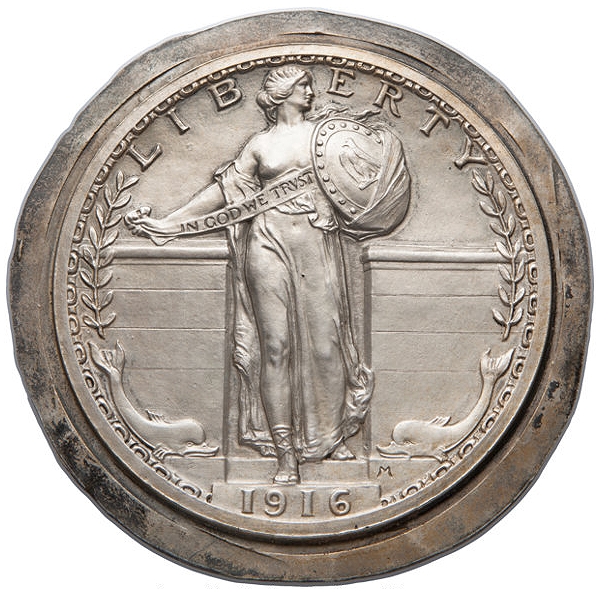
The reason MacNeil chose to depict Liberty exposed remains unknown. The New York Society for the Suppression of Vice soon began lobbying Congress to force a redesign.
In late 1917, without MacNeil’s input, officials altered the design and clothed Liberty in a chainmail undergarment.
Some historians suggest the change stemmed more from internal complaints within the Treasury Department than from public outcry. Regardless, collectors highly prize these coins, which command a significant premium over Type II Standing Liberty quarters.
The 1964-D Peace Dollar
Before the 2021 issue, the Peace dollar last entered circulation in 1934. As a result, this coin stands as one of the most controversial pieces in modern US numismatics. PCGS even offers a standing $10,000 reward simply to view an authentic 1964-D Peace dollar.

During the post–World War II economic boom, demand for silver coinage rose sharply in the early 1960s. To meet that demand, the Senate allocated $600,000 to resume striking Peace dollars for the first time in 30 years. When news of the coins leaked, collectors reacted immediately and began offering up to $7.50 per coin if they were ever released. On May 25, shortly after the Denver Mint struck more than 316,076 pieces, officials supposedly melted them all. Even so, some may have been removed by mint workers.
Even if one surfaced today, owning the coin would remain illegal because the Mint never officially monetized it.
The 1804 Dollar
You might assume the 1804 dollar was struck in 1804. In reality, the Mint struck these coins in 1834 by order of President Andrew Jackson. Officials intended them as diplomatic gifts for foreign leaders, including the Sultan of Muscat and the King of Siam. Although the Mint may have produced as many as 19,570 examples, only eight are known to survive today.
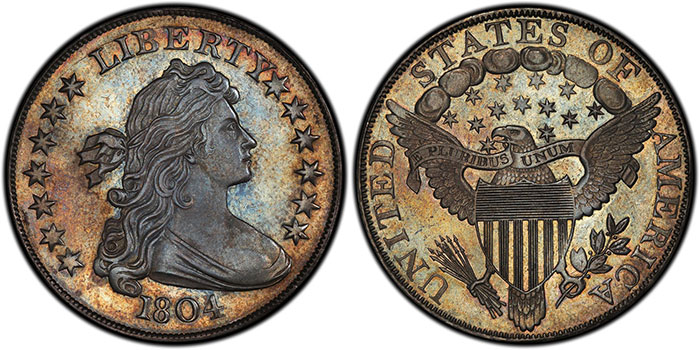
This is where the controversy begins.
In 1857, Mint official Theodore Eckfeldt began illegally striking restrike 1804 dollars, now known as Class II 1804 silver dollars. He sold them privately to collectors who believed they came from the original 1834 issue. The scheme came to light in 1861, when members of the Boston Numismatic Society complained that the Mint had sold restrikes to several dealers.
Officials returned four of the five Class II coins to the Mint and melted them, but the story did not end there. During the mid-1860s, additional 1804 dollars were struck illegally. These later coins, known as the Class III type, survive in seven known examples.
Are these coins illegal to own? While the Treasury Department will most likely never attempt to seize them, as they have sold openly at auction. But for some, uncertainty still surrounds their status.
The 1946 Roosevelt Dime
The US Treasury introduced the Roosevelt dime in 1946 after retiring the Mercury dime. The design honored the recently deceased president. Below the truncation of Roosevelt’s neck and to the left of the date appears a small “JS.” These letters represent the designer’s initials, a common practice in numismatic design.
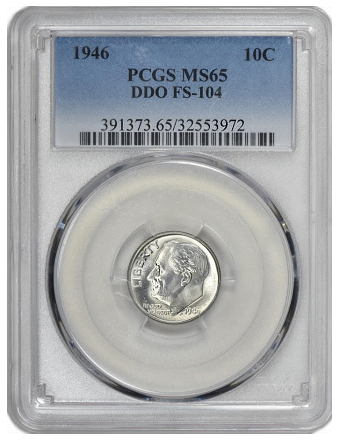
Some members of the public, however, drew a different conclusion.
At the start of America’s post–World War II Red Scare, a conspiracy theory accused Mint workers of communist sympathies. According to the rumor, they placed Joseph Stalin’s initials on the coin to honor the Soviet dictator. The claims spread widely enough that when John R. Sinnock later added his initials to other designs, he used “JRS” instead. The Mint also issued a press release to address and dismiss the controversy.
Critics also accused Sinnock of copying the obverse design from a bas relief by Selma H. Burke. Sinnock denied the charge and stated that he created the design as a composite based on several of his own life studies of President Roosevelt.
The 1909-S VDB Cent
The first release of Victor David Brenner’s 1909-S VDB Lincoln cent proved extremely popular. At the initial issue, sellers resold examples for as much as 25 cents each. Brenner did not place his initials on the reverse himself. The Mint added them as an official honor for the designer. Public protest followed soon after.
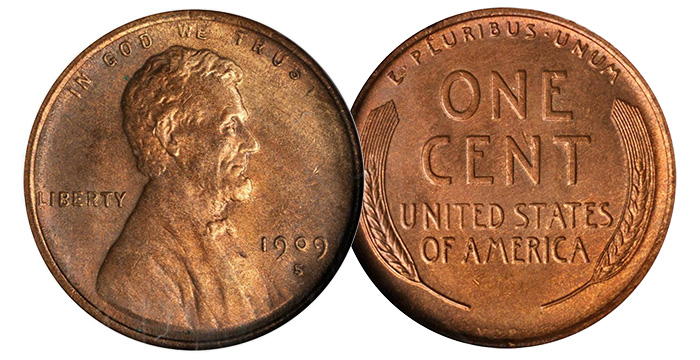
When people complained to the Mint, they argued that Brenner received payment for his work and effectively served as a government employee. For that reason, they claimed he did not need or deserve recognition on the coin.
The Mint responded quickly by replacing the dies, and about 60% of the year’s production omitted the VDB initials. Officials believe this change occurred after only five days of production.
Brenner’s initials returned to the Lincoln cent in 1918.
The 1793 Chain Cent
As the first coin struck by the US government using its own machinery, the 1793 Chain cent presented a bold new image.
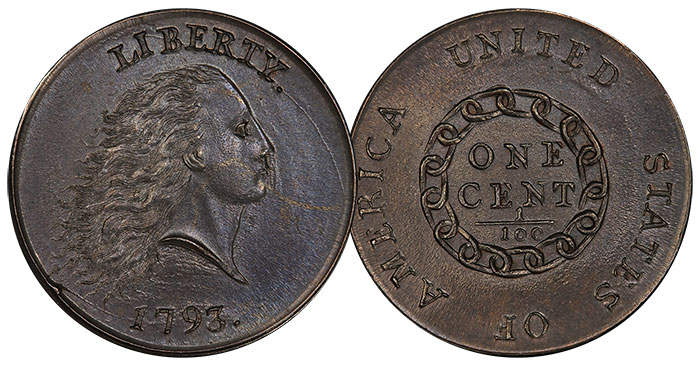
During the first 12 days of March 1793, the Mint struck 36,103 one-cent coins. Just 14 days after release, a Boston newspaper published a harsh review. The article criticized the poorly executed obverse and condemned the chain motif on the reverse for its negative symbolism.
Chief Coiner Henry Voigt had intended the chain to represent the unbreakable bonds of the newly formed Union. Instead, many viewers saw it as a reminder of slavery.
Critics also took issue with Lady Liberty’s hair, which appeared poorly rendered and unrealistic. This flaw may reflect Voigt’s lack of prior experience engraving coin dies.
After the Mint exhausted its supply of blank planchets and ended production of the Chain cent, officials quickly moved on to the new Wreath cent design.
The $1,000,000,000,000 Platinum Coin
Often called the “Coin That Never Was,” the trillion-dollar coin functioned more as a political gimmick than a serious monetary proposal.
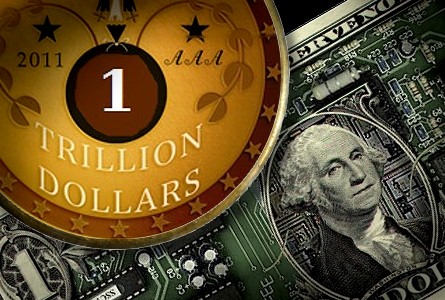
Lawmakers first proposed the idea during the 2011 US debt-ceiling crisis. Supporters suggested that the Mint strike a one-trillion-dollar platinum coin to help address the national debt.
This move was legally possible because Congress passed a bill in 1997 that allows the Mint to strike platinum coins of any denomination without prior congressional approval.
The proposal relied on seigniorage, the profit a government earns by issuing currency. By striking a coin containing one ounce of platinum and assigning it a face value of one trillion dollars, the government would instantly generate $999,999,999,999.
The proposal quickly sparked controversy. Republicans argued that issuing such a coin would trigger massive inflation because it would effectively amount to printing new money.
Critics also warned that the move would undermine Congress’s control over spending and erode the separation of powers. The idea drew widespread ridicule, with one public commentator suggesting the coin should feature the likeness of the scam artist Charles Ponzi.
The 1921 Zerbe Morgan Dollar
Farran Zerbe, a noted numismatist and President of the American Numismatic Association (ANA), ordered a small number of Proof 1921 Peace dollars from the San Francisco Mint in 1920.
When he visited the Mint, however, officials had received dies from Philadelphia bearing the older Morgan dollar design. As a result, the Mint struck a limited number of 1921-S Morgan silver dollars with a Proof-like finish.
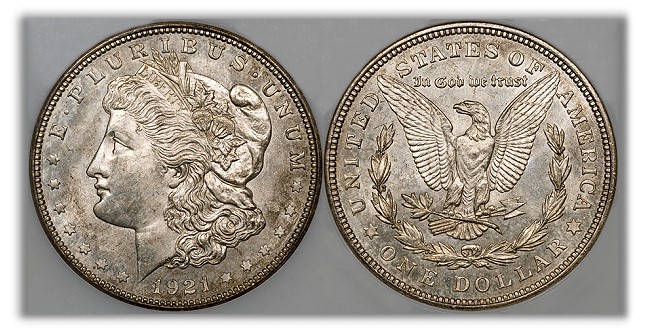
Zerbe quickly distributed the coins. While the Mint likely struck between 20 and 200 examples, only about five to ten survive today. These coins closely resemble Chapman Proofs and can be difficult to distinguish.
ANACS and PCI label them “Struck from Zerbe dies,” while PCGS and NGC do not recognize the designation. Questions continue to surround these pieces.
Are they true Proofs or merely presentation strikes? Were all of them struck in San Francisco? Regardless, many coins labeled as “Zerbe Proofs” do not qualify as true Proof issues.
The 1913 Proof Liberty Nickel
In 1913, after the Mint discontinued the Liberty nickel, two Philadelphia Mint workers struck five additional Proof examples. They produced the coins illegally using official dies and without authorization.
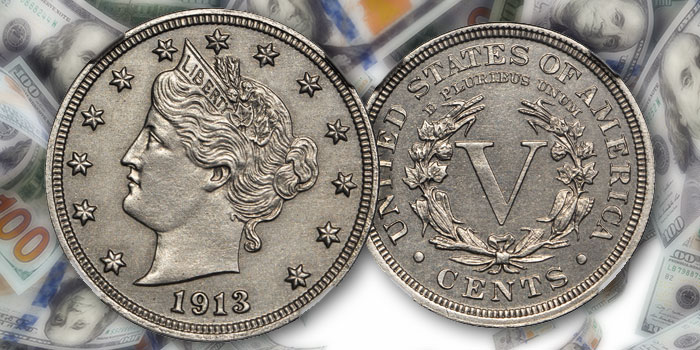
The public did not learn of the coins until 1919. That year, coin dealer Samuel W. Brown placed a front-page advertisement offering $500 per coin, equal to $8,562.89 today.
Soon after, wealthy collector Edward H. R. Green acquired all five examples. His estate sold the coins following his death in 1936.
Public institutions later acquired two of the nickels. The Smithsonian obtained one, and the ANA Money Museum in Colorado Springs acquired another.
Collectors held the remaining three in private hands. One reportedly disappeared in 1962. The Walton family owned that example and long believed it was a fake. That belief changed when Bowers & Merena offered a $10,000 reward to examine the coin.
Another example, known as the Eliasberg Specimen, became the first US coin to sell for more than $1 million. It realized $1,485,000 at auction in 1996.
Thoughts on Buying a 1913 Nickel by Jeff Garrett
* * *




I like articles like this…simple, easy-to-understand for the layman. Gets people interested in the hobby.
Good job, Tyler !
Wouldn’t mind seeing follow-up articles giving out more details about the historical sales and background history of each coin or the ones that were disallowed or deemed illegal. Would make for a nice series over time (maybe one article a month ?). For instance, on the 1933 you can go into the sales of the coin in the 1930’s and 1940’s before the current one became the only one legal to own/sell.
What about the 1974 aluminum cent that the secret service seized a few years ago.
Really good story, Tyler. Kudos from a retired longtime journalist.
I remember seeing a heavily worn ‘1804 silver dollar’ in a sidewalk flea market in northern Thailand in 1976. I had a vague idea of what it purported to be but didn’t bother even picking it up, much less buying it. I’ve long wondered what it really was. I suppose just a well worn fake. Funny place to see it though.