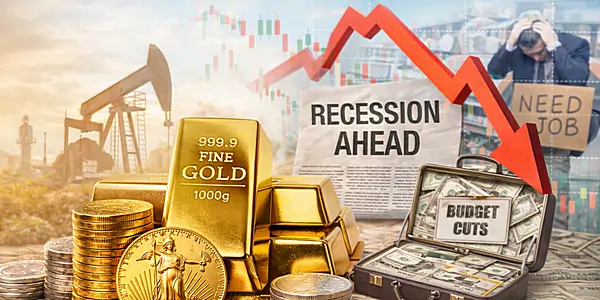
 Oil Shocks and Precious Metals: What History Shows
Oil price spikes often dominate financial headlines during geopolitical crises. Yet history shows that energy shocks alone rarely dictate the direction of precious metals.
Analysts at Heraeus recently examined past conflicts that disrupted oil markets. Their conclusion is clear. Oil shocks typically reinforce the price trend already in place rather than create a new one.
In other words, precious metals tend to follow the broader economic cycle rather than the immediate geopolitical event.
The 1970s offer a good example. Two major oil shocks occurred during a powerful precious metals bull market. Gold and silver prices continued rising. However, the rally eventually ended once the U.S. economy slipped into recession.
A different pattern appeared during the 1990 Gulf War. Precious metal prices were already declining. The conflict coincided with a recession, and the downward trend continued.
More recent conflicts show another variation. The 2003 Iraq War and the 2022 Russian invasion of Ukraine occurred roughly two years after economic downturns. At the time, the global economy was still recovering. As a result, the oil price spike did not trigger another recession.
Why Recession Risk Matters More Than Oil Prices
The bigger concern today is not oil itself. Instead, analysts warn that a potential recession could reshape the metals market.
Industrial metals would likely feel the pressure first.
Silver and the platinum-group metals depend heavily on manufacturing and industrial demand. Because of this exposure, economic slowdowns typically hurt them more than gold.
Gold, by contrast, often benefits from safe-haven demand during uncertainty.
Even so, economic conditions remain fragile. U.S. GDP growth has held up surprisingly well despite recent turbulence. However, labor data shows emerging cracks.
Recent reports indicate 92,000 jobs were lost in February, and earlier figures were revised lower. Meanwhile, unemployment ticked higher to 4.4%.
At the same time, rising energy costs could increase pressure on consumers and businesses already struggling with higher living expenses.
Analysts also note that the current expansion is aging. It has now been six years since the last recession, which matches the typical length of many business cycles.
That timeline alone raises the possibility that economic growth could soon slow.
Oil Prices Complicate Fed Rate Cut Expectations
Higher energy costs also affect monetary policy expectations.
Markets recently reduced the likelihood of aggressive Federal Reserve rate cuts. Rising oil prices increase inflation risk, which could force the Fed to keep interest rates higher for longer.
Current market projections suggest one rate cut by December as the most likely outcome. Meanwhile, the probability of multiple cuts has dropped sharply.
Global Demand Trends Continue to Shift
Beyond the United States, regulatory changes could support precious metals demand.
India’s Securities and Exchange Board recently introduced rules allowing equity funds to allocate up to 35% of assets to gold and silver.
This change could increase institutional demand in one of the world’s largest precious metals markets. India already ranks as the second-largest gold consumer globally and the leading buyer of silver jewelry and silverware.
Although Indian investors traditionally favor physical metal, ETFs have grown steadily. Funds held more than 110 tonnes of metal as of January.
Silver Market Signals Mixed Momentum
Silver markets show a combination of caution and renewed interest.
Global silver ETF holdings declined again last week, falling 6 million ounces to 817 million ounces, down from 863 million ounces at the start of the year.
However, physical demand remains strong. The U.S. Mint sold more than 4.8 million ounces of silver coins in January, which is typically the strongest month of the year. February sales dropped seasonally but still reached 1.7 million ounces, the highest February level in five years.
At the same time, speculative interest has increased. The non-commercial net long silver futures position rose to 116.7 million ounces in early March, up from 111.3 million ounces.
The CME also reduced margin requirements on March 6. Silver margins fell from 18% to 14%, while gold margins dropped from 9% to 7%.
Technically, silver currently trades near a support zone around $80 per ounce. If that level fails, analysts say prices could revisit $72 or even $64.
Gold and Silver Prices Today
Gold recently dipped below the $5,000 per ounce level before rebounding.
Spot gold last traded near $5,029 per ounce, up slightly on the day.
Meanwhile, silver recovered from early weakness and climbed above $81 per ounce after briefly touching $77 earlier in the session.