


By Alex Sim – First Mint LLC
Introduction: When Identical Silver Bars Tell Different Stories
Two silver bars enter the mold under identical conditions. They share the same graphite molds. They melt at the same temperature. Both assay above 99.9% purity.
Yet the results could not be more different.
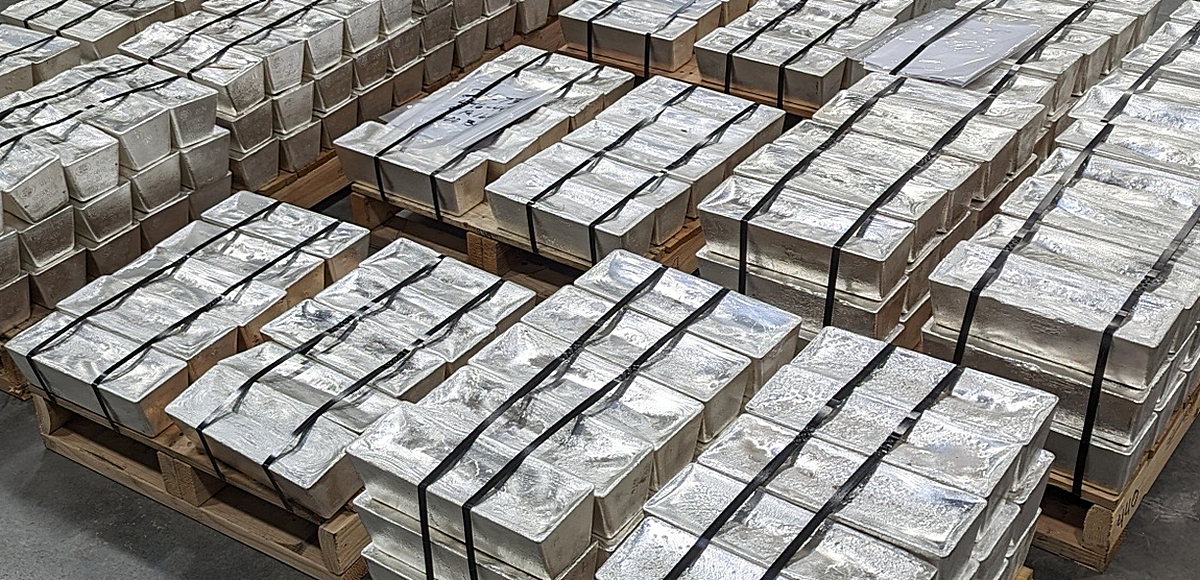
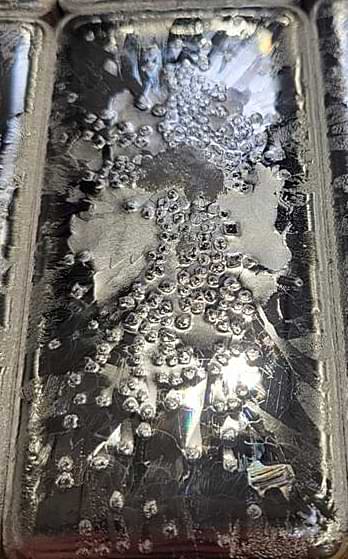
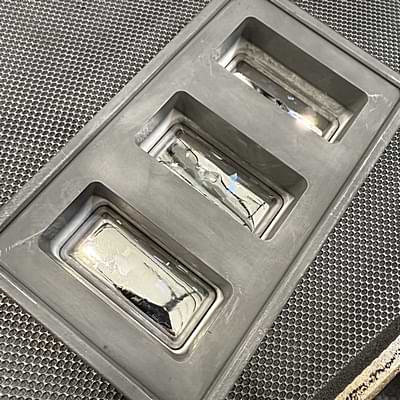
One bar emerges with a clean, mirror-like finish. The other looks like the surface of the moon. It shows pitting, pockets, and rough textures that make it nearly unsellable.
So what went wrong?
Surprisingly, the answer is not the silver itself. Instead, the culprit is a trace element measured in parts per million: selenium.
Even at levels as low as 50 ppm, selenium can damage surface quality and increase brittleness. In one real-world case, a pallet holding more than 200,000 ounces (about 14,000 pounds) of silver saw its visual quality ruined by less than two pounds, roughly eight tablespoons, of selenium. The bars still passed assay. However, the market rejected them.
What Is Selenium, and Why It Travels with Silver
Selenium, atomic number 34, sits in group 16 of the periodic table alongside oxygen, sulfur, and tellurium. Because of its chemistry, it behaves much like sulfur.
As a result, selenium rarely forms its own minerals. Instead, it substitutes into sulfide minerals. These same minerals often carry silver, copper, and lead.
This matters because modern mining increasingly relies on polymetallic deposits. Pure silver deposits are far less common today. Therefore, selenium often follows silver from the ore body all the way through refining.
Unless refiners actively remove it, selenium remains in the final metal.
How Selenium Survives the Refining Process
During mining and smelting, selenium-bearing sulfides can pass into doré bars. These semi-pure bars typically contain about 90% precious metals.
If a refinery does not specifically target selenium removal, some of it will persist. In fact, mining executives have reported that refiners sometimes reject doré shipments with elevated selenium levels.
The reason is simple. Selenium is difficult, and dangerous, to remove. Effective treatment often requires high-temperature oxidation. Moreover, improper handling can produce hydrogen selenide gas (H₂Se), which is extremely toxic.
A Problem Refiners Didn’t Always Understand
For most of history, refiners did not even know selenium existed. They only observed its effects.
Silver from certain regions behaved poorly. It cracked more easily, showed surface flaws and it proved difficult to work.
Only after advances in analytical chemistry, long after selenium’s discovery in 1817, could refiners measure it at trace levels and understand the cause.
Why Selenium Ruins the Look of Cast Silver Bars
Once selenium enters molten silver, its impact becomes visible during casting.
Selenium has a density of about 4.81 g/cm³, while silver measures about 10.49 g/cm³. Because of this difference, selenium rises toward the surface during solidification.
At the same time, cast bars undergo minimal finishing. After casting, they receive burnishing and stamping. Unlike coins, they do not go through extensive rolling or polishing.
Therefore, any defects remain visible.
At around 50 ppm, selenium can create pitting and irregular surfaces. At 100 ppm or more, bars can become commercially unusable. Some producers have remelted thousands of kilograms of silver to protect their brand image.
Beyond Appearance: Selenium and Brittleness
Selenium does more than affect appearance. It also changes how silver behaves mechanically.
Higher selenium levels make silver more brittle. This increases the risk of cracking during rolling and striking.
For coins and minted bars, this creates serious problems:
- Edge cracking during blanking
- Variations in strip thickness
- Higher scrap rates
In addition, harder metal shortens die life. Coins struck multiple times for higher relief suffer the most.
Understanding ppm: Why Tiny Amounts Matter
Standard .999 silver allows up to 1,000 ppm of total impurities. However, most Good Delivery bars actually reach about 99.95% purity or higher.
Within that small impurity budget, selenium is only one element among many. Others include copper, lead, zinc, iron, nickel, and cadmium.
However, selenium behaves differently. Even if it accounts for just 20% of total impurities, its effect on casting and workability can be disproportionately large.
How Mints Control Selenium: Dilution Strategies
The simplest solution is dilution.
Refiners often blend higher-selenium silver with .9999 fine silver. A common working ratio is:
- 25% .999 silver
- 75% .9999 silver
This mix usually reduces selenium to manageable levels. However, refiners must always base the ratio on precise assay data.
Mechanical Fixes for Cast Bars
When selenium levels cause only minor surface defects, mints can avoid full remelting.
Instead, they use mechanical treatments:
- Staking: A flat die compresses surface voids
- Burnishing: Ceramic media smooths the surface in a vibrating system
These methods improve appearance without removing significant metal. As a result, they can restore marketability.
Adjustments for Coins and Minted Products
Minted products face different challenges. Selenium does not affect their surface finish as much. However, it complicates production.
To compensate, mints often:
- Dilute high-selenium silver
- Add small amounts of copper (10–50 milligrams)
This approach maintains .999 purity while improving workability.
Press Settings and Die Life Under Pressure
When silver becomes harder or more brittle, operators must adjust press settings.
 Higher pressures and multiple strikes increase die wear. Under ideal conditions, dies can strike several hundred thousand coins. However, selenium can reduce that lifespan to tens of thousands.
Some mints accept this trade-off for lower-tier products. Others adjust maintenance schedules and press parameters to limit losses.
The Role of Modern Assay Technology
Today, refiners rely on advanced analytical tools such as ICP-based assays.
These techniques detect selenium at very low ppm levels. As a result, refiners can identify problematic lots before production begins.
Over time, some refiners incorporate selenium levels into pricing. High-selenium material may carry additional processing charges.
Economic Consequences of Ignoring Selenium
Although selenium exists in trace amounts, its financial impact is significant.
Defective bars require:
- Remelting
- Additional labor
- Energy consumption
- New assays
Moreover, these delays reduce production capacity. In today’s market, most mints already operate at or near full capacity.
On the mining side, high-selenium doré can lead to shipment delays or rejection. This disrupts cash flow and logistics.
Environmental compliance adds another layer of cost. Selenium compounds, especially hydrogen selenide, require strict handling under EPA and OSHA regulations. Refineries must invest in advanced scrubbing and wastewater systems.
Conclusion: A Trace Element with Outsized Influence
Selenium may exist in only parts per million. However, its impact on silver bullion is anything but small.
Two bars can meet the same 99.95% purity standard. Yet one can shine, while the other fails in the marketplace.
The difference lies in how refiners manage trace elements.
Those who actively control selenium, through blending, processing, and analysis, achieve consistent quality. Those who ignore it risk defects, losses, and reputational damage.
In modern bullion production, success depends not only on purity, but on mastering the invisible.








This is a good article. I learned something today.
I learn something new everyday.
Wow, very interesting info.
Very interesting ! I had no idea !