


An Interesting not-PCGS 1893-O Morgan Dollar
Every counterfeit coin tells a story. Sometimes the clues appear immediately. Other times they reveal themselves slowly, one diagnostic at a time.

Recently, a friend contacted me with an intriguing question. He asked if I would look at an 1893-O Morgan dollar he had purchased on eBay. After the purchase, he submitted the coin to PCGS for grading. However, the coin did not receive a grade. Instead, PCGS returned it body-bagged as counterfeit.
Naturally, that raised questions.
The Coin Arrives for Examination
At first, I only saw photographs of the coin. Unfortunately, the images were not ideal. As a result, they did not reveal much. It proved difficult to determine whether anything was actually wrong.
Therefore, my friend offered to send the coin to me for an in-hand review. I gladly accepted.

Once the coin arrived, I spent part of my morning examining it carefully.
The first tests appeared encouraging.
The coin weighed 27.0 grams, which falls within the expected range for a Morgan dollar. In addition, a Sigma Metalytics analyzer confirmed the presence of silver.
However, those results alone cannot confirm authenticity. Counterfeiters increasingly produce silver coins with the correct weight.
Therefore, the real work begins with die diagnostics.
The Reverse That Should Not Exist
The most revealing issue appeared on the reverse.
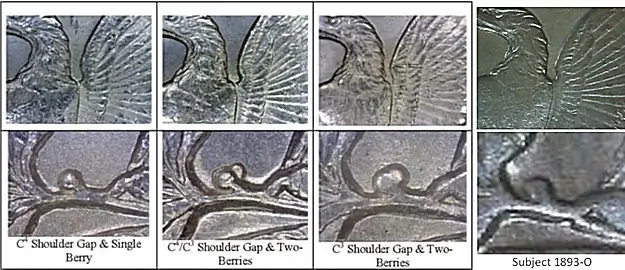
Authentic 1893-O Morgan dollars use the C3 reverse hub. This design includes a distinctive wing gap and berry placement that specialists recognize immediately.
However, the coin I examined displayed a C4 reverse.
That detail immediately raised a red flag.
After consulting with Morgan dollar specialist Jack Riley, I confirmed that the New Orleans Mint did not transition to the C4 reverse until 1901. In other words, a genuine 1893-O cannot have this reverse configuration.
That alone strongly suggests the coin is not genuine.
The Mintmark Problem
The diagnostics did not stop there.

Two reverse dies appear on genuine 1893-O VAM varieties. Yet the mintmark on this coin did not match either example.
Specifically:
- The position was incorrect.
- The shape was wrong.
- The tilt did not match known dies.
- Taken together, those differences create another major authenticity problem.
- Odd Details in the Date
Closer inspection revealed additional irregularities.
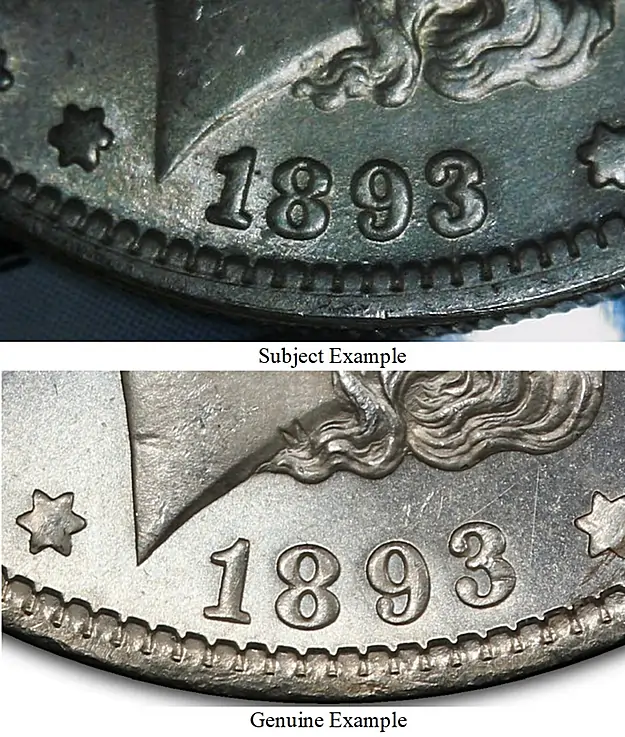
Both the “D” in DOLLAR and the “3” in the date looked unusual. The letterforms simply did not match the known characteristics of genuine coins.
Each issue alone might raise suspicion. Together, they form a clear pattern.
Tracing the Coin Back to the Seller
After finishing my examination, I emailed my findings to my friend. He then asked me to share the diagnostics on the CoinTalk forum, where we both occasionally participate.
During that discussion, I asked about the eBay seller who listed the coin. My friend sent the seller’s ID.
The results were eye-opening.
The seller had 12 negative feedback responses. Many of those complaints involved bait-and-switch counterfeit coins, including three Morgan dollars.

One of those negative feedback posts included images of a supposed 1895-O Morgan dollar the buyer received.
That is when things became especially interesting.
The 1895-O coin showed the same unusual reverse seen on this 1893-O.

At that moment, the pattern became clear.
A Lesson in Comparing Listing Photos
After reviewing the situation, my friend realized something important.
He had not compared the coin he received to the original listing photographs.
That step can prevent many problems. Counterfeit sellers often rely on that oversight.

Naturally, I attempted to contact the seller. Unfortunately, I received no response.
However, one thing is certain.
That seller now sits firmly on my eBay watch list.
A Counterfeit with Educational Value
Although this story began with disappointment, it ended with something positive.
My friend decided to donate the counterfeit coin to the “Dark Side” collection. The coin now serves as an educational tool.
That decision helps collectors learn from real examples. In many ways, that may be the best possible outcome.
Because every counterfeit coin offers a lesson.
The key is learning how to read the clues.
Why This Story Matters for Collectors
Counterfeits continue to appear in online marketplaces. Even experienced collectors can encounter them.
Therefore, collectors should always remember three important safeguards:
Third-party grading services remain an essential defense.
Die diagnostics often reveal the truth.
Comparing listing photos to the received coin can expose bait-and-switch fraud.
In this case, a single incorrect reverse hub told the whole story.
And that story reinforces an important lesson for Morgan dollar collectors everywhere.
Always trust the diagnostics.
Best,
Jack.






Jack: Your work is greatly appreciated!
Thank you!
Details, details, details.
You always need to keep your eye out counterfie t coins.
I just wondering how many coins that I have could be counterfeit.
you can never be to careful. hurting the legit sellers.
Very interesting and informative article on the counterfeit 1893-O Morgan dollar.
Thank you for the information!
I really appreciate the positive comments here! A labor of love I always try to help the Hobby with articles like this one.
Great article. It’s always good to have an expert opinion on what to look for in counterfeit coins, especially the older ones.
Lesson learned for me. DO NOT BUY COINS FROM EBAY without clear information about the coin. Be sure it matches the Ebay sellers information. Better yet, buy when the coin is slabbed buy a known coin appraiser & then verify.
Thanks
Great article
So many fakes out there.
Excellent point about comparing the received coin with the listed one!
Agreed, good information on coins, knowledge and comparison, eBay
Not always what’s it seems, caution is always assumed? Buying
From reputable dealers preferred!!!
Unfortunately the fakes are everywhere anymore and more of them
great info! Thanks for sharing
The level of detail in examining coins is unreal!
Always afraid of fakes
Weeding out fakes….
Thanks for sharing!
Great information
Wow a lot of very good info. TY
very informative article…thanks Jack
Buyer beware, unfortunately is rearing its ugly head again. I only buy from sources I trust and only certified for rare dates.
Good info!
There are reputable dealers on eBay but there are some bad ones. I prefer to buy higher value coins at coins shops or coin shows. It does not negate getting a counterfeit but I things decreases the chances. I bought a counterfeit silver coin once and contacted the dealer and was told “it was in my father’s collection”. I got my money back
Great article!
Very interesting! Your detective work was excellent. I learn something new every day in this hobby. It’s a shame there are so many scammers out there.
I always purchase the high dollar coins already graded,eliminates what these buyers went thought
How interesting. Good luck on the coin giveaway everybody!
I see those differences. To bad that people ruin coins to make a fake mismark.
Good article. I’ve always looked at coins on eBay but have never bought any as I heard of counterfeits from Asia and it seemed many were being shipped from there.
I’m just glad there are no counterfeits on ebay.
Good to know! Thanks for the informative article!
Thanks for the heads up!
Thanks! I just started to use ebay for coins knowing of their poor reputation. I got some modern coins and all appear well. I did have to wade through many listings from sellers who had shills bid up the price of difficult to get items but they bid them up to four times the actual value.
Your point about checking the photo to what you receive is so excellent. Now in my procedure when buying on-line.