


By Mike Byers for MintErrorNews
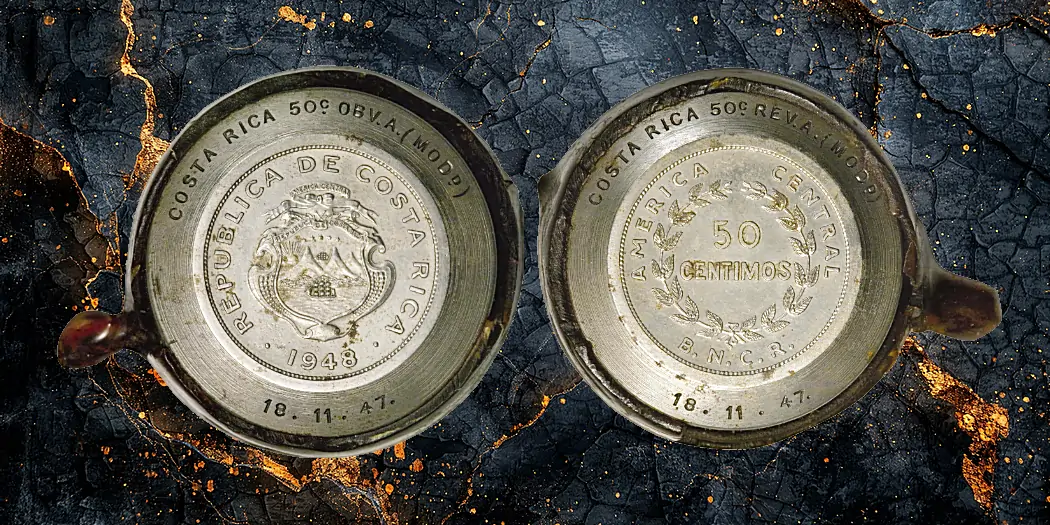
In numismatics, discoveries that rewrite the census rarely occur. However, a newly surfaced pair of uncancelled obverse and reverse hubs for the Costa Rica 1948 50 Centimos now demands attention.
This pair is unique in private hands. Moreover, it represents the only known uncancelled hub set outside the Central Bank of Costa Rica.
The Royal Mint Connection
The hubs originated at the Royal Mint in London. The Royal Mint produced the hubs and dies for the 1948 Costa Rica 50 Centimos. It also struck the circulation coins for Costa Rica that year.
To understand the importance of this discovery, one must understand minting technology. Coin hubs create coin dies. In turn, coin dies strike coins. The hub carries the positive image of the design. The die carries the negative image. Without hubs, dies cannot exist. Therefore, hubs form the backbone of the minting process.
Uncancelled hubs are especially significant. Mints normally deface or cancel hubs and dies after use to prevent unauthorized strikes. When a hub survives intact, it preserves the original design in its purest form.
The Costa Rica 50 Centimos: KM #176
The Costa Rica 50 Centimos is cataloged as KM #176. The coin weighs 7 grams. It has a copper-nickel composition of 75% copper and 25% nickel. The diameter measures 26 millimeters.

The obverse displays the national arms and the date. The reverse features the denomination within a wreath.
This design saw limited production. The type was struck in only two years. In 1937, the mintage totaled 600,000 pieces. In 1948, the mintage increased to 4,000,000 pieces.
Although the Royal Mint struck the coin in London, the Banco Nacional de Costa Rica issued it.
Below is an example of a regular-issue 1948 Costa Rica 50 Centimos:
Unique in Private Hands
The newly surfaced uncancelled obverse and reverse hubs represent the only pair known outside the holdings of the Central Bank in Costa Rica.
That fact alone elevates their status. However, their survival also provides insight into the Royal Mint’s production process for foreign coinage during the mid-20th century.
Advanced collectors understand the magnitude of this discovery. Hubs almost never enter private collections. When they do, they become cornerstones of institutional-level cabinets.
Indeed, this pair belongs in a museum or a world-class coin collection.
The Broader Context: Uncancelled Costa Rica Dies in Private Hands
The 1948 50 Centimos hubs do not stand alone. In fact, they join an extremely small group of known uncancelled Costa Rica dies in private ownership.
These include uncancelled dies for the 1897 10 Colones and 1897 20 Colones.
However, an even more dramatic discovery reshaped the field in recent years.
A Unique Numismatic Discovery: The 1897 2 Colones Proof Die
A previously unpublished uncancelled proof obverse die for the Costa Rica 1897 2 Colones surfaced and received authentication and certification by NGC.

This die was produced at the United States Mint in Philadelphia. It struck proof gold 1897 2 Colones coins.
Its survival stunned specialists.
A World-Class Latin American Rarity
The 1897 2 Colones ranks among the most famous Latin American gold coins. The coin was struck only in proof. The recorded mintage stands at 500 pieces.
Today, only seven examples are accounted for:
- Smithsonian Collection
- Jenks Collection (1921)
- Hans Schulman (1963)
- Private Costa Rica Collection
- Private Costa Rica Collection
- Private U.S. Collection
- Cecil Webster Collection (damaged), sold by Heritage Auctions
Notably, only one example has crossed the auction block in the last half century. That coin came from the Cecil Webster Collection and sold through Heritage Auctions. Experts in Latin American numismatics estimate that a problem-free example offered today would realize more than $75,000.
Extreme Die Rarity
Uncancelled Costa Rica dies from the Philadelphia Mint are extremely rare. Only two additional pairs exist in private hands:
- 1897 10 Colones obverse and reverse dies
- 1897 20 Colones obverse and reverse dies
The Costa Rica Central Bank Museum lists two 1897 20 Colones dies and four undated 10 Colones dies in its collection. However, it lists no dies or coins for the proof-only 1897 2 Colones.
Therefore, the survival of the uncancelled 2 Colones proof obverse die stands as remarkable. The die is approximately 125 years old. Despite its age and its use in striking 500 proof gold coins, it remains in excellent condition.
The Philadelphia Mint and Foreign Gold Coinage
The United States Mint in Philadelphia struck gold coinage for only five foreign countries, including Costa Rica. This limited engagement enhances the importance of surviving dies.
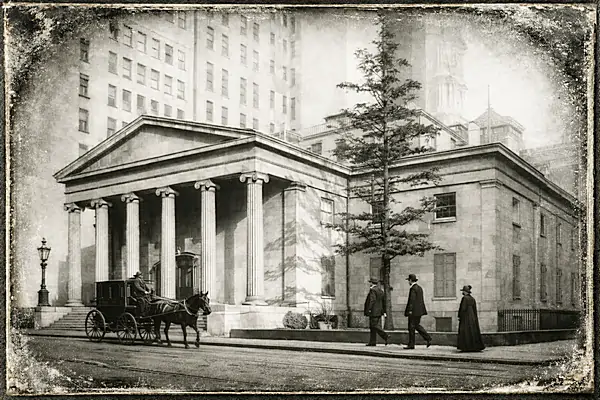
In 1906, the Philadelphia Mint also struck Mexico gold 5 Pesos coins. However, Mexico produced the dies. Moreover, both the United States and Mexico struck the coins.
Mint Error News published a comprehensive 69-page report on foreign coins struck at the U.S. Mint. That research underscores the rarity of surviving foreign dies from Philadelphia.
Why These Discoveries Matter
Numismatics thrives on documentation and survival. Most hubs and dies faced destruction after use. Therefore, uncancelled survivors represent tangible links to the minting floor.
The Costa Rica 1948 50 Centimos uncancelled hubs now join a microscopic group of known Costa Rican die and hub survivals in private hands.
Together with the 1897 proof 2 Colones die and the known 10 and 20 Colones dies, they form a narrative of extraordinary preservation.
Moreover, they remind collectors that major discoveries still occur.
This unique hub pair preserves the design at its source. It connects Costa Rica, the Royal Mint in London, and mid-century global coin production.
Above all, it represents a once-in-a-generation opportunity. Pieces like this do not surface often. When they do, they redefine what advanced collectors believe possible.
For institutions and elite collectors alike, the message is clear: this is not simply a mint artifact. It is a historic survivor.








It’s amazing they got out.
Interesting.
Truly unique indeed
Very interesting
Always love seeing articles discuss these interesting finds!