


A strong numismatic library helps collectors make smarter decisions and enjoy the deeper history behind every coin.

Numismatics rewards knowledge. The more you learn about coins, the better your collecting decisions become. For that reason, every serious collector should build a strong numismatic library.
One of the most ambitious projects in modern numismatic publishing highlights this idea perfectly. That project is Mega Red X, the latest deluxe edition of A Guide Book of United States Coins.
This massive reference work shows why books remain essential tools for both beginners and advanced collectors.
Mega Red X: A Major Numismatic Reference
One of the most significant numismatic publishing efforts in recent years is Mega Red: A Guide Book of United States Coins, Deluxe Tenth Edition, often called Mega Red X.

The Whitman publishing team invested countless hours assembling this extensive reference. The book spans nearly 1,100 pages of numismatic information. Even with its size and depth, it remains one of the best bargains in the hobby at about $69 retail per copy.
Whitman describes the book as the ultimate expanded companion to the famous Official Red Book®.
This new edition delivers:
- More coins
- More varieties
- Expanded pricing data
- Deeper research
- Updated market analysis
In addition, the book includes essays and special studies, including a detailed feature covering more than 130 years of $5 Half Eagle gold coins (1795–1929).
The publication builds on the work of legendary numismatic authors including R.S. Yeoman, Q. David Bowers, and Kenneth Bressett. Editors John Feigenbaum and Jeff Garrett further expanded the research and coverage.
As a result, Mega Red X explores the full scope of American coinage. The book covers:
- Colonial issues
- Early federal coinage
- Classic gold and silver coins
- Modern U.S. Mint programs
- Bullion and commemorative coins
- Proof and Mint sets
- Territorial gold
- Civil War tokens and private issues
- Puerto Rican, Philippine, and Hawaiian coinage
- Patterns, errors, and major varieties
The book also features pricing data from the Greysheet® team, along with a collector-friendly layout. More than 90 industry experts contributed research and analysis.
Overall, the book contains over 1,000 pages of price charts, high-resolution images, essays, and current numismatic research.
What You’ll Find Inside Mega Red X

Collectors will find an enormous amount of information inside the book. Key features include:
- More than 18,000 coins, tokens, medals, sets, and related collectibles
- Over 100,000 market values in up to 13 collectible grades
- More than 1,100 auction records
- Thousands of full-color images
- CPG® retail pricing and GSID numbers linking to the Greysheet catalog
- Expanded research on $5 Half Eagle gold coins
- Updated United States Mint data
- Coverage of the latest numismatic discoveries
- A chapter titled “History of Coins in America, 1607 to Date”
- The “2026 Market Report” by Jeff Garrett
- An analysis of Chinese counterfeit coins by Beth Deisher
- Expanded research on patterns, varieties, misstrikes, and error coins
Cross-references to major variety attribution systems including:
- Cohen
- Sheldon
- Newcomb
- Logan & McCloskey
- Overton
- VAM
- Fivaz-Stanton
Special essays covering David W. Rittenhouse and upcoming U.S. Semiquincentennial coinage
For collectors who want a single reference covering the entire scope of U.S. numismatics, Mega Red X delivers an extraordinary amount of information in one volume.
“Buy the Book Before the Coin”
The best advice ever given in numismatics remains simple:
 Buy the book before the coin.
Legendary numismatist Q. David Bowers popularized the phrase. The message still rings true today.
When collectors understand a series, they make better buying decisions. Knowledge helps identify rarity, value, and authenticity. However, the benefits go far beyond simple price research.
Books also reveal the history and stories behind the coins.
Those stories transform collecting from a simple hobby into a deeper historical pursuit.
The Story Behind the 1792 Half Disme
The 1792 Half Disme provides a perfect example.
Collectors have long admired the coin because it ranks among the first coins struck for the United States. The issue remains extremely rare today.
However, research revealed an even more fascinating detail.
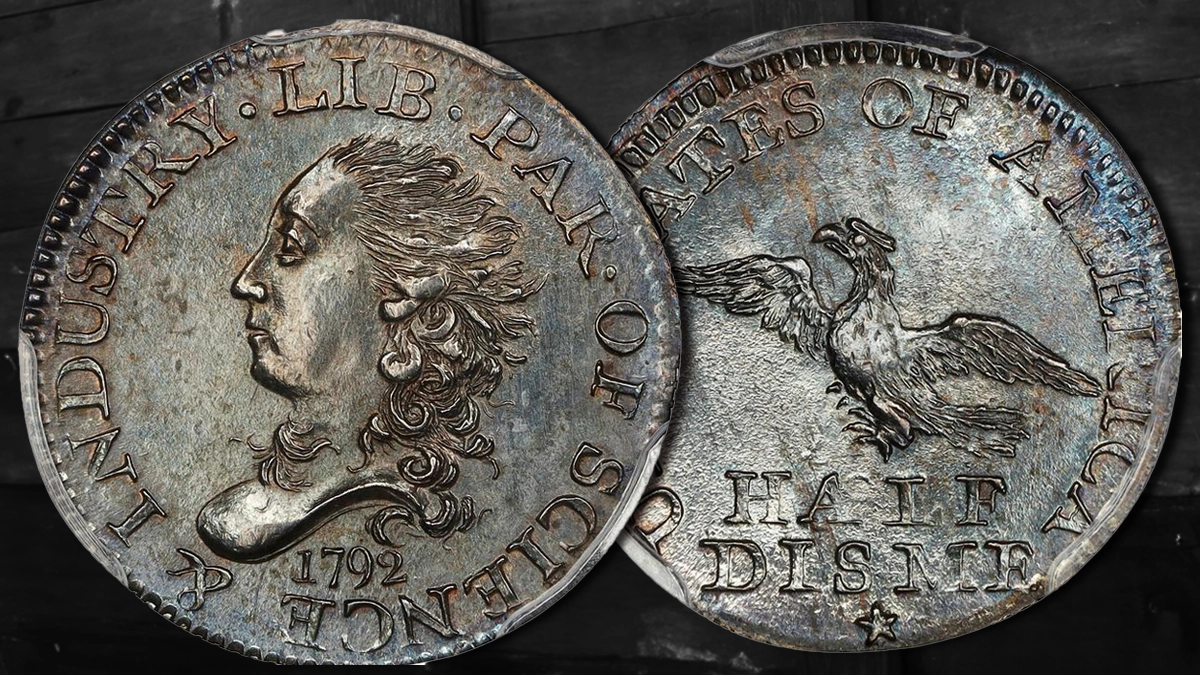
Historical evidence shows that Thomas Jefferson purchased the first 1,500 pieces. He then reportedly spent them during his journey home to Monticello.
That discovery transformed the coin from a rare collectible into a remarkable piece of early American history.
Stories like this illustrate why books matter. Auction data and population reports cannot replace the historical insights found in serious numismatic research.
Digital Tools vs. Numismatic Books
Many young collectors grew up in a digital world. Today, they can access population reports, auction records, and price guides on their smartphones within seconds.
Those tools certainly help collectors determine whether a coin represents a fair deal.
However, digital research often misses the deeper narrative behind rare coins.
Rare coins carry extraordinary historical stories. Books allow collectors to explore those stories in depth.
Fortunately, modern collectors enjoy an incredible range of numismatic literature. Hundreds of specialized books have appeared in recent decades.
Publishers such as Whitman alone have released hundreds of titles over the past two decades, with many more planned for future release.
Building a Personal Numismatic Library

Over the past 40 years, I have built a numismatic library containing hundreds, possibly thousands, of titles.
My policy has always remained simple. I try to obtain a copy of nearly every U.S. numismatic book published.
Professional numismatists must stay informed. Missing the right reference book can mean missing an important opportunity.
In fact, one book can save, or make, you thousands of dollars when used correctly.
Of course, most collectors cannot purchase every book available. The cost would add up quickly. In addition, many references focus on specialized areas.
Instead, collectors should build a library that matches their collecting interests.
A Morgan Dollar collector needs very different references than a collector who studies ancient coins. Choosing the right books makes all the difference.
How to Start Your Numismatic Library
Most collectors begin with a classic reference:
A Guide Book of United States Coins, widely known as the Red Book.
Collectors often call the Red Book the “numismatic bible.” The nickname fits well. The book provides a remarkable amount of information for both beginners and experienced collectors.
 The Red Book serves as the standard reference for U.S. coin mintage figures, which Whitman verifies carefully.
Collectors have relied on the Red Book since 1946. Today it ranks among the best-selling numismatic reference books of all time.
For several years, I have served as the Senior Editor. Our team works hard to maintain accurate information and reliable research.
The 2027 edition promises to be exceptional. Whitman plans to ship the new edition in late spring.
Another Recommended Title
Another book that I recommend to both beginners and advanced collectors is:
100 Greatest United States Coins
The book explains why certain coins achieved legendary status.
Interestingly, rarity and condition rarely tell the full story. Instead, most famous coins earned their reputation because of the remarkable events connected to them.
Understanding those stories enriches the entire collecting experience.
Staying Current in Numismatics
The numismatic market constantly evolves. Therefore, collectors must stay informed about current developments.
Several publications help collectors keep up with the hobby. If you are reading this article, then you already know about CoinWeek and the resources available on this website.
However other physical and online resources are available such as:
- Greysheet and other CDN numismatic publications
- Coin World
- Numismatic News
Collectors should also consider joining the American Numismatic Association (ANA).
Membership includes a monthly copy of The Numismatist, the organization’s flagship publication. The magazine has appeared continuously for more than 125 years.
ANA members can also access past issues at the ANA’s website.
In addition, the ANA maintains the largest lending numismatic library in the world for its members.
Recommended Numismatic Books by Specialty
The following references represent books that I consult frequently. This list cannot include every great numismatic book ever published. However, these titles provide an excellent starting point for collectors.
Collectors should also consult specialists within their chosen field for additional recommendations.
Colonial Coinage
- A Guide Book of United States Coins, R.S. Yeoman
- The Early Coins of America, Sylvester Crosby
- Walter Breen’s Complete Encyclopedia of U.S. and Colonial Coins, Walter Breen
Early Copper Coins
- American Half Cents, R.S. Yeoman
- Penny Whimsy, William H. Sheldon
- The Cent Book 1816-1839, John D. Wright
- United States Large Cents 1793-1814, William C. Noyes
- United States Large Cents 1816-1839, William C. Noyes
- The Die Varieties of United States Large Cents 1840-1857, John Grellman
- United States Copper Cents 1816-1857, Howard R. Newcomb
Small Cents
- Flying Eagle and Indian Cents, Richard Snow
- The Complete Guide to Lincoln Cents, David W. Lange
- A Guide Book of Lincoln Cents, Q. David Bowers
- The Authoritative Reference on Lincoln Cents, Kevin Flynn and John Wexler
Two-Cent and Three-Cent Coins
- Getting Your Two Cents Worth, Kevin Flynn
- The Authoritative Reference on Three Cent Nickels, Kevin Flynn
Nickels
- The Complete Guide to Buffalo Nickels, David W. Lange
- Million Dollar Nickels: Mysteries of the 1913 Liberty Head Nickels Revealed, Paul Montgomery, Mark Borckardt, Ray Knight
- A Guide Book of Shield & Liberty Head Nickels, Q. David Bowers
Bust Coinage
- Early Half Dollar Die Varieties 1794-1836, Al Overton
- The Ultimate Guide to Attributing Bust Half Dollars, Glenn R. Peterson
- Silver Dollars and Trade Dollars of the United States, Q. David Bowers
- The United States Early Dollars 1794-1803, Jules Reiver
Liberty Seated Coinage
- The United States Half Dimes, D.W. Valentine
- Encyclopedia of United States Liberty Seated Dimes 1837-1891, Kamal Ahwash
- The Complete Guide to Liberty Seated Dimes, Brian Greer
- The Complete Guide to Liberty Seated Half Dimes, Al Blythe
- Comprehensive Encyclopedia of United States Liberty Seated Quarters, Larry Briggs
- The Complete Guide to Liberty Seated Half Dollars, Randy Wiley and Bill Bugert
Morgan Silver Dollars
- A Guide Book of Morgan Silver Dollars, Q. David Bowers
- The Top 100 Morgan Dollar Varieties, Dr. Michael Fey and Jeff Oxman
- Comprehensive Catalog and Encyclopedia of Morgan & Peace Silver Dollars, Leroy C. Van Allen and A. George Mallis
Gold Coins
- Encyclopedia of U.S. Gold Coins, Jeff Garrett and Ron Guth
- Gold Coins of the Dahlonega Mint 1838-1861, Douglas Winter
- Gold Coins of the Charlotte Mint 1838-1861, Douglas Winter
- Gold Coins of the New Orleans Mint 1839-1909, Douglas Winter
- Early U.S. Gold Coin Varieties: A Study of Die States 1795-1834 , John Dannreuther and Harry W. Bass Jr.
- Double Eagle Gold Coins, Q. David Bowers
- Illegal Tender: Gold, Greed and the Mystery of the Lost 1933 Double Eagle, David Tripp
Pattern Coins
- United States Pattern Coins, J. Hewitt Judd
- United States Gold Patterns, David Akers
Territorial Coinage
- Private Gold Coins and Patterns of the United States, Dr. Donald Kagin
Proof Coinage
- United States Proof Coins, John Dannreuther
Coin Grading
- The Official American Numismatic Association Grading Standards for United States Coins, Kenneth Bressett
- Collectors should also visit Whitman.com to explore the latest numismatic publications.
Knowledge Is the Collector’s Greatest Asset
A strong numismatic library remains one of the most valuable tools any collector can build.
Books provide historical context, technical knowledge, and market insight. They also reveal the fascinating stories behind America’s coinage.
For that reason, the advice still holds true today.
Buy the book before the coin.




Well, that article was a lot of information And where to find it. Even if someone has a perfect photographic memory, they would still have to read to implant the info into their memory.
Books will never die.
I have heard of the Half Disme before but had never seen a picture of one before. I still am confused about the value of the coin itself and for the spelling. Is it the first nickle or what
i wish had more money to sped on coin books
Really good coin information!
A good look at what is available to help make informed decisions.
I agree with the author. I have started a numismatic library with a dozen of books so far. You just can’t have enough information!
Always buy the book before the coin because knowledge is power !