


By Jeff Garrett for Numismatic Guaranty Company (NGC) ……
 Next year, in 2026, the United States Mint will issue a series of coins and medals to celebrate the Semiquincentennial of the United States. The original plan was for the U.S. Mint to replace all circulation coin designs for one year. That has been a moving target though, and some may just have a privy mark designating the event.
Last year, representatives from the Mint visited the Smithsonian’s National Numismatic Collection looking for inspiration for re-issuing some popular coin types and famous rarities. The 1804 Silver Dollar was one idea that was explored, along with the beautiful 1907 Saint-Gaudens High Relief Double Eagle. With the recent success of the 1794 Silver Dollar commemorative issues, these seem like great ideas.
Over the years, I have been asked dozens of times what coins a person new to collecting should consider buying. It is often a bullion buyer who has now discovered numismatics and is ready to get started. My advice is usually tailored to the individual’s collecting budget.
I also suggest several numismatic books to pique their interest and to educate them about the unique history and beauty that rare coins offer. My coffee table book 100 Greatest United States Coins is a great introduction for someone new to the hobby.
The Saint-Gaudens High Relief Double Eagle
If you can afford it, there is no better way to start your numismatic journey than by purchasing an original MCMVII (1907) Saint-Gaudens High Relief Double Eagle. These coins are a masterpiece of U.S. gold coinage and universally considered one of the most beautiful ever produced at the Mint. The coins also have an interesting history and are connected to one of the most popular presidents of all time.
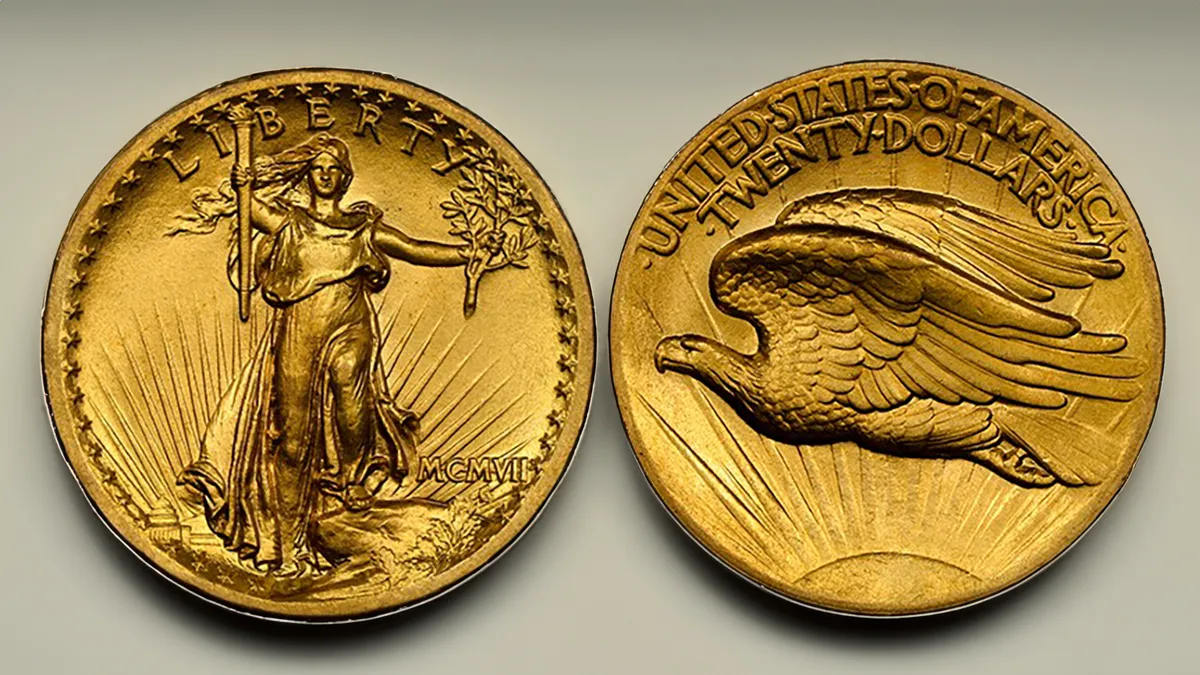
Theodore Roosevelt considered the nation’s coin designs, at the time, to be unattractive and without artistic merit, and he personally requested that Augustus Saint-Gaudens (a prominent U.S. sculptor of the era) design new $10 eagles and $20 double eagles. After Saint-Gaudens’ death in 1907, Mint Engraver Charles Barber was ordered to begin striking the High Relief Double Eagles. President Roosevelt even ordered: “Begin the new issue even if it takes you all day to strike one piece.”
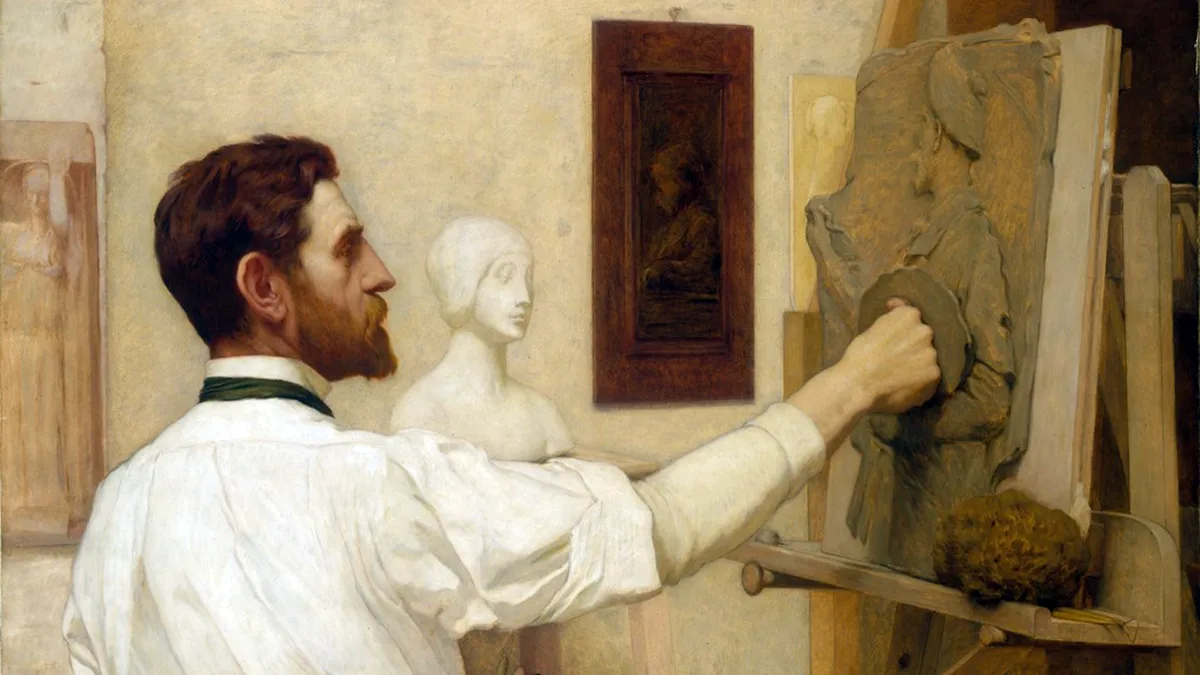
Although the high-relief design was fabulous from an artistic standpoint, it was impractical for commercial uses. Bankers complained that the coins would not stack properly, and the high-relief design required at least three to five blows from the minting press. The Roman numerals were also too confusing for the American public. Later, in 1907, the relief was dramatically lowered and the Roman numerals replaced with Arabic numerals.
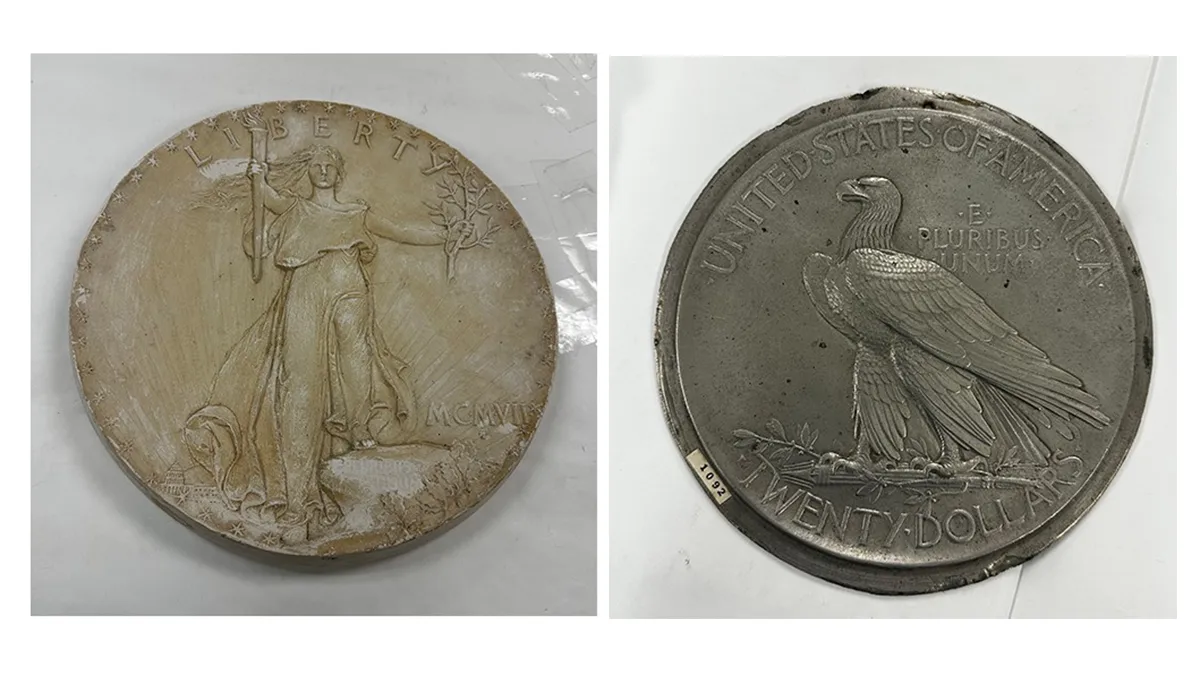
RIGHT: One of Augustus Saint-Gaudens’ designs for the Double Eagle that was not selected. Image: NGC.
The MCMVII (1907) High Relief Double Eagle is one of the most popular and desirable coins in the U.S. gold series. The High Relief is not an extremely rare coin, but for decades it has been one of the most sought-after. The beauty of the sculptural design elevates the issue to the level of fine art. If you can only buy one coin, the 1907 High Relief Double Eagle should top the list.
Collecting Saint-Gaudens’ Masterpiece
There are two distinct varieties of the MCMVII (1907) High Relief issue: Wire Rim and Flat Rim. These varieties were not created on purpose but were the result of different collars used in the minting process. Loose collars resulted in extra metal being forced between the collar and the dies, resulting in a thin wire rim. On some coins, the wire rim is seen on only one side. The Flat Rim coins are considered to be slightly scarcer, but the Wire Rim and Flat Rim varieties are valued about equally in today’s markets.
The U.S. Mint struck 11,250 MCMVII (1907) High Relief Double Eagles, and it seems that most were saved at the time of issue. The coin is somewhat expensive, but not rare. I have handled at least a few hundred examples over the course of my career. I usually have two or three in stock at all times.
Purchasing a MCMVII (1907) High Relief Double Eagle may depend on your budget. Circulated examples are encountered quite often, but many of these have problems such as rim mounting or damage. An attractive, problem-free MCMVII (1907) High Relief can be purchased for under $10,000 in About Uncirculated condition. Damaged coins can sometimes be found for less than $7,000.
In my opinion, if you are going to buy a MCMVII (1907) High Relief, the best value lies with coins in MS63 and MS64 condition. A beautiful NGC MS63 can be found for about $22,500 and coins graded NGC MS64 are around $35,000. These coins show up at auction frequently, often with multiple examples being represented in a single auction sale. Exercise patience and find one with superior luster and minimal marks for the grade. Wire edge examples often have rim issues due to the extra metal, which is soft and can be nicked easily.
The MCMVII (1907) High Relief is also known in the so-called Proof format. These appear to be special issues with a swirling matte finish, unlike the traditional Matte Proofs, which were struck from 1908 to 1915. At least 100 are known of this interesting issue. A 1907 High Relief graded NGC PF69 sold for $660,000 in September 2020.
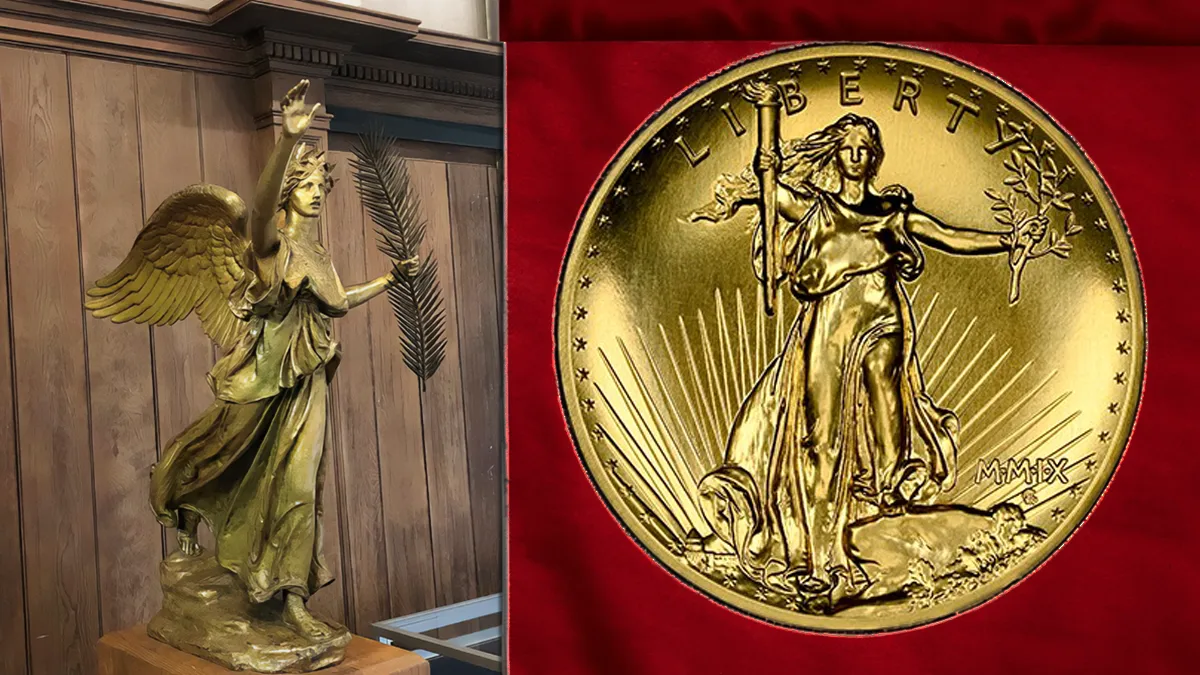
Plan B: If your budget precludes you from considering a MCMVII (1907) High Relief Double Eagle, you should consider the 2009 re-creation of the MCMVII (1907) Ultra High Relief Saint-Gaudens Double Eagle Piedfort. The year 1907 saw a great deal of experimentation at the U.S. Mint. President Roosevelt was insistent that sculptor Augustus Saint-Gaudens redesign the US coinage.
One of the experimental issues produced was a Double Eagle of the MCMVII (1907) design struck on a normal weight planchet, but with the diameter of an eagle. The resulting coin was a Piedfort, meaning it was much thicker than normal. This Ultra High Relief Double Eagle was almost double the thickness of a standard Double Eagle and was smaller than the regular High Relief Double Eagle. Only two examples are known, both of which are in the Smithsonian National Numismatic Collection.
It is interesting that a coin that was so elusive and mysterious was later mass produced. Some collectors welcomed the chance to own one, while others lamented the reproduction of such an iconic issue. Regardless, the issue gives collectors a chance to own one of the most beautiful coins ever struck for not much more than its bullion price. Examples can be found with little effort in MS69 or MS70 condition.
Plan C: Stay tuned to see how the U.S. Mint reimagines the 1907 High Relief Design in 2026. Hopefully they will stay true to the artistic hopes of Augustus Saint-Gaudens. The United States Mint has been charging healthy premiums recently for new releases. With gold over $3,000 per ounce, I would not be surprised to see the issue price above $4,000. It should also be pointed out that the 2026 version of the High Relief could cause a spike in demand for the 1907 production. This often happens with reissues.
The MCMVII (1907) High Relief Double Eagle is one of my all-time favorite numismatic issues. Not many coins combine history and art so effectively. Regardless of how long you have been collecting coins, you should consider owing an example of one of the above versions of the Saint-Gaudens masterpiece.
Suggested Reading
- 100 Greatest United States Coins, 6th Edition by Jeff Garrett
- Striking Change by Michael Moran
- Renaissance of American Coinage 1905-1908 by Roger Burdette
* * *
* * *







I do agree with the author that the upcoming 2026 reissues will be quite appealing and interesting. My first instinct however would be to purchase original pre-33 issues, particularly given current PM prices. I find the silver medals quite engaging and an excellent low cost option, and I have purchased them with great appreciation, since they are of course US Mint issues, and a direct representation of the culture and great history of the nation.
Actual documents and work by Roger Burdette indicate 12,367 MCMVII High Reliefs were struck.