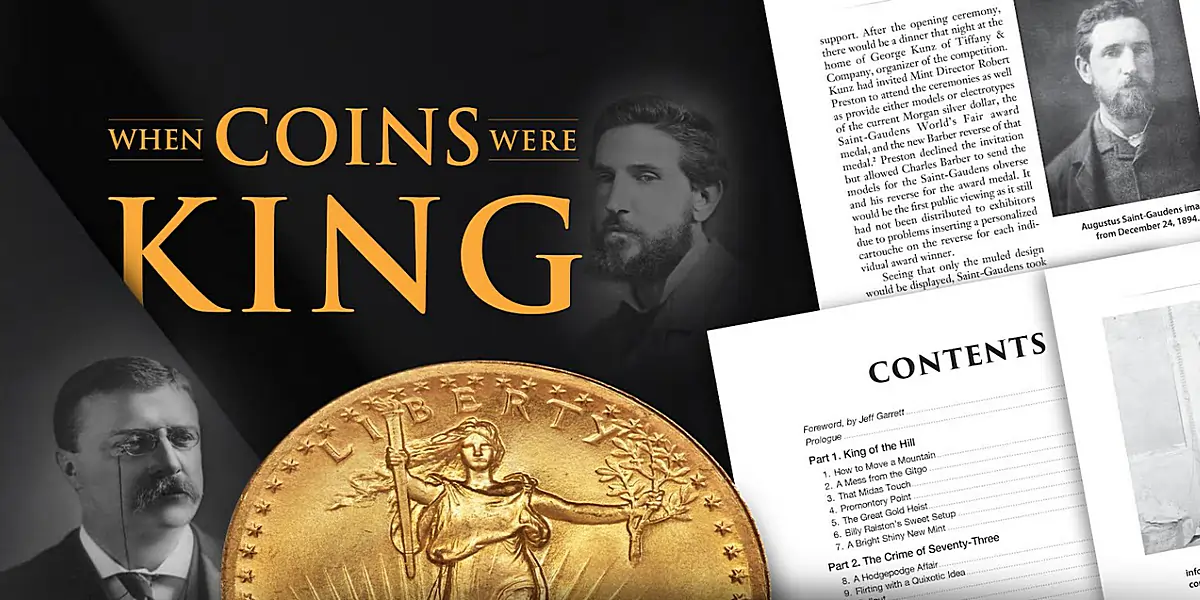
Whitman Brands™, a full-service provider of data, media, and product distribution for the numismatic and collectibles marketplace, has announced the release of When Coins Were King: The Coins, Power Struggles, and Personalities That Defined a Nation, a new book by award-winning numismatic historian Michael F. Moran.
The richly illustrated volume examines the role of gold and silver coinage in shaping American political, economic, and cultural identity during the late nineteenth and early twentieth centuries. According to the publisher, the book focuses on a period when circulating coins reflected national priorities, economic anxieties, and shifting political ambitions.
A Monetary Nation in Transition
In When Coins Were King, Moran traces the evolution of American coinage through the aftermath of the Civil War and into the era defined by industrial growth and monetary debate. Central to that story is the discovery of the Comstock Lode, the massive gold and silver deposit that rivaled the California Gold Rush in scale and impact.
Drawing on archival research, historical accounts, and hundreds of images, Moran documents how monetary policy, political maneuvering, and institutional failures influenced U.S. coinage. The narrative includes documented episodes of corruption at the San Francisco Mint and explores the ideological conflicts surrounding bimetallism, gold, and silver that shaped federal policy.
Rather than relying on technical economic analysis, the book emphasizes historical context and personal narratives, presenting monetary history through documented human decisions and political consequences.
The 1907 High Relief Double Eagle and Its Legacy
A central subject of the book, and the image featured on its cover, is the 1907 Saint-Gaudens High Relief double eagle. The coin is widely regarded by scholars and collectors as one of the most artistically significant coins ever struck by the United States.
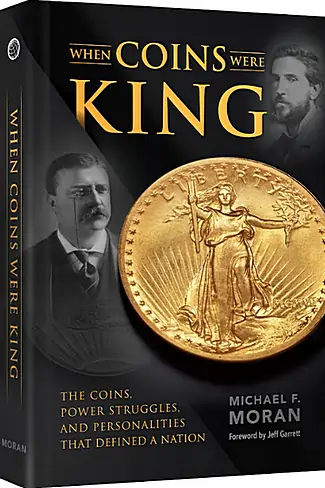 Moran examines the artistic and political circumstances surrounding its creation, describing it as a defining moment in American coinage history. The design’s enduring influence remains relevant today. In 2026, the U.S. Mint is scheduled to include the Saint-Gaudens double eagle design in its five-coin “Best of the Mint” series, according to publicly available information from the U.S. Mint.
For collectors considering the modern high-relief issue, When Coins Were King provides historical background on the original coin’s development, artistic challenges, and political significance. The book does not speculate on the performance or market impact of the 2026 release.
The Figures Who Shaped American Coinage
Throughout the book, Moran situates coinage within the broader political and cultural landscape of the era. Documented historical figures include President Theodore Roosevelt, sculptor Augustus Saint-Gaudens, populist leader William Jennings Bryan, and Senator John Sherman, among others.
Moran presents these individuals based on historical records, focusing on how their documented actions and philosophies influenced U.S. monetary policy and coin design. The result is a narrative history centered on verifiable events and personalities rather than economic theory alone.
Building on an Established Body of Research
When Coins Were King builds on Moran’s earlier published research, including 1849: The Philadelphia Mint Strikes Gold (coauthored with Jeff Garrett) and Striking Change: The Great Artistic Collaboration of Theodore Roosevelt and Augustus Saint-Gaudens. Both works received industry recognition for their research and narrative clarity.
Advance Praise from Numismatic and Historical Scholars
Jeff Garrett, numismatic researcher, Whitman author, co-editor of The Official Red Book, and Moran’s coauthor on 1849, offered the following assessment:
“Michael Moran has a rare talent for turning complex monetary history into a compelling human drama. When Coins Were King brilliantly captures the political intrigue, economic turmoil, and artistic vision that shaped America’s most iconic coins.”
Dr. Michael Patrick Cullinane, Walton Chair of Theodore Roosevelt Studies at Dickinson State University, commented:
“Moran has transformed economic history from charts and theories into a gripping narrative about power, personalities, and the gold and silver coins that drove it all.”
Todd Imhof, Partner and Executive Vice President at Heritage Auctions, added:
“Few know the inner workings of Augustus Saint-Gaudens as well as Moran. In When Coins Were King, Moran marshals all the fascinating details that led up to the design of America’s greatest coin while putting this effort within the context of its times.”
About the Author
Michael F. Moran has collected coins since childhood, when his grandfather introduced him to Indian Head cents. He earned degrees in civil engineering and industrial administration from Purdue University and later worked in corporate mergers and acquisitions before focusing full-time on numismatic research and writing.
Moran has received multiple industry honors, including the American Numismatic Association’s Heath Literary Award, the Professional Numismatists Guild’s Robert Friedberg Award, and the Numismatic Literary Guild’s award for Best U.S. Coin Book. He is currently serving his fourth term on the U.S. Mint’s Citizens Coinage Advisory Committee and played a leading role in securing Congressional authorization for the 2021 Morgan and Peace silver dollars.
In addition, Moran serves on the executive committee of the Theodore Roosevelt Association, where he holds the role of treasurer and chairs multiple committees.