


Why Medieval Coins Finally Get the Attention They Deserve
The field of medieval numismatics has reached a turning point. Collectors now look at medieval coins with fresh curiosity and growing respect. For decades, these pieces intimidated newcomers. The reasons felt obvious: countless mints, tangled political authorities, crude designs, scarce references, and inscriptions that resist easy reading. Yet those same challenges now attract collectors who want depth, mystery, and direct contact with history.
Medieval coins do not aim to please the eye first. Instead, they reward patience, study, and imagination. As collectors grow more historically minded, medieval coinage finally claims the recognition it has long deserved.
“Why Are Medieval Coins So Ugly?”
This question often comes first. Closely behind it comes another: “Why are they so hard to read?”
Medieval coins rarely qualify as artistic masterpieces. However, they compensate with historical power. These coins circulated during centuries dominated by warfare, dynastic ambition, and survival. Rulers focused on control and defense, not on refined monetary aesthetics. As a result, coinage reflected function rather than beauty.
Even so, medieval society clearly possessed artistic skill. The stained glass of twelfth-century cathedrals proves that artisans could create breathtaking works. However, they worked in service of the Church and God. Coinage occupied a much lower priority.
How Medieval Mints Really Worked
Most medieval mints operated as profit-driven enterprises. Contractors ran them. Temporary, often unskilled workers struck the coins. Under these conditions, refinement had little value.
Coins came out extremely thin. Designs often bled through from one side to the other. Many issues used billon, a copper alloy with minimal silver content. Over time, this metal darkened into dull gray or black. Authorities frequently recalled coins, melted them down, and struck new issues. Decoration rarely survived long enough to matter.
Weak central governments also struggled to enforce laws. As a result, clipping became common despite severe penalties. Furthermore, the specialized skill of engraving lifelike portraits had faded after the fall of the Roman Empire. That expertise would not return until the Renaissance.
Coins Without Names, Dates, or Meaningful Text
Early medieval coins often lack inscriptions entirely. They name no ruler. They show no mint, no date, and no denomination. Everything modern collectors expect simply does not appear.
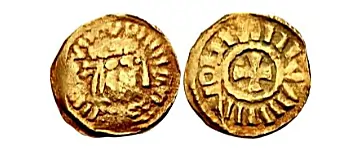
Some coins display “pseudo-inscriptions.” These lines and circles imitate writing but convey no literal meaning. They served as symbolic decoration rather than readable text. For modern collectors, these marks deepen the mystery instead of solving it.
Latin, Literacy, and the Problem of Reading Coins
When inscriptions do appear, they usually use Latin. The Church preserved Latin as its liturgical language. Literacy, however, remained limited. Clergy and officials could read. Moneyers and die engravers often could not.
As a result, engravers copied inscriptions without fully understanding them. Abbreviations saved space. Errors crept in easily. Misspellings, garbled letters, and odd ligatures appear frequently. Even common words like REX, meaning “king,” sometimes appear merged or distorted.
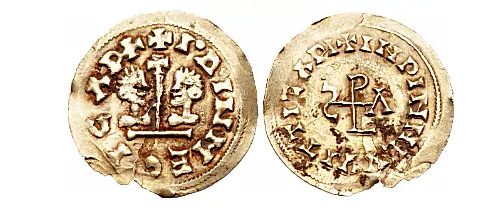
Titles such as REGINA, IMP, DUX, COMES, and EPS appear regularly. Personal names shift into Latinized forms. Henry becomes HENRICVS. Louis becomes LVDOVICVS. Richard turns into RICARDVS. Words like CIVITAS and MONETA also recur, pointing to cities and mints.
Why Medieval Letters Look So Rough
Ancient Greek and Roman engravers cut each letter carefully by hand. Their standards remained high. Medieval die makers worked differently. They punched letters into dies using simple tools. Precision suffered. Even well-preserved examples can challenge the eye.
Collectors quickly learn that reading medieval inscriptions demands experience. Letter shapes vary wildly. Familiar alphabets become unfamiliar puzzles.
When Coins Speak in Other Alphabets
Latin does not dominate medieval coinage entirely. Several non-Roman scripts appear across Europe and neighboring regions.

Runic inscriptions [above] appear on rare Anglo-Saxon issues. Inscriptions in the runic alphabet, or “futhark”[1] appear on rare Anglo-Saxon coins, including the rare silver penny of Beonna [2], king of East Anglia, who ruled c. 749-760. The king’s name is written as +BENNA+ in runes around a pellet on the obverse. The coins are the main historical evidence for this ruler’s existence:
Arabic script dominates Islamic-influenced territories. Armenian, Georgian, Cyrillic, and even Hebrew appear under specific political and cultural conditions.
In some cases, coins provide the only historical evidence that a ruler existed at all. A single name, struck in silver or gold, preserves a reign that written history barely recorded.
Bilingual Coins and Cultural Crossroads
Some medieval coins speak in two languages at once. These pieces reveal moments of transition, conquest, and coexistence. Latin inscriptions might share space with Arabic text. Each side follows its own calendar system, reflecting parallel worldviews within the same political reality.
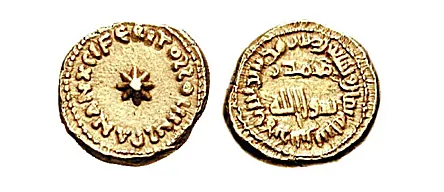
An example of a bilingual medieval coin is a gold solidus struck in Spain, c. 715-717:
The Latin inscription on the obverse is FERITOS SOLI IN SPAN ANXCI (Feritos Solidus in Spania Anno XCI, “Solidus made in Spain, Year 91.”).
The Arabic text on the reverse states in two lines across the center: Muhammad rasul Allah (“Muhammad is the messenger of Allah”), and around the margin “bismillah struck was this dinar in al-Andalus in the year eight and ninety”.

The Christian kingdom of Georgia in the Caucasus region developed its own alphabetic script. [3] A silver dirham of queen Rusudan, who reigned from 1223 to 1245 bears inscriptions in Georgian and Arabic:
On the obverse, around an image of Christ, with his Greek monogram IC XC (abbreviating Ἰησοῦς Χριστός, “Jesus Christ”) the Georgian inscription gives the date according to a local era corresponding to AD 1230: “In the name of God, struck in the year 450.”
On the reverse, around Georgian letters for RSN the inscription is “Queen of queens, glory of the world and faith, Rusudan, daughter of Tamar, champion of the Messiah” in Arabic.
These coins transform into historical documents. They record religious declarations, royal authority, and administrative practice in metal form.
Royal Titles, Faith, and Symbolism
Medieval coins rarely separate politics from faith. Religious phrases dominate inscriptions. Invocations of God appear constantly. Titles assert legitimacy through divine approval.
Imagery reinforces these messages. Christ, saints, angels, shields, and crosses dominate designs. Even when inscriptions vanish off the flan, symbols still speak.
Heraldry as a Key to Identification
From the twelfth century onward, coats of arms gained importance. Heraldry became essential for identification. Shields allowed collectors to recognize kingdoms, dynasties, and rulers even when text failed.
French fleurs-de-lis, English lions, and combined arms tell political stories at a glance. Claims to territory, alliances, and ambition appear directly on the coin’s surface.
Gothic Lettering and Late Medieval Style

CNG Auction 130, September 23, 2025, Lot: 832, realized: $4,500
By the fourteenth century, lettering evolved. Gothic uncials emerged, especially on prestigious gold issues. These coins display more confidence, stronger symbolism, and greater visual impact.
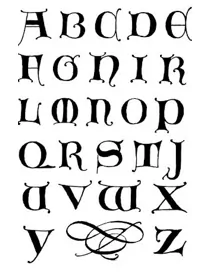
Angels, ships, royal arms, and bold inscriptions dominate. Lettering grows elaborate, yet meaning becomes clearer as literacy slowly expands.
How to Start Collecting Medieval Coins
Collectors benefit from strong reference works. A slim introductory booklet can open the door. Larger scholarly series provide long-term depth. One-volume introductions still offer the best entry point for beginners.
Most medieval coins appear through European dealers and auctions. Compared to ancient coins, they face fewer import restrictions in the United States. As interest grows, availability continues to improve.
Why Medieval Coins Matter Now
Medieval coins demand effort. They resist casual viewing. However, they reward collectors with unmatched historical intimacy. Each piece reflects a world of fractured authority, religious devotion, and cultural exchange.
Today’s collectors value that complexity. As a result, medieval coins finally step into the spotlight, not as ugly relics, but as powerful witnesses to a formative age.
Citations:
[1] https://en.wikipedia.org/wiki/Elder_Futhark
[2] https://en.wikipedia.org/wiki/Beonna_of_East_Anglia
[3] https://en.wikipedia.org/wiki/Georgian_scripts
References:
- Erslev, Kristian. Medieval Coins in the Christian J. Thomsen Collection. South Salem, NY (1992)
- Fox-Davies, A. C. A Complete Guide to Heraldry. London (1985)
- Friedenberg, Daniel. Jewish Minters and Medalists. Philadelphia (1976)
- Grierson, Philip. Coins of Medieval Europe. London (1991)
- Naismith, Rory. Making Money in the Early Middle Ages. Princeton (2023)
- Plant, Richard. Arabic Coins and How to Read Them London (2000)
- Spufford, Peter. Money and Its Uses in Medieval Europe. Cambridge (1988)
- Walker, Ralph. Reading Medieval European Coins. Fairfield, CT (2009)







I’ve never quite caught on to deciphering medieval coins.
have a few medieval coins in my collection, and I’ve had others that have moved on to other caretakers. I find them historically interesting.