


The fame and fortune associated with a successful gold heist have long captured the imagination. After all, gold represents wealth in its most concentrated and universal form. Throughout history, that allure has tempted criminals to test vaults, transport systems, and institutions designed to be impenetrable.
Sometimes, those gambles worked—at least for a while. More often, however, they ended in arrests, betrayals, or fortunes that vanished into the global bullion market.
Taken together, these cases reveal a consistent truth: gold rarely disappears by force alone. Instead, access, patience, and insider knowledge usually matter far more.
Here, ranked from #10 to #1 by the number of kilograms stolen, are the ten most interestong gold heists in modern history.
10. Croydon Airport Gold Robbery — United Kingdom (1935)
Gold Stolen: ~20 kg
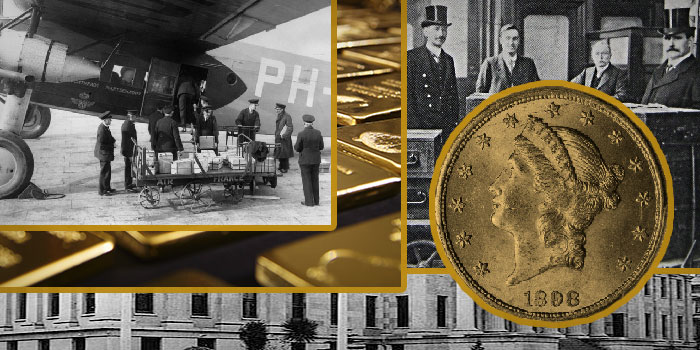
In March 1935, Croydon Aerodrome stood as Britain’s primary international airport. Despite handling valuable cargo for Imperial Airways, the facility relied on surprisingly minimal security. Typically, only one guard held the key to the secure cargo room. That single point of failure proved decisive.

Although police charged three suspects, only one man received a conviction and a seven-year sentence. The others walked free after a key witness altered testimony. The gold itself was never recovered.
Ultimately, the Croydon robbery exposed early weaknesses in aviation cargo security and set a precedent for later airport-based bullion crimes.
9. Coral Gables Gold Heist — United States (2012)
Gold Stolen: ~45 kg
On October 12, 2012, George Villegas left his Coral Gables apartment transporting raw gold nuggets for a Bolivian mining company. Packed into rolling suitcases, the gold weighed more than 45 kilograms and carried a value exceeding $2.8 million.

Authorities later captured Valdez near the Guatemala–Belize border. Tragically, Villegas died of a heart attack before trial. Even so, prosecutors secured a conviction, and Valdez received a ten-year prison sentence in 2017.
The case highlights a recurring vulnerability: raw gold transported outside armored systems remains especially exposed.
8. Perth Mint Swindle — Australia (1982)
Gold Stolen: ~68 kg
In June 1982, the Perth Mint released 49 gold bars weighing 68 kilograms after accepting stolen checks presented as legitimate payment. Once the bullion left mint custody, it vanished.

The mystery deepened in 1989 when 55 kilograms of gold nuggets appeared outside a Perth television station with a note claiming the brothers’ innocence. Despite renewed investigations, the stolen bars have never resurfaced.
Today, the Perth Mint Swindle remains one of Australia’s most controversial and unresolved gold crimes.
7. Singapore Brink’s Robbery — Singapore (2012)
Gold Stolen: ~70 kg
In July 2012, during a period of near-record gold prices, 70 one-kilogram gold bars disappeared from Brink’s Singapore.
Brink’s discovered the loss quickly and alerted authorities. Within twelve hours, police arrested one suspect at Singapore’s airport as he attempted to leave the country. Prosecutors later charged Teo Wen Wei with aiding and abetting the theft.
Although the arrest came swiftly, public documentation remains limited. Authorities never fully disclosed whether all of the gold was recovered. Even so, the case illustrates how quickly bullion thefts can unravel when transport controls fail.
6. The Great Gold Robbery — United Kingdom / France (1855)
Gold Stolen: ~91 kg
In May 1855, criminals executed one of history’s most sophisticated transport thefts. Targeting a gold shipment traveling by rail from London to Paris, the thieves used duplicate keys and insider access to railway safes.
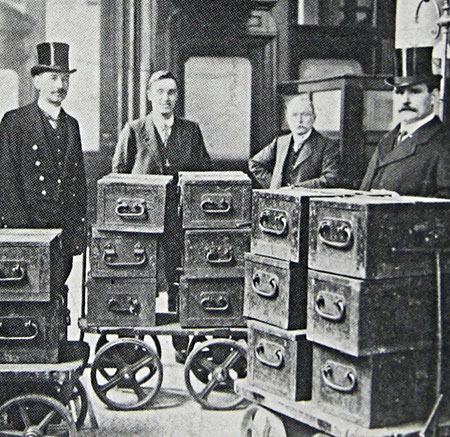
A lengthy investigation eventually exposed a network of railway workers and criminal planners. Betrayal followed, leading to arrests, prison sentences, and transportation. The crime permanently reshaped European transport security and inspired generations of heist lore.
5. Philadelphia Mint Gold Bar Robbery — United States (1893)
Gold Stolen: ~183 kg
Long before tunnels and forged documents, America’s greatest gold theft unfolded quietly from within.
Between 1883 and 1893, Henry S. Cochran worked at the Philadelphia Mint and exploited small flaws in vault construction and oversight. Using a bent wire, he dislodged gold bars from stacks behind an iron lattice door. By nudging loose hinges, he briefly opened the vault just long enough to remove each bar.

Over ten years, Cochran stole 183 kilograms of gold, worth millions today.
An audit eventually exposed the loss. Investigators recovered much of the stolen bullion from Cochran’s home and from ventilation shafts within the mint itself. Even so, the breach shocked federal officials and led to sweeping changes in U.S. Mint security protocols.
More than a century later, the Philadelphia Mint Gold Bar Robbery remains the largest confirmed insider gold theft in American history, proving that access—not force—often poses the greatest risk.
4. Lufthansa Cargo Gold Heist — United States (1997)
Gold Stolen: ~187 kg
By the late 1990s, JFK Airport had become a critical hub for international bullion shipments. In July 1997, criminals exploited that role with precision timing and insider knowledge, targeting a Lufthansa Cargo facility that routinely handled high-value freight.

Rather than relying on brute force, the thieves planned carefully. They understood the cargo schedule, the layout of the facility, and the brief security gaps during transfers. On the night of the heist, they subdued employees quickly and without gunfire. Within minutes, they loaded 187 kilograms of gold bars into waiting vehicles and disappeared.
The Lufthansa Cargo heist highlighted a recurring vulnerability in bullion transport: airports depend heavily on internal trust. When that trust fails, even layered security systems can collapse.
3. Toronto Pearson Airport Gold Heist — Canada (2023)
Gold Stolen: ~400+ kg
In April 2023, one of the most modern gold heists on record unfolded without gunfire, broken locks, or dramatic escapes. Instead, it relied on paperwork.
At Toronto Pearson International Airport, a shipment of gold arriving from Switzerland sat briefly inside an air cargo facility. During that narrow window, criminals presented forged but convincing documentation that appeared to authorize the release of the cargo. Cargo staff, following standard procedures, handed over the shipment.
The crime stunned the global bullion industry. Investigators later arrested multiple suspects, including individuals with airport access. Even so, much of the gold remains missing. Authorities believe portions were quickly melted or exported before law enforcement could intervene.
What makes the Toronto Pearson heist especially alarming is what it revealed about modern logistics. Physical security held firm. Digital systems worked as designed. The failure occurred at the intersection of trust and verification.
For collectors and investors, the lesson was sobering: even in an age of biometric access and digital tracking, gold can still vanish if procedural safeguards fail.
2. Banco Central de Colombia Gold Heist — Colombia (1994)
Gold Stolen: ~1,200 kg of Gold Bars
In 1994, criminals carried out a major bullion theft targeting the Banco de la República, Colombia’s central bank. The crime involved the removal of approximately 1.2 metric tons of gold bars from official reserves stored in a high-security vault.

Unlike smash-and-grab robberies, this theft relied heavily on insider access and institutional familiarity. Investigators later determined that employees with knowledge of vault procedures and transport schedules played a central role. Rather than triggering alarms, the perpetrators exploited trust and routine.
Authorities recovered only a portion of the stolen gold. Much of the bullion was believed to have been melted down and sold through illicit refining networks, a common tactic in large gold crimes. Several individuals were later convicted, though the full scope of the criminal network was never publicly disclosed.
The heist forced Colombia’s central bank to overhaul vault controls, auditing procedures, and internal oversight. It also reinforced a lesson repeated throughout gold-theft history: the greatest risk often comes from inside the system, not outside it.
1. Brink’s-Mat Gold Robbery — United Kingdom (1983)
Gold Stolen: ~3,000 kg
On November 26, 1983, armed robbers forced their way into a Brink’s-Mat warehouse near Heathrow Airport. Initially, the criminals expected to steal cash. Instead, they discovered something far more valuable: over three metric tons of gold bullion, stacked inside a secure vault.
The scale of the theft soon created a second challenge, how to make three tons of stolen gold disappear. Criminal networks melted much of the bullion and re-cast it into new forms, effectively laundering it back into the legitimate gold market. Only a fraction of the original gold was ever recovered.
Decades later, experts believe that some Brink’s-Mat gold still circulates undetected. Unlike stolen art or rare coins, melted bullion leaves no identifying trace. As a result, the Brink’s-Mat robbery remains uniquely unsettling, both for law enforcement and the precious metals industry.
The case triggered sweeping reforms in bullion storage and transport across the United Kingdom. However, its legacy endures as a stark reminder that once gold loses its original form, it becomes almost impossible to reclaim.
Final Thoughts
These gold heists reveal more than criminal ingenuity. They also highlight weaknesses in security, trust, and oversight, lessons that still resonate in today’s bullion markets. Whether driven by desperation or greed, each case underscores one undeniable truth: where gold goes, trouble often follows.
If you’re fascinated by the darker side of numismatic history, these stories offer a gripping reminder that gold’s value has always inspired risk, reward, and remarkable crimes.









very interesting article
SILVER Prices!!
Interesting stories!
Interesting. I had not heard of most of these heists.
I wonder where humankinds fascination with gold started. And is it really a rare mineral in the universe.
That’s a lot of gold!
What an interesting article! I had no idea about most of these and only vaguely remember the most recent heists. Thanks for a great article! I really enjoyed reading it.
I guess the crooks are smarter than the securty also the crooks probeble paid well for info
All these stories are so interesting!
Awesome that’s so coll
Lots of interesting stories
How much was the Gold heist by the US government in 1933?
The silver heist by the US government in 1965 was huge too.
It is a different kind of heist, yet somehow it is okay? Just saying.
The gold nuggets that showed up after the Perth Mint heist is especially puzzling. I’m sure the full story is fascinating.
Lots of gold
Wow it’s fascinating to learn about all of these heists! 3000 kg is a crazy amount of stolen gold! Very fun article to read, thanks!
It’s amazing that so much of the stolen gold was never recovered.
It seems that personal choice is the culprit fo many of these thefts. Can’t depend on individuals staying honest in the face of such economic windfall.
Very interesting. Thanks again for another great article !!
great list
Great article! It’s nice reading about gold heists in my golden years!
Gold is at a premium now, but so is the highest security ever!
I really enjoy reading these articles. They’re always entertaining and informative. Thanks.
Good reading, Where is all the gold. thank you
As interesting as these heists are, I don’t want to sensationalize them because people died in these heists.
I enjoy reading about history. Great article.
Amazing stories! It makes me think how much some of these hauls would be worth at today’s Gold prices. Lots of moola!
Hmmm. I guess I’ll need to dig my hole a little deeper in my back yard.
great read . thank you
Great article. Waiting for gold to fo gang busters like silver did last week.
At least two of these heists were made into movies: #6 turned into “The Great Train Robbery” starring Sean Connery, and #4 was a central part of “Goodfellas.” Interesting that criminals were prosecuted even though the gold was often not recovered.
I spent 27 years in Air logistics, through the 1980s – 1990s and into the 2000s and we handled quite a few high value shipments. We handled these shipments with very strict proceedures and with no security holes so we never had any problems. We only used trusted carriers with equal or superior security to ours. It was an exciting time, and very stressful too!