

By CoinWeek IQ
Paper money may look uniform and precise, but every note begins life as a physical object moving through massive, high-speed printing presses. Like coin striking, that process invites mechanical stress, misfeeds, folds, and ink failures. Even with exceptional quality control at the Bureau of Engraving and Printing (BEP), perfection remains impossible.
As a result, dramatic paper money errors escape into circulation every year, sometimes unnoticed for decades. Some scream for attention. Others whisper to those who know what to look for. Collectors prize them all for one reason: they represent genuine mistakes in a system designed to avoid them.
Here are five dramatic paper money errors you can still find in circulation, often hiding in plain sight.
Misalignment Error
A Misalignment Error occurs when an entire sheet of notes fails to seat correctly in the printing press. When that happens, the printed design shifts off-center, sometimes dramatically.
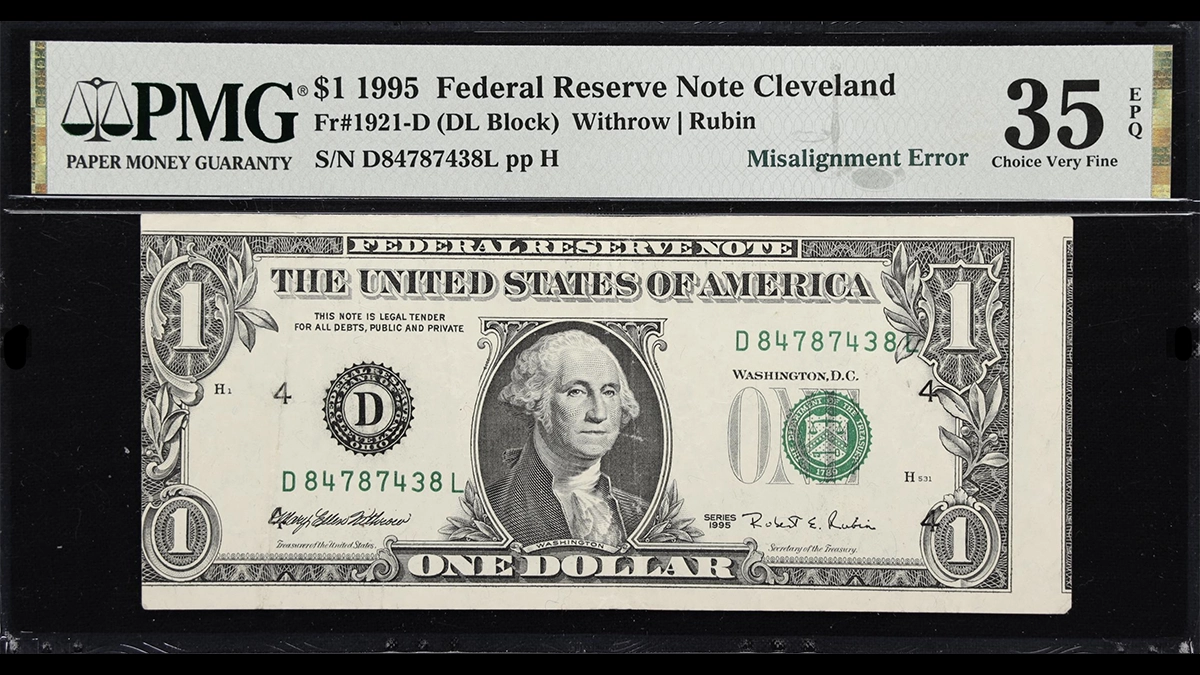
Instead of a perfectly framed portrait, part of the design disappears beyond the edge of the note. In extreme cases, the press prints part of a neighboring bill onto the wrong note, creating a surreal overlap of designs.
These errors range from subtle margin shifts to jaw-dropping off-center prints. They can affect the face, the back, or just one side, making every example unique.
Collector tip: The more design missing (or extra design visible), the stronger the premium.
Gutter Fold Error
Gutter Fold Errors appear far more often than most collectors realize. They happen when the paper wrinkles or folds before entering the press.
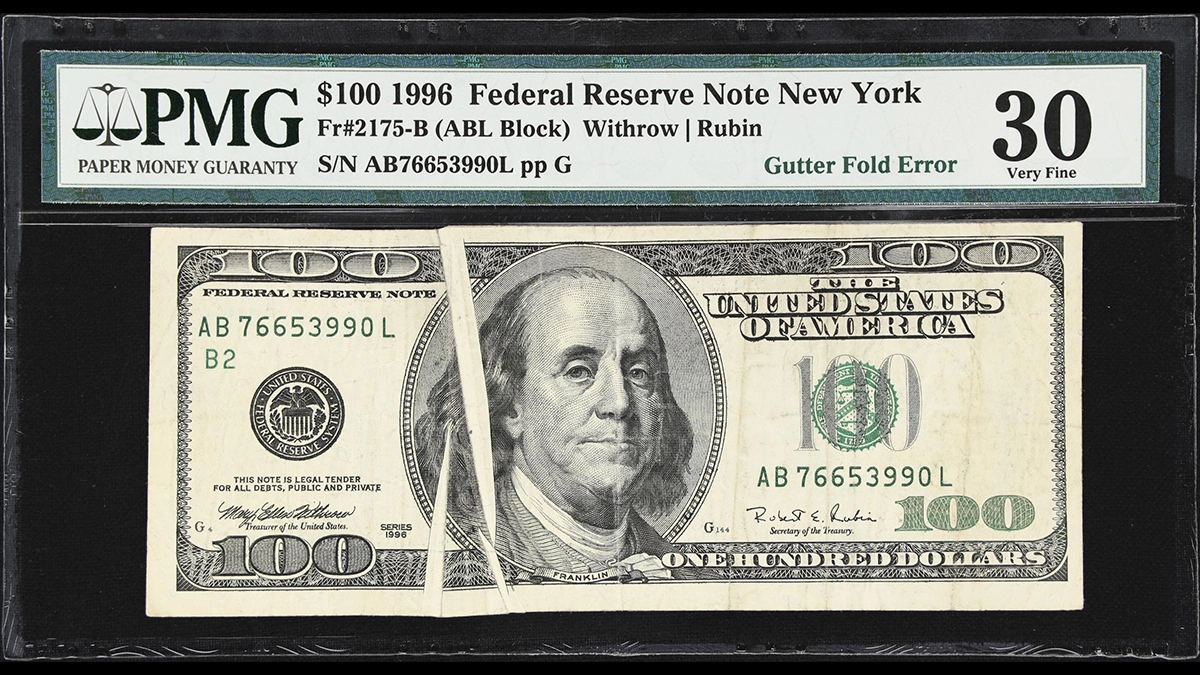
The result looks like a blank stripe running across the note, sometimes narrow, sometimes wide. Because the folded area never receives ink, it remains unprinted once the sheet unfolds.
Multiple folds do exist, but they remain rare. Most examples show a single clean “gutter” where the press skipped the paper entirely.
Collector tip: True gutter folds show no ink in the blank area, ever.
Printed Fold Error
Printed Fold Errors push the drama up a notch.
In this case, one side of the note prints normally. Then the sheet folds before the next printing pass. When the press strikes again, it prints over the fold, creating overlapping, distorted design elements once the note flattens.
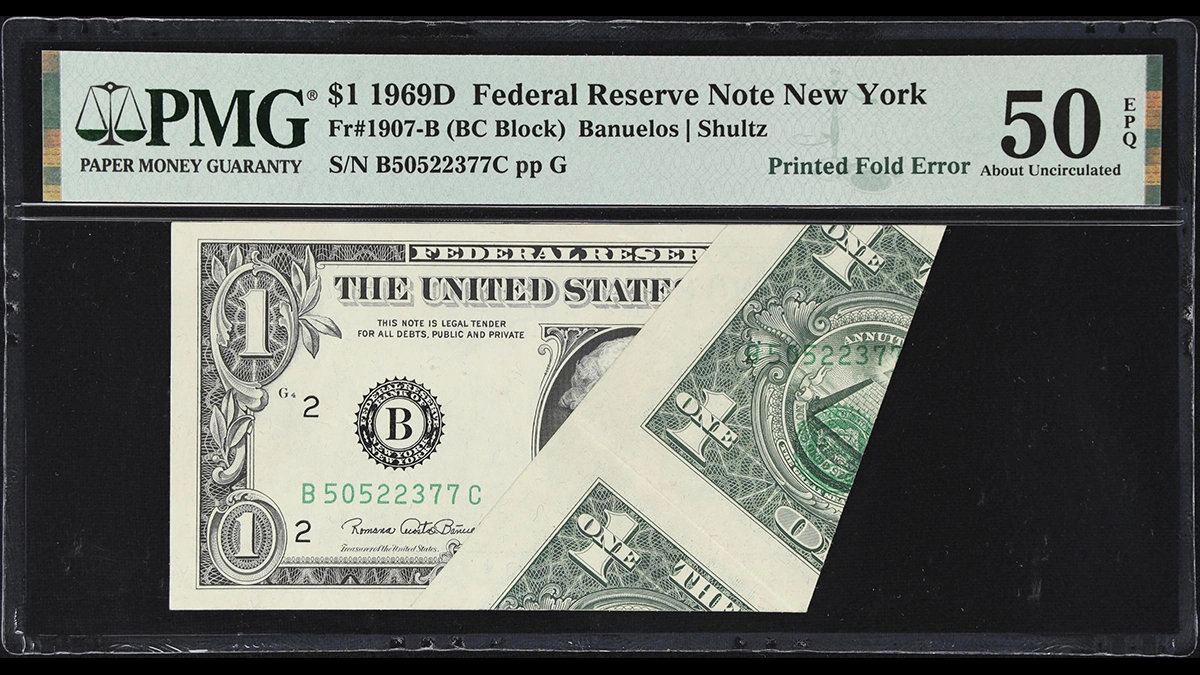
Collectors love these errors because you can see one side’s design printed onto the other, often at strange angles. The folded shape usually remains visible, adding another layer of visual impact.
Collector tip: Look for crisp printed detail on top of another design, not just blank paper.
Ink Error (Ink Smear)
Ink Errors result from pure mechanical failure. Either the ink jet releases too much ink or the wiper malfunctions and drags wet ink across the surface.
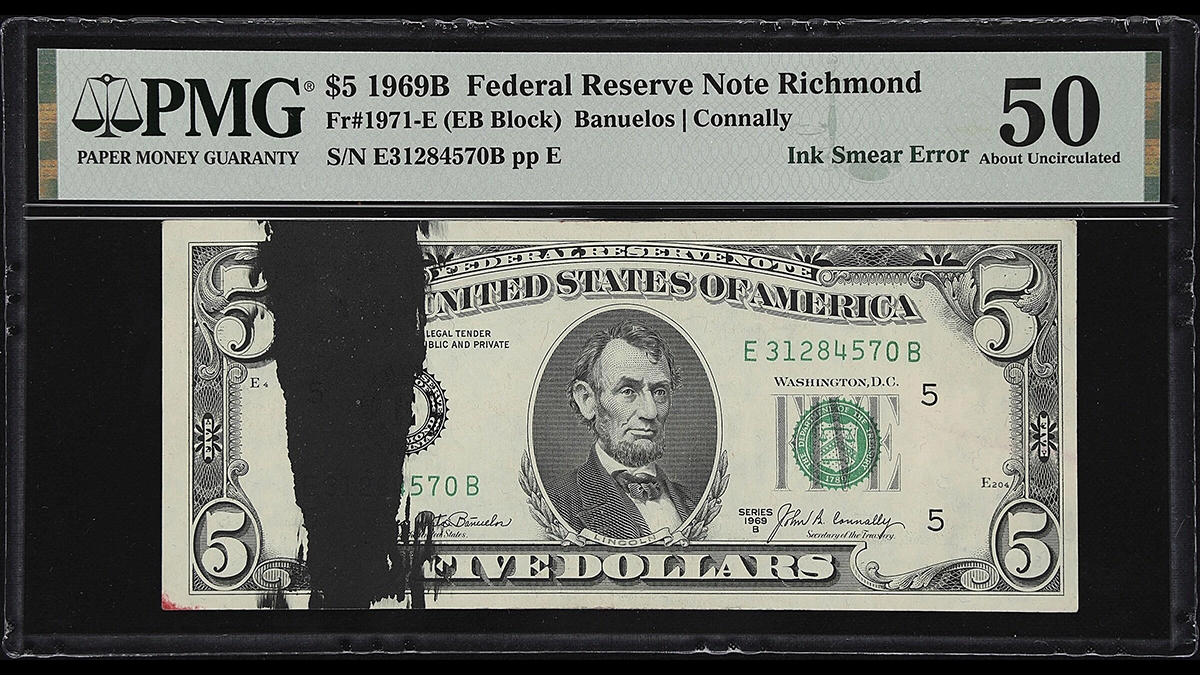
Unlike alignment or folding errors, ink smears don’t alter the structure of the note. Instead, they leave behind bold streaks, blobs, or pools of ink that interrupt the design.
Because each smear forms differently, no two ink errors look alike. Some barely intrude on the portrait. Others overwhelm entire sections of the note.
Collector tip: Random ink blobs differ from normal printing artifacts, size and irregularity matter.
Offset Printing Error
Offset Printing Errors occur when the impression roller contacts the inked plate without paper between them, a paper money equivalent of a coin die clash.
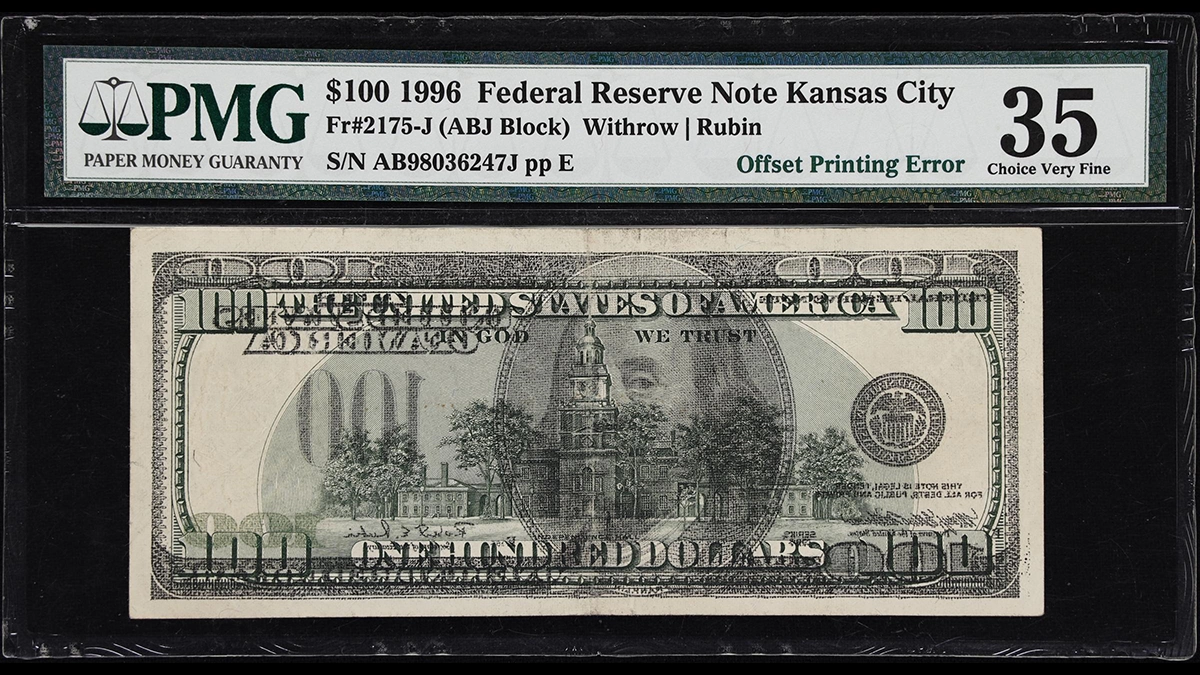
The roller picks up the inked design and transfers it onto the next sheet. Most examples appear as a mirror-image impression of the opposite side, floating faintly over the intended design.
These errors reward careful inspection. At first glance, they look ghostly or accidental. Under closer study, they reveal precise design elements in reverse.
Collector tip: Flip the note over, offset images often match details from the opposite side.
Why Collectors Love Paper Money Errors
Error notes tell stories of machinery, motion, and momentary failure inside one of the most controlled production environments on Earth. They prove that even modern money-making leaves room for chance.
Best of all, you don’t need a dealer or an auction catalog to find one. Many still circulate at face value, waiting for a sharp-eyed collector to rescue them.
So the next time you receive change, take a second look. That “ordinary” bill might be anything but.


I would love to own these error notes
I will keep an eye out. good article
These must be few and far between
I look for these all the time. Check every bill I have ever had. Never find anything. But I’ll keep looking, maybe someday!
Iv always wanted to know more about errors
Excellent article about paper money errors.
I used to see some of these printing errors back when I was bartending during college. (was more concerned with getting the perfect ‘Liar’s Poker’ bills!) Wish I’d thought about collecting them back then! Now I don’t have occasion to deal with cash other than my own shopping, but will definitely pay much closer attention to the cash I receive.
It`s not so easy for me anymore, being on a fixed income and direct deposits
good article
Very informative article on the errors of paper money.
I have never found one.
This is all very fascinating. You would think with modern technology errors would be a thing of yester year only.
Never Noticed an error like these
I need to pay closer attention! Interesting article!