


Original article By Nathan Elkins for American Numismatic Society (ANS)
posted April 27, 2022 and re-edited and formated by CoinWeek.
Why Roman Coin Identification Still Challenges Even Experts
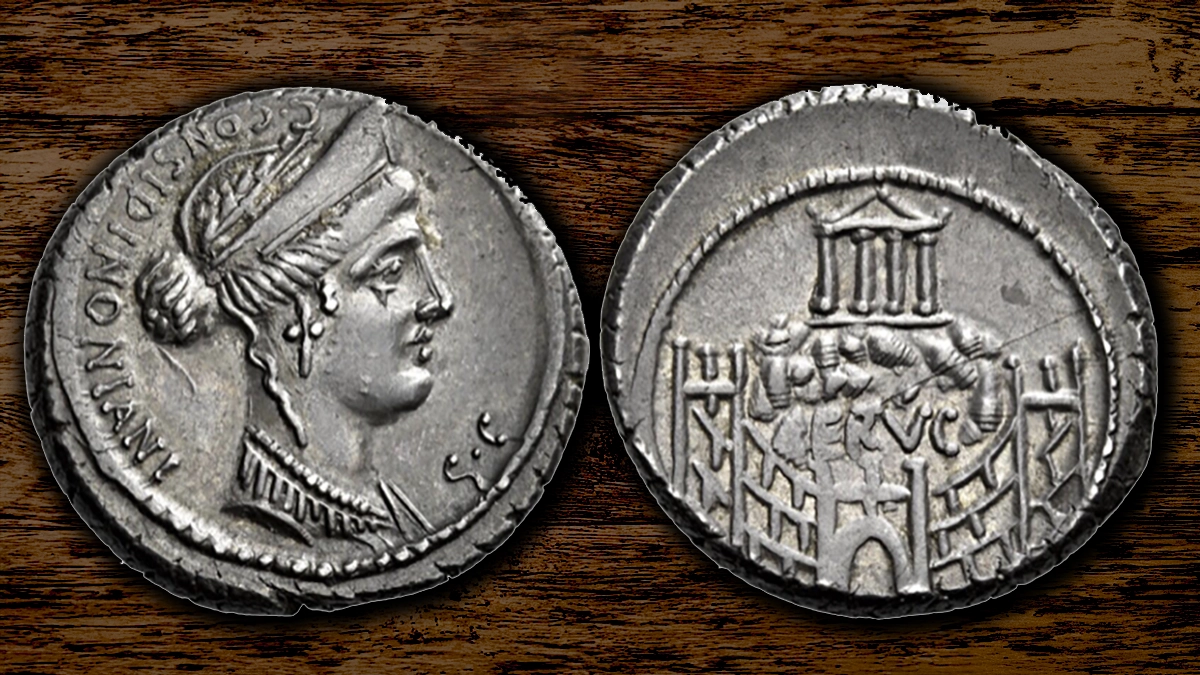
Roman coin identification forms the backbone of ancient numismatics. Yet, despite its importance, it remains one of the most complex skills to master. While books, databases, and classroom instruction help, none can replace experience. Numismatists learn by handling coins, comparing types, and spending countless hours refining their judgment.
As a result, Roman coin identification is not a skill one learns and finishes. Instead, it develops gradually over time. Even experienced scholars continue sharpening their abilities as new material, tools, and methods emerge.
The High Stakes of Coin Identification in the Field
For field numismatists, the difficulty increases significantly. Coins recovered from excavations rarely resemble the crisp, well-preserved examples found in auction catalogs. More often, they appear worn, corroded, or incomplete.
Moreover, archaeological sites frequently produce coins from many cultures and periods. During excavations in Israel, for example, assemblages have included Roman, Seleucid, Ptolemaic, Nabatean, Hasmonean, Herodian, Byzantine, Crusader, Islamic, and modern issues. Consequently, correct attribution becomes essential. In many cases, a single coin can establish the date of a layer and fundamentally alter the historical interpretation of a site.
How Roman Coins Were Identified Before Digital Tools
Not long ago, identifying Roman coins in the field required careful planning, and heavy luggage. Numismatists packed multiple volumes of Roman Imperial Coinage (RIC) and hoped they had chosen the right ones for the material likely to appear.

When on-site identification proved impossible, scholars photographed coins and completed the work later. Eventually, PDF scans of reference books and early online databases such as CoinArchives helped streamline the process. Even then, experience mattered most. Over time, numismatists learned to recognize recurring types instantly, especially among late Roman issues.
When Reverse Types Do the Heavy Lifting
In many cases, reverse imagery provides the most reliable clue. Late Roman coins often survive with little legible legend, yet their reverse types remain recognizable.
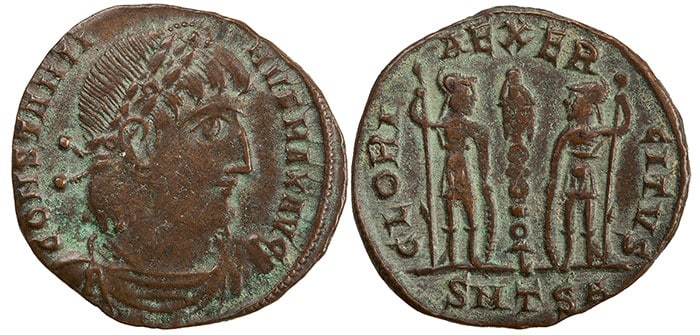
For example, coins showing two soldiers flanking a single standard date to the final years of Constantine I’s reign and the early rule of his sons. If Constantine appears on the obverse, the issue dates to 335–337 CE. If one of his sons appears as Augustus, the coin belongs to 337–340 CE. Thus, even fragmentary visual evidence can narrow a coin’s date range with surprising accuracy.
When Late Roman Bronzes Test the Limits of Perception
Nevertheless, identifying worn late Roman bronzes can feel subjective. Scholars often tilt coins under light, searching for faint outlines that may, or may not, be there.
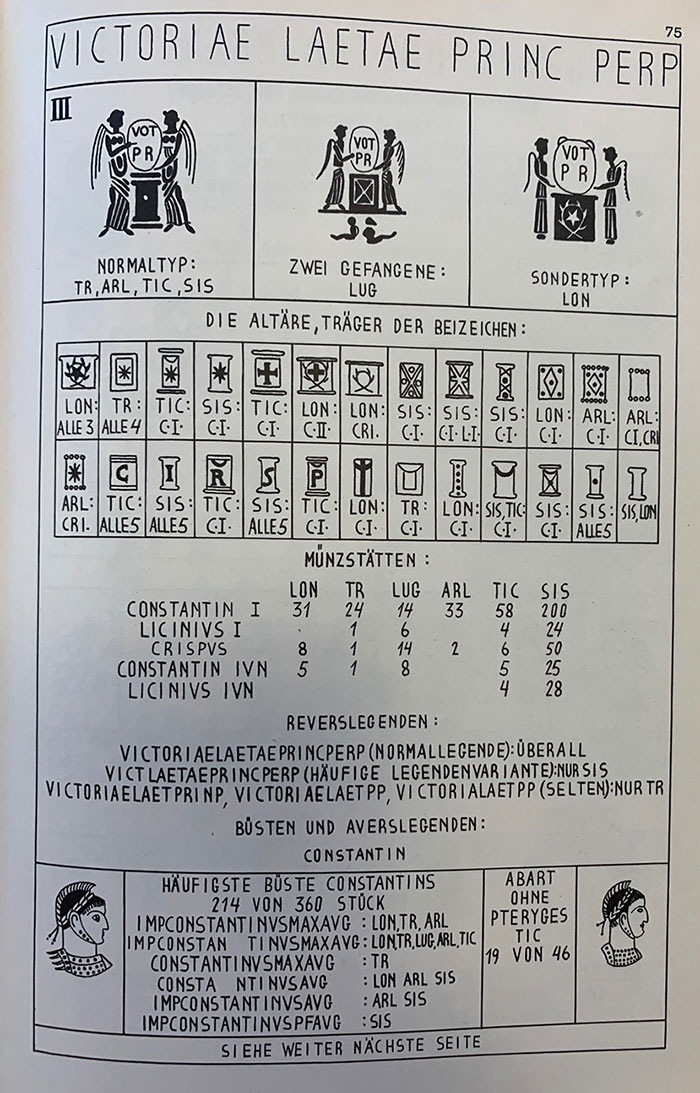
For decades, Guido Brück’s Die Spätrömische Kupferprägung has helped address this problem. By pairing simplified line drawings with rulers, mints, and legends, the book guides users toward plausible attributions. Even today, its approach remains instructive.
OCRE and the Digital Transformation of Roman Coin Identification
The launch of Online Coins of the Roman Empire (OCRE) marked a major turning point. Developed by the American Numismatic Society in collaboration with the Institute for the Study of the Ancient World at New York University, OCRE placed a vast Roman coin corpus online.
Instead of flipping through printed volumes, users can now search legends, browse keywords, and compare images in seconds. As a result, Roman coin identification has become faster, more accessible, and far more efficient.
The Most Underrated Tool in OCRE’s Arsenal
Despite its strengths, one OCRE feature remains surprisingly underused: the coin identification tool.
Recently, the tool demonstrated its power in an unexpected way. While browsing an online coin forum, a staff member at the ANS, without formal training in ancient numismatics, successfully identified a Roman coin using OCRE alone. This example underscores how intuitive and effective the tool has become.
How the OCRE Identification Tool Works
The identification tool allows users to enter visible portions of obverse and reverse legends, without spaces. Importantly, it also supports wildcard searches using an asterisk (*), making it ideal for incomplete or uncertain legends.
For instance:
- impconstantinvs* finds legends beginning with IMP CONSTANTINVS
- *constantinvs* locates legends containing CONSTANTINVS anywhere
- *const* returns results for Constantine I, Constantine II, and Constantius II
As a result, even minimal surviving text can yield useful matches.
Refining Results by Metal and Portrait
In addition, users can filter results by metal, which quickly eliminates many possibilities. The tool also allows searches by emperor and offers portrait galleries. This feature proves especially valuable for collectors and students still learning to recognize imperial likenesses.
Together, these options reduce guesswork and dramatically improve attribution accuracy.
What Comes Next for Roman Coin Identification Online
The ANS is actively exploring ways to expand the identification tool’s capabilities. Future enhancements may include keyword searches for reverse types, allowing users to enter terms such as Victory, branch, or patera.
If implemented, these features would further assist users working with heavily worn coins—especially those recovered in the field.
Why This Matters for Collectors and Researchers Today
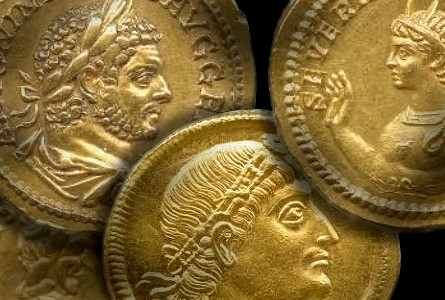
Roman coin identification continues to evolve. Digital tools like OCRE do not replace experience, but they amplify it. By combining traditional numismatic knowledge with powerful online resources, collectors and scholars can work faster, more accurately, and with greater confidence.
For CoinWeek readers, whether seasoned researchers or advanced collectors, OCRE represents one of the most important developments in Roman numismatics of the last generation.
Have Ideas to Improve OCRE? The ANS Wants to Hear from You
As OCRE grows, user feedback remains essential. Collectors, dealers, and scholars alike can help shape the future of Roman coin identification by sharing suggestions and insights.
In the meantime, OCRE stands as a reminder that even in a discipline rooted in ancient objects, innovation continues to drive discovery.






I have been using Wildwinds’ website (wildwinds.com) for many years as an aid in ancient coin identification. This will be an additional resource for me from now on!
At first glance, a coin may look like a simple piece of metal. But when you slow down and look closer, :
• Symbols that once represented empires
• Dates marking moments in history
• Portraits of leaders long gone
• Mint marks that whisper where the coin was born
It sharpens your eye, and rewards your curiosity.