


By Russell A. Augustin, AU Capital Management, LLC ……
The Colosseo Collection of Ancient Coins ……
The Gold Daric: Wealth, Power, and the First International Gold Coin
Through disciplined leadership and innovative governance, the Achaemenid kings built the largest empire the world had ever seen. At its height in the fifth century BCE, the empire stretched from the Indus Valley to the borders of Greece and from Central Asia to Egypt. It covered nearly three million square miles. Moreover, it ruled over an estimated 40% of the world’s population at the time.
The Persian Empire did not simply rise to power. It engineered it. That scale required vision. It also required gold.
A Revolutionary Model of Rule
Unlike many ancient conquerors, Persian rulers did not erase local traditions. Instead, they preserved them.
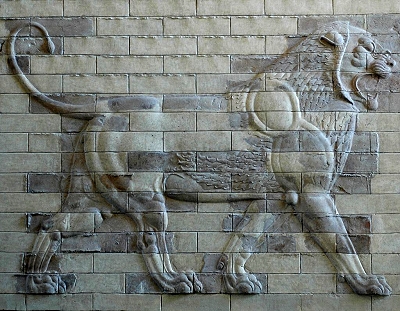 They allowed subject peoples to maintain their religions and customs. However, they required loyalty and taxation. In return, they provided protection, infrastructure, and stability. As a result, the empire achieved cohesion across diverse cultures and languages.
This administrative model influenced later powers. Both the Hellenistic kingdoms and the Roman Empire adopted similar governing principles. Therefore, the Persian system shaped the ancient world long after its political decline.
Yet none of this functioned without economic strength.
From Barter to Coinage
Originally, Persians relied on barter. However, that changed in the mid-sixth century BCE.
When Darius I and his predecessors absorbed the wealthy kingdom of Lydia, they inherited a powerful innovation: coinage. The Lydians, under Croesus, had pioneered precious metal coin production in the seventh and sixth centuries BCE.
Soon after, Persian leaders recognized the strategic value of standardized money.
At the same time, conflict intensified with the Greek city-states. Persian kings frequently hired Greek mercenaries. These soldiers demanded payment in coin. Consequently, the empire required reliable, consistent gold currency.
The Birth of the Gold Daric
Rather than copy the defeated Lydian types, Darius introduced a new coin.
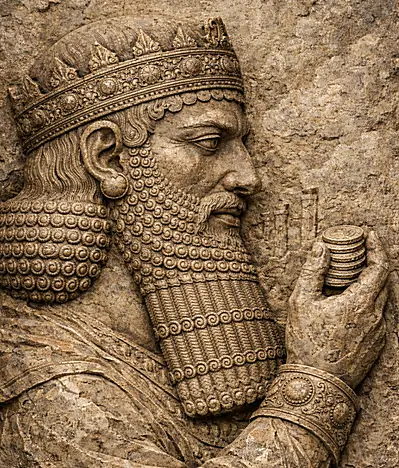
He transformed the Lydian gold stater into the daric, named after himself. The Greeks later called these coins toxotai, meaning “archers,” because of their distinctive design.
The daric became the first gold coin to achieve widespread international circulation. Furthermore, it stands as one of the most recognizable coins of antiquity. It also holds a unique distinction: it represents the earliest coin mentioned in the Old Testament.
For nearly 185 years, the core design remained unchanged. That continuity projected stability and royal authority. It also reflects the conservative nature of Achaemenid monetary policy.
A Design That Defined an Empire
The obverse depicts the Persian king in a “running-kneeling” stance. This pose conveys motion. In fact, it represents one of the earliest attempts in numismatic history to portray dynamic movement.
The king wears royal robes and a crown. He carries a bow and a spear. A quiver rests over his shoulder. The image projects strength, readiness, and divine authority.
The reverse features a simple oblong incuse punch.
Persian officials prioritized metal purity over artistic refinement. Darics typically contain 98–99% gold. That level of fineness ensured trust across international markets. However, the emphasis on purity often resulted in crude engraving.
Nevertheless, rare specimens display exceptional artistry. These coins reveal a brief artistic resurgence in die engraving and a more naturalistic depiction of the king.
The Gold Behind the Power
The Persian Empire controlled immense natural wealth.
It drew tribute from Egypt’s grain fields, Mesopotamia’s cities, Anatolia’s trade routes, and Central Asia’s mineral resources. Moreover, it commanded gold from Asia Minor and possibly from regions as far east as India.
Ancient sources describe royal treasuries overflowing with bullion. When Alexander the Great conquered Persia in 329 BCE, he seized vast reserves of precious metal. Classical historians estimate that he captured tens of thousands of talents in gold and silver—wealth accumulated over generations of imperial taxation and tribute.
That gold financed Alexander’s campaigns. It also reshaped the Mediterranean economy.
Even after the empire fell, the daric endured. Alexander and his successors continued striking the type until approximately 300 BCE. Eventually, his own gold stater replaced it fully.
The Coin: A Superb Daric of the Late Achaemenid Period
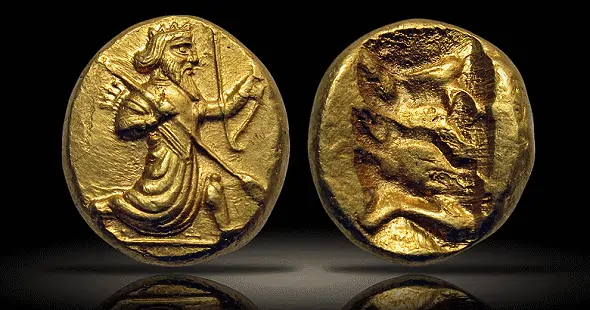
Obverse: Persian king moving right in running-kneeling stance. He wears a crown and flowing robes. A quiver rests over his shoulder. He holds a transverse spear ending in a ball in his right hand and a bow in his left.
Reverse: Oblong irregular incuse punch.
This specimen stands out. It shows sharp detail and high relief. The engraving appears elegant and refined. Unlike the majority of darics, this example reflects unusually fine artistry.
Why the Daric Still Matters
The Persian gold daric represents more than currency.
It symbolizes the administrative genius of the Achaemenid kings. It reflects the empire’s vast territorial reach. Moreover, it embodies one of the ancient world’s greatest accumulations of gold wealth.
Most importantly, it marks the birth of international gold coinage.
Few coins claim such historical impact. Fewer still connect directly to one of history’s largest and richest empires.
The daric does both.
View More Articles on Ancient Coins on CoinWeek






Absolutely the finest known by a country mile. I’ll surely be coming back to look at this again!
Such a great piece of history!
Ancient coins are my favorite. Good luck everybody!
I wish my budget would allow me to buy one of these!
With all the news of Iran, it is nice to be reminded of the scope of the Persian empire and their contribution towards a standardized monetary system that superseded the barter system of old.