


A Historic Run Meets Reality
Gold entered 2026 on a remarkable streak. However, that momentum has started to fade.
At the start of 2025, gold traded near $2,625 per ounce. By early 2026, it surged to $4,319. That marks a staggering 65% gain in just one year. For a traditionally stable safe-haven asset, that kind of move is extraordinary.
Yet, rapid gains often lead to sharp corrections.
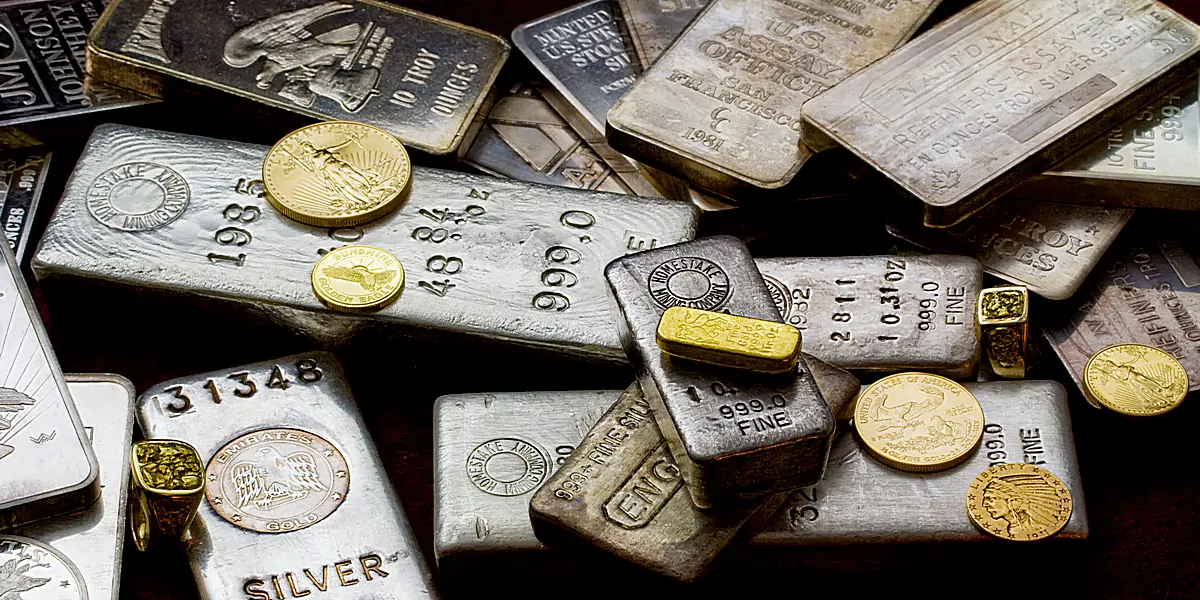
According to analysts at Heraeus, gold reached an extreme technical condition at the end of January. The daily Relative Strength Index (RSI) climbed to 93. That level signals that the market was heavily overbought.
As a result, a pullback was not only possible, it was expected.
Why Gold Isn’t Reacting to Global Tensions
Normally, geopolitical instability supports gold prices. However, that pattern has recently broken.
Even as tensions in the Middle East continue, gold has failed to attract strong buying interest. Instead, prices have retreated from recent highs.
This disconnect has surprised many investors.
However, the explanation may lie in positioning. After such a massive rally, traders appear to be locking in profits. At the same time, momentum has slowed.
In other words, the market is digesting its gains.
Fed Policy Shift Adds New Pressure
At the same time, the interest rate outlook has changed, and that matters.
The U.S. Federal Reserve held rates steady at its latest meeting. That decision matched expectations. However, the tone of the discussion raised eyebrows.
Some Fed officials suggested that rate hikes could still be on the table.
That possibility has shifted market expectations significantly. Previously, investors expected multiple rate cuts in 2026. Now, the most likely outcome is no rate cuts at all, followed by a single cut later in the year.
This shift creates a headwind for gold.
Higher interest rates tend to weigh on precious metals. They increase the opportunity cost of holding non-yielding assets like gold.
Still, there is another angle.
If higher energy prices slow economic growth, the Fed may eventually pivot toward easing. That scenario could support gold later. For now, however, uncertainty dominates.
Wild Price Swings Define the Current Market
Recent trading highlights just how volatile conditions have become.
Gold dropped to $4,099.12 in early trading before rebounding sharply. Shortly after the North American open, prices climbed back above $4,400.
Even with that recovery, gold still traded at $4,416.35, down 1.80% on the day.
These rapid moves reflect a market struggling to find direction.
The Hidden Force: Retail Investors and Market Amplification
While macro factors matter, another force has intensified the swings.
A recent report from the Bank for International Settlements (BIS) points to retail investor behavior as a key driver of volatility.
In the months leading up to the peak, retail investors poured money into gold and silver ETFs. Meanwhile, institutional investors reduced their exposure.
That imbalance created a fragile setup.
Once prices began to fall, several mechanisms accelerated the decline:
- Leveraged ETF liquidations
- Trend-following strategies from commodity trading advisors
- Margin-related selling pressures
Together, these factors amplified both the rally and the subsequent sell-off.
Silver’s Volatility May Be Even More Severe
Silver has followed a similar path, but with even sharper swings.
Prices dropped significantly last week before finding support just below $70 per ounce. That level now acts as a critical line.
If it breaks, analysts warn that silver could fall into a lower support range between $45 and $55 per ounce.
On Monday, silver traded between $61 and $69.725. Early in the North American session, prices remained relatively flat.
Spot silver last traded at $67.811, down 0.15% on the day.
What Comes Next for Precious Metals?
Investors now face a very different landscape.
Volatility has increased. Market expectations are shifting. And traditional relationships, such as gold rising during geopolitical stress, are no longer guaranteed.
According to Heraeus analysts, it may take time for the market to reset.
In the meantime, investors should prepare for continued turbulence.
The Bigger Picture: A Market in Transition
This moment may mark a turning point.
Gold’s explosive rally created enormous gains. However, it also introduced instability. Now, the market must rebalance.
At the same time, the role of retail investors has grown. Their influence can amplify both upside momentum and downside risk.
That dynamic is unlikely to fade.
For precious metals investors, the message is clear: The era of calm, steady price movement may be over, at least for now.







When Gold and Silver values took off like a Space X Rocket I knew it could only go just so far before gravity ( coming sense) would take hold and start pulling it back down. The slower the decline will affect what will become the new Norm.
Who’s writing these articles? Seems odd for Coinweek to be commentating on markets and not physical metal.