


By Tyler Rossi for CoinWeek …..
What to Look for in Pocket Change and While Coin Roll Hunting

Coin collectors often start with the simplest source of treasure: pocket change. Everyday circulation still produces surprising discoveries for anyone willing to look closely. While truly rare finds remain uncommon, several types of coins regularly appear in circulation and coin rolls.
Collectors who search carefully can still find attractive coins, discontinued designs, silver coinage, and even dramatic mint errors. Each category offers the potential for value and the thrill of discovery.
Below are the key types of coins worth pulling from circulation.
Look for High-Grade Coins with Eye Appeal

The first category includes high-grade coins and Proof coins with strong eye appeal.
Finding a true Mint State coin while coin roll hunting happens very rarely. However, collectors often encounter coins that come close. These pieces may show strong luster and minimal wear.
Two common situations produce these finds. First, a bank roll may come from an original mint wrapper filled with freshly struck coins. Second, someone may deposit a collection into circulation. Both scenarios happen more often than collectors might expect.
Proof coins also occasionally appear in circulation. These coins normally come from collector sets produced by the U.S. Mint. When they enter circulation, a family member often inherited them from a deceased relative and spent them without realizing their value.
This situation highlights an important lesson for collectors. Always keep clear and updated records of your collection so others understand its value.
Collectors should also act quickly when they spot high-grade or Proof coins in circulation. Circulation damage reduces their value rapidly. Even light wear can destroy the premium attached to Mint State or Proof condition.
Pull Coins with Discontinued Designs
Another important category includes coins with discontinued designs that still circulate today.
Most examples show heavy wear. As a result, many pieces sell for only $1 to $5. However, collectors sometimes find better-preserved examples worth much more.
The average lifespan of a circulating coin runs about 30 years. Still, older coins frequently reappear. Some pieces remain stored for decades before returning to circulation. When that happens, they may appear in surprisingly strong condition.
Collectors occasionally find earlier U.S. coin types while searching rolls or pocket change. These include:
- Buffalo nickels
- Shield nickels
- Mercury dimes
- Standing Liberty quarters
- Indian Head cents
Even circulated examples of these coins often sell for $15 to $35 or more.
Watch for Older Wheat Cents
Collectors should also pull pre-1930 Lincoln Wheat cents whenever they appear.
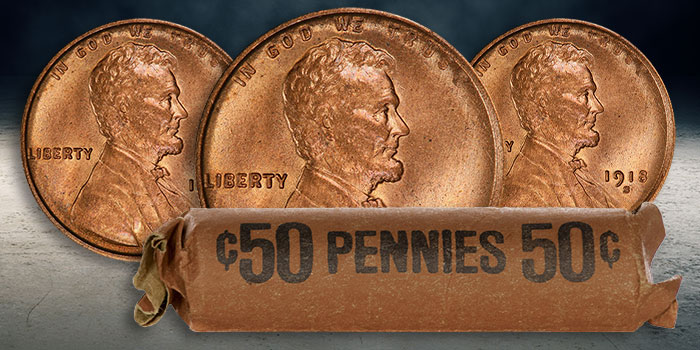
Many of these coins approach their 100th anniversary. As a result, fewer attractive examples remain in circulation.
Most pieces sell for about 25 to 50 cents at local coin shops. However, slightly better circulated examples can bring between $1 and $5.
Collectors should also set aside Lincoln cents dated 1955, because some may display the famous 1955 Doubled Die Obverse (DDO) error.
Additionally, keep any 1943 steel cents struck during World War II. These wartime coins remain popular with collectors.
Check for Pre-1964 Silver Coins
The next category includes all 90% silver U.S. coinage.

These coins include:
- Dimes
- Quarters
- Half dollars
The United States Mint produced them with 90% silver until 1964. Beginning in 1965, the Mint introduced copper-nickel clad coinage for circulation.
Collectors who search rolls often find more silver dimes than silver quarters. Rolls of half dollars can produce the most silver overall, but banks often carry very few half dollars today.
Even so, silver coins rarely appear in circulation today. Much of the remaining supply disappeared decades ago.
Collectors usually treat these coins as bullion rather than collectibles. For that reason, the hobby commonly calls them “junk silver.” Dealers buy and sell them based on their metal content. [See Note Below]
As of March 14, 2026, silver traded at $81.13 per ounce. At that price:
A 90% silver dime contains about $5.87 in silver
A 90% silver quarter contains about $14.67 in silver
A 90% silver half dollar contains about $29.34 in silver
Later 40% silver Kennedy half dollars (1965-1970) contain about $12.00 in silver.
NOTE: Most dealers used to buy junk silver for about 3% to 5% below melt value and sell it for 3% to 5% above melt value. However right now, many dealers are selling 90% silver below spot and some are only offering about 75% of spot to buy. The problem is volitility and the inability to lock in prices with refiners. But that is a different story.
A Quick Way to Identify Silver Coins
Collectors can save time by checking coin edges.
Modern clad coins show a visible copper core along the edge. By contrast, silver coins display a solid silver-colored edge with no copper stripe.
If a coin shows a completely silver edge, it likely contains silver or comes from a foreign mint.
Watch for War Nickels
Collectors should also check Jefferson nickels carefully.
If the mint mark appears above Monticello on the reverse, the coin belongs to the 1942-1945 “War Nickel” series. These coins contain 35% silver.
Look for Dramatic Error Coins
Error coins represent the final category worth searching for in pocket change.
Most mint errors carry little value. Minor off-center strikes or small planchet flaws often sell only for face value.
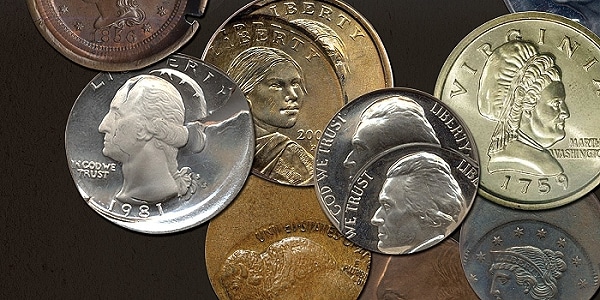
However, dramatic errors can command serious premiums.
Collectors should watch for:
- Off-metal strikes
- Large off-center strikes
- Lamination errors
- Die clashes
- Blank planchets
- Double-struck coins
Some famous examples bring extraordinary prices. The 1943 copper Lincoln cent and the 1965 silver dime struck in error have each sold for thousands of dollars.
These major errors appear rarely, but they still surface from time to time.
Coin roll hunters continue to find smaller errors as well. Examples include lamination errors, off-center strikes, die clashes, blank planchets, and double-struck coins. One collector even sold a Washington quarter with a roughly 75% delaminated obverse for more than $30.
Coin Roll Hunting Still Delivers the Thrill of Discovery
Searching pocket change and coin rolls rarely produces life-changing finds. Still, the hobby delivers both enjoyment and occasional profit.
Many collectors earn small amounts over time. Some hobbyists report earning several hundred dollars through years of searching circulation.
More importantly, the activity offers hours of entertainment and the excitement of discovery.
Whether you check the coins from a store purchase or search rolls from the bank, the next handful of change might contain something unexpected.
Yoast SEO Focus Keyword: coin roll hunting
SEO Title: Coin Roll Hunting: What Coins to Look for in Pocket Change
Meta Description: Learn what coins to look for while coin roll hunting, including silver coins, Wheat cents, error coins, and discontinued U.S. coin designs still found in circulation.
Sources
Potter, Ken, and Brian Allen. Strike It Rich with Pocket Change: Error Coins Bring Big Money. (2021)
* * *
Updated and reformated by CoinWeek – March 2026






Enjoyed all info, thanks
.
I have a 1947 nickel no mind mask it’s blackish silver
@Linda Crisp: 1947 nickels were struck in the traditional 75/25 cupronickel composition. A blackened surface is typically caused by environmental damage, heating, or other post-mint effects. You can of course always have the coin examined in person on the slim chance that you have an off-metal strike.
Not sure about my coin findings. But I have a few
Do. You know where one can go to check out coins, like get them appraised. I’ve been racking my brain and can’t find an online option.cif you do please share the I fo. Thank you.
I always check my change from the grocery store. I have picked up silver dimes – recently a 1956-D, and several nice nickels, mint state cents (50’s – 70’s), several proof dimes, quarters, and a Pres $ (from recent years). More than anything it is fun for a change with change.
I found a1996 D dime it looks like copper ,it isn’t in good shape ,is this possible
How can I get ahold of A book on old and rare coins like Mercury dimes ect
The “bible” is A Guide Book to United States Coins, the famous “red book”. There are also websites from numismatic agencies like PCGS etc. that provide a lot of information.
IMHO avoid relying on non-numismatic sources like general auction sites, YouTube, etc. There’s lots of good information but plenty of bad or even dishonest info too. Unless you’re already familiar with coins it can be tough to tell the difference.
(These are just my recommendations – I don’t get any compensation or other perks.)
The “bible” for collectors is A Guide Book of United States Coins, better known as The Red Book. There are also numismatic sites like CoinFacts, USACoinBook, and many others where you can find loads of information.
Two good sources would be the famous Red Book guide to United States Coins or one of the Krause guidebooks.
You could also visit a local coin show and ask presenters for their thoughts.
Where can I go to in Mass. To see if my coins and two dollars bills are worth.
Most 1976 and later $2 bills are only worth two bucks. If you have any older red-seal bills they may or may not be worth a premium but it depends on their condition, date, and what letter if any is next to the date.
Finding proof coins in bank rolls and circulationon is very common…kids and their friends after school search moms and grandparents chests.desks, closets for coins and jewerly…yes the cute 7 to14 year old steal…spend at 7/11. Sometimes r olls to the bank…best times for finding are in spring and always after Thanksgiving to christmas…after t day is 8 to 1 r a tio for finding…stupid kids will spend a pre 1964 proof or silver coin at face value…parents will never sell coins when apprised at fair market prices…
I once found a 1902 nickel in a roll. It’s pretty worn, but still neat that I found a 120 year old coin in circulation
I found a 2000 year old Roman coin. It looks like stone but a coin dealer told me what it was and said the Roman’s use to bury their money which explains why it looks stone.
Nice! Did you find it in a roll of some other coins from the bank?
I have a Lincoln penny and on it Lincoln has a big nose. Is it worth anything.
I have several of coins ad would ie to speck to someone about them and I have a 1969dallor I’ll and it looks to have a D right under the year
You can take your coins to a local coin show or find a dealer who’d be willing to look at them.
However there were no US 1 dollar (rather than “dallor”) coins minted in 1969. The highest denomination struck that year was a HALF dollar. Also the mint mark was above the date rather than under it. You may have a coin from another country. Turn the coin over and look at the denomination and country shown on it.
How much is the one dollar bill from 1928
I have a one cent 1925 and 1930
I found a double headed quarter in my change yesterday it’s a 1985 Denver on one side and a 1990 Philadelphia on the other side don’t think it’s a Novelty.But two different dates and mints how can that happen.
Your coin’s almost certainly a novelty piece called a magician’s coin. With modern computer-guided milling techniques the seam between the two sides can be almost undetectable.
You’re correct that it’s not possible for a coin to be cleanly struck at two different mints in two years.
You’re rich
@Jimmy: It’s 99.9999% likely to be a magician’s coin. Having different dates 5 years apart is effectively impossible.
It’s a magicians coin…a novelty…
I have found coins that might be rare but I don’t really know if they are or not because this is my first time.
Thank you for your information. I enjoy looking for old coins. Now that i read your article, i know a little more. Thank you !!!
Hello my name is Denise and I’m a coin collector. I have a few coins that I would like to sale but I need to know about the way I’m supposed to put them on ebay and how am I supposed to describe them. Is there a certain way to do this or what.
Pls let me know.
My brother passed away and he had a bicentennial quarter with a crazy double die reverse so bad it made you dizzy just to look at it, he always said he got lucky with that find and had it in a lock box and someone came and broke into his house after he had passed away and stole it, I can’t tell you how bad i miss my brother that coin ment so much to him.
I hear it a whopping $19,000???
I have a 1979D penny with a repunched mint mark on the reverse near the Lincoln memorial.Is that rare for a penny?
@Bruce: The mint mark on Lincoln cents is below the date on the _obverse_, not the reverse side: blank or P = Philadelphia, D = Denver, S = San Francisco. Without seeing your coin it’s impossible to say, but my suspicion is that the mark you’re seeing on the back is a tiny “FG”, the monogram of Frank Gasparro who designed the Memorial reverse.
I have a Lincoln Cent with the Memorial over Lincolns Bust, vertically (and on the reverse by itself. Is it Valuable?
I have a uncirculated 1964 d Kennedy half dollar… I’ve had it since 1964… it’s in mint condition,….how much is it worth….
Where can I buy a good book about coins world wide, as I have traveled the world over many years and have many old coins which could be worth something on the market
I have 8 rolls of 1958 penny, no mint mark.
Uncirlated
Probably worth a few dollars…
I have a 1969 s double die reverse penny I have a 1970s Penny double die I have a 1974 sweetheart I have a dying Roosevelt dime 1965 no mint mark I also have a 1978 Roosevelt died no mint mark and also have a I have a lot of coins that I need to get sold but little money right now trying to get on social security benefits pretty good money can help me out but surely appreciate it thank you and God bless
If the 69 shows extremely good doubling, it can fetch a great deal of money.
I’ve found the 1946 Wheat Penny
All you folks who are asking about what your coin is worth and how to sell them. Look on Your tube at Blue Ridge Silver hound videos or Couch Collectibles. They have taught me tons. I inherited part of my father’s collection and fund them helpful with all the above questions.
It’s silver coinage prior to 1965 because obviously 1964 quarters dimes and halves are silver. Everyone always writes this wrong
47 nickel blackish silver noint mark ?
I have found a 1984 S nickel in my change.
@Jane: San Francisco struck proofs but not circulation coins in 1984. Most likely you have a proof nickel that someone broke out of its original packaging. Unfortunately that destroyed its numismatic value as a proof, but it’s still worth holding onto as a conversation piece.
I have several bicentennial 1776 quarters rare penny
@Richard: The dates on bicentennial coins are double, 1776-1976. Huge numbers were struck in both 1975 and 1976, but all carried the same double date. Any that you find in change aren’t likely to be worth much more than face value.
Without knowing what and why you consider your penny to be rare, it’s not possible to make any evaluation.
I have a sealed set WW2 NICHEL’S P,D,S. 3 of each year. Worth anything?
@Al: More information’s needed. Are the nickels** uncirculated, or are they from circulation? If they’re circulated, have they been cleaned or plated? If they have little or no wear and haven’t been altered by cleaning, they could have extra collector value; otherwise they’re pretty much worth only their silver* value.
(*) Internet mythology notwithstanding, war nickels are the -only- US nickels that contain silver. The standard metal since 1866 has been a 75/25 cupronickel alloy.
(**) Rather than “nichel’s” :)
Always good to know as much as possible when it comes to collecting and reviewing
Good article. Reminded me of the time years ago that I found a 1916 half dollar in a bank roll. Don’t find pre-1964 coins very often now, but fun to look for more recent year coins with lower production
I found an Indian head penny while searching a roll from the bank with my granddaughter.
Still always check my pocket change for keepers
You never know where something cool will show up…
It will be interesting to see what the discontinuation of pennies does to their value over time. But surprisingly, I still find businesses giving pennies in change.
Found a 1909 VDB Lincoln cent, very good condition, in my childhood paper route collections. Sixty years later, still check change every time!
Very practical advice, encouraging to new collectors.
I do enjoy the hunt. I have $50 dedicated to change. I take it to the machine at the credit union then but $50 in whatever they may have. Usually get quarters or dollars. Best find was few weeks ago. Tgey said someone brought in Ike dollars. I got them, and the roll had one Peace dollar! Have found at leadt 2 dozen “S” mint presidential dollars (can’t really call some of them Proof state anymore). Always look for the “W” mint quarters from 2019 and 2020. Have assembled one complete set, and probably 17 or more duplicates of various ones. Actually some of my best finds come from thr rejects people leave in the reject slot of the coin counting machine. Have found lots, and I mean lots, of foreign coins. The occasional silver coin (i guess the weight is different) and steel cents (on the magnetic grill you dump the coins in.
When I was a kid got two rolls of uncirculated 1060-D small date Lincoln cents. Since I got two rolls at the same time I thought they were the more common variety. But I kept them anyway…fortunately.
A lot of good information listed here.
Good info for beginners or refresher for oldsters.
I love seeing what turns up in my pocket change sometimes :)
Where is the best place to get the Red Book?
https://www.wizardcoinsupply.com/red-book/
Love the different type and color of coin wrappers. I believe there is a demand for those variations.
Yes, I have been surprised by the amount of proofs I have found in bank rolls. Mostly ruined. :(
Interesting article. Now I’m looking through all my change every day!
I got started collection foreign coins while in the Navy. I love going through bags of mixed coins from the bank. Some will sell them to you and some won’t but it’s always great when they do.
Coin roll hunting can be both exciting and tedious. I personally love going through roll by roll because to me, it’s like treasure hunting!
The best advice I could give to anyone who is exploring this hobby, is to take the time to educate yourself by first, going through this website
(Coin week) . It is filled with so much great information! Over the years, this site has been a wonderful source of education for me!
I of course, love the weekly giveaways as well!
This is truly a great read!!!
had to switch to nickels roll hunting found 10 buffalo with read dates Great Find !!!
As an older guy, 74, I cringe when I think of all the 90% silver coins I spent without a thought in my early years.
And, yes, I check all my change today.
Handy guide for those wanting to learn about coin collecting.
Interesting article as usual
Reading this article reminded me again in how much I wished I could go back as a paperboy in the 60s and ALL THAT SILVER I collected as payment for newspapers.