


Why U.S. Gold Dollar Coins Offer a Smart Collecting Alternative
By Jeff Garrett for Numismatic Guaranty Company (NGC)
In recent weeks, the price of gold bullion has been on a rollercoaster. It presently exceeded $4,475 per ounce.
At the same time, global markets have struggled. Stocks and other assets have dropped sharply over the past 30 days. As a result, investors have moved toward safer assets. Historically, gold has filled that role for more than 2,000 years.
Naturally, long-time gold investors have seen their predictions come true. However, collectors now face a different question: how do you collect gold coins when bullion sits at $4,475?
Rising Gold Prices Hurt U.S. Coin Demand
High bullion prices have created a major challenge for collectors. In particular, demand for many U.S. gold coins has weakened.
For example, double eagles now trade very close to melt value, even in certified Mint State grades. Similarly, $5 half eagles and $10 eagles offer little premium over bullion.
Consequently, entry costs have surged. Most collectors cannot justify spending $4,500 or more for common-date coins. This shift has forced many hobbyists to rethink their strategy.
A More Affordable Option: U.S. Gold Dollars
Fortunately, collectors still have options. One of the best alternatives is the U.S. Gold Dollar series.
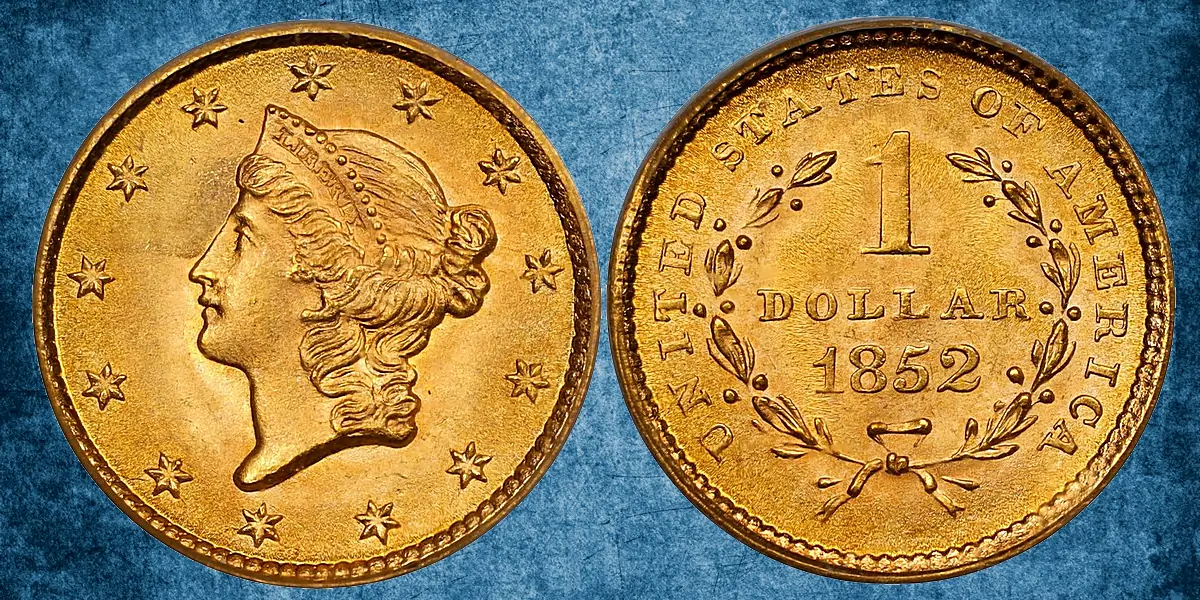
These coins, minted from 1849 to 1889, contain 0.04837 ounces of gold. At $4,500 gold, their melt value sits around $217. Even better, many common-date examples sell for about $350 in lower grades.
That lower entry point makes a huge difference. Instead of chasing large, bullion-heavy coins, collectors can build a meaningful set at a fraction of the cost.
In addition, the supply remains stable. Unlike larger gold coins, Gold Dollars do not appear in large quantities from overseas hoards. Therefore, populations should remain steady for the foreseeable future.
Strong Availability and Collectibility
Another key advantage involves affordability across the series. In fact, many dates trade for less than $500.
Historically, the Gold Dollar served as a workhorse denomination. The U.S. Mint produced large quantities from 1849 through 1862. However, mintages dropped during the Civil War. Later issues saw renewed production, although at varying levels.
As a result, collectors enjoy both availability and variety.
Three Distinct Types to Collect
Type One (1849–1854)
The U.S. Mint introduced the Gold Dollar in 1849 after the California Gold Rush. Chief Engraver James B. Longacre designed the coin.
The first version measured just 13 mm, making it extremely small. Today, collectors refer to this design as Type One.
Type Two (1854–1856)
Collectors quickly criticized the small size. In response, Longacre created a new design in 1854.

This version increased the diameter to 15 mm and introduced an Indian princess portrait. Today, collectors know this design as Type Two.
There is also a very interesting 1855-O Error Gold Dollar which is worth mentioning.
Type Three (1856–1889)
However, minting issues affected the Type Two design. Therefore, Longacre modified the coin again in 1856.
He lowered the relief and widened the portrait. This final version, known as Type Three, continued through 1889.
Ways to Build a Gold Dollar Collection
Collectors can approach this series in several ways.
First, beginners often purchase one example of each type. This strategy offers variety without excessive cost.
Alternatively, advanced collectors may attempt a complete set. Notably, the series includes only one major stopper: the famous 1849-C Open Wreath Gold Dollar.
This rare coin commands six-figure prices. In fact, a Mint State example recently sold for more than $1.5 million. As a result, most collectors exclude it from their sets.
Southern Mint Issues Add Historical Appeal
The series also features popular Southern Mint issues.
From 1849 to 1861, the Charlotte, Dahlonega, and New Orleans mints struck Gold Dollars. These coins connect directly to pre-Civil War history.
Most notably, the 1861-D Gold Dollar stands out. Experts believe this coin represents the only issue struck with certainty by the Confederate States of America. Soon after, the Dahlonega Mint closed permanently.
Key Dates and Underrated Rarities
Several dates offer strong collector appeal.

The 1875 Gold Dollar has an extremely low mintage of just 400 coins. Despite this rarity, collectors can acquire Mint State examples for under $20,000. If the coin were larger, it would likely command far higher prices.
Additionally, many issues struck after 1875 feature surprisingly low mintages. In many cases, the market still undervalues these coins. Therefore, they present strong opportunities for knowledgeable collectors.
A Compact Coin with Big Potential
Ultimately, U.S. Gold Dollars provide a compelling alternative to larger gold coins.

They offer:
- Lower entry costs
- Strong historical significance
- Diverse collecting options
As one dealer once noted during the rise of certified grading, all gold coins look the same size in holders. That observation still holds true today.
Although small in size, Gold Dollars deliver exceptional variety. The series includes multiple rarities, including two coins featured in 100 Greatest United States Coins.
No matter how you approach the series, you will find a rewarding challenge—without the burden of high bullion-driven prices.
* * *






Great article as I have always wanted a gold type set but feel it is not possible on a budget.
Good information. Buying sure has changed with the increase in precious metal prices.
Very interesting article, but these coins are unaffordable to me at this time.
Let’s go!
Noice!
I like to have one yeah right.