


The Lincoln Cent, an enduring symbol of American numismatics, bears a rich history spanning more than a century. Beyond its familiar portrait of beloved 16th President Abraham Lincoln, the humble penny offers lesser-known facts and tales of its origin, designer, longevity, rarities, compositional shifts, and future prospects.
1. A Presidential Push Sparked Its Origins

The Lincoln Penny’s 1909 inception wasn’t a spontaneous decision by the United States Mint–it was a presidential initiative steeped in aesthetic ambition. President Theodore Roosevelt, dissatisfied with the artistic state of U.S. coinage, sought to elevate it to a level matching America’s rising prominence in the world. In 1904, he enlisted American sculptor Augustus Saint-Gaudens to reimagine the cent and the country’s gold denominations. Although Saint-Gaudens died in 1907 before completing the penny’s design, his vision paved the way for Victor David Brenner’s Lincoln Wheat Cent. Introduced to mark the centennial of Lincoln’s birthday, the coin replaced the Indian Head Cent, blending commemoration with Roosevelt’s quest for numismatic beauty.
2. Victor David Brenner: The Designer with a Controversial Mark

Victor David Brenner, a Lithuanian immigrant and skilled engraver, crafted the Lincoln Penny’s iconic obverse and original wheat-stalk reverse. His design debuted with his initials “V.D.B.” boldly placed at the base of the reverse – not a first on American coinage but certainly uncommon. The weird public outcry over this prominence made the Mint remove his initials within days of the coins initial release, restoring them on Lincoln’s shoulder nine years later in 1918.
3. A Century+ of Continuous Circulation

Few coins boast the staying power of the Lincoln Penny. As of February 25, 2025, this penny has circulated for 116 years, making it THE longest-running coin design in American history. Its obverse remains relatively unchanged, while the reverse has changed from wheat stalks (1909–1958) to the Lincoln Memorial (1959–2008), to the Lincoln Bicentennial Cents (2009), and finally (so far) to the Union Shield (2010–present). This longevity reflects both the tradition and adaptability of American coinage.
4. The 1958 Lincoln Cent Doubled Die: The Rarest Variety of Them All

Among Lincoln Cents, the 1958 Lincoln Cent Doubled Die Obverse variety stands as the pinnacle of rarity and value. Only three specimens are known, their doubling highly visible in the motto IN GOD WE TRUST and the word LIBERTY. Discovered around 1960 by collector Charles Ludovico, this error was caused by Rotated Hub Doubling. This happens making the production die, either the die or the hub gets rotated slightly around a central axis. This creates the Double Die. In 2023, a pristine example fetched $1.136 million at a 2923 Greatcollections auction, cementing its status as the “king” of Lincoln Penny rarities.
5. A Changing Composition

The Lincoln Penny’s composition has changed dramatically since 1909, reflecting wartime needs and economic shifts. Initially bronze–an alloy of 95% copper and 5% tin and zinc–it was changed to a zinc-coated steel in 1943 to conserve copper for World War II. From 1944 to 1982, the cent reverted to bronze. Eventually, rising copper costs could not be ignored and the Mint finally switched to copper-plated zinc (97.5% zinc, 2.5% copper), the alloy it still uses today.
6. Wartime Anomalies and Off-Metal Errors
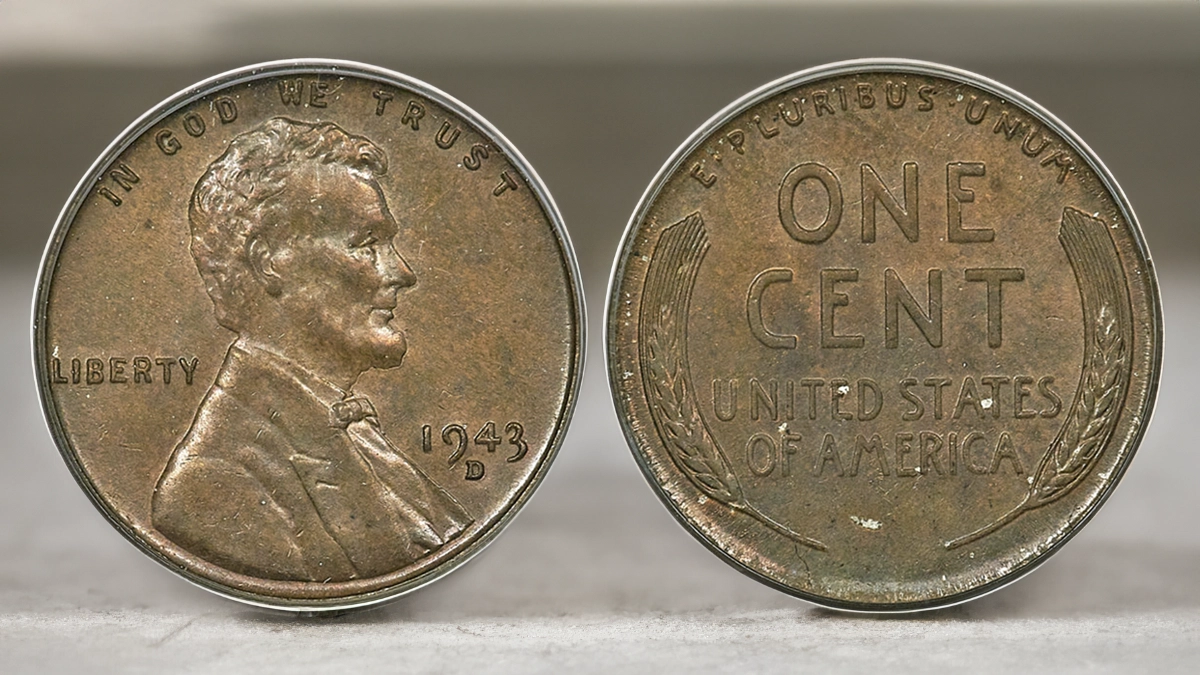
In 1943, a handful of bronze cents slipped through the steel production, with one 1943-D selling for $1.7 million in 2010 – the highest price ever for a Lincoln Penny. That coin sold more recently for $840,000.

Similarly, 1944 saw stray steel planchets struck, creating off-metal rarities. These errors fuel further fascination with the already popular coin.
7. The Future of the Penny
So what lies ahead for the Lincoln Penny? With production costs exceeding its one-cent value (about 2.72 cents per coin in recent years), debates over its elimination have occurred since the 1970s. Yet the coin’s collector appeal, cultural resonance, and utility in cash transactions have kept it alive despite the naysayers. That is, until President Donald J. Trump ordered the end of the denomination.

That decision stood, so 2025 was the final year for the Lincoln Cent to be part of the nations circulating coinage, a coin that has seen the country through two World Wars, the Great Depression, the space age, and 21 presidencies. Nevertheless, the penny’s departure presents exciting opportunities for collectors. On eBay, fresh uncirculated rolls are selling for high premiums. Multiple sales have been reported for the 2025 and 2025-D Lincoln Cents, with coins selling for more than 350 times their face value. This bubble will probably ease, but demand for America’s final penny will likely mean that uncirculated 2025 Lincoln Cents will always carry a premium over their face value.
Also check out these articles about the end of the Lincoln Cent, The sale of the Omega Cents and more.
- Goodbye to the Penny: Final U.S. Cents Minted as Historic Auction Looms
- The Penny is Going Away: Four Great Reasons To Collect Them Now
- Last ‘Omega’ Cents, Including U.S. Mint’s 24K Gold Piece, Head to Auction Dec. 11th
- Stack’s Bowers Galleries’ Omega Cents Sale Concludes with Strong Results and Historic Highlights
- Last “Omega” Pennies Sell for Over $16.76 Million in Stack’s Bowers Galleries Auction
* * *





Actually, the cost to make the one cent coin, as reported, is inflated. Because more one cent coins are made than any other denomination, its manufacture gets assigned much of the cost of machine maintenance and general upkeep at the mint. If the cent went away, those costs would remain and would probably be assigned to the next highest production coin — probably the nickel, which already “too expensive.” Eliminate the nickel and costs go to the dime, making it probably close to 10 cents to make. Evening out the maintenance costs and the one cent coin would probably still cost too much, but probably not 2.7 times. The real solution here is to revalue our money (reduce inflation) to make a one cent coin worth one cent again. The slogan used to be “what American needs is a good five cent cigar.” In modern times it should be “what America needs is a five cent nickel.”
I love this information very interesting and I been looking very hard! You never know especially if they are still in circulation. Thank you very much
Another great article. I wish I had a 1943-D and a 1958 Double Die penny!
What a shame to get rid of such a great coin.
As always, a great article about the Lincoln cent. It is easy to debate the cost of actually making the cent, with people stating the cost between 2 cents and as high as 9 cents. I agree, it is probably closer to 2 cents than 9, but it still costs more to make than it is worth. In 1974, the mint produced some aluminum Lincoln cents, but they were never made for production, only to show Congress what was possible. I wonder why that was never pursued? Canada made their dimes from aluminum for a few years and they seemed to hold up well.
Again, thanks for a great article!
Interesting well done