


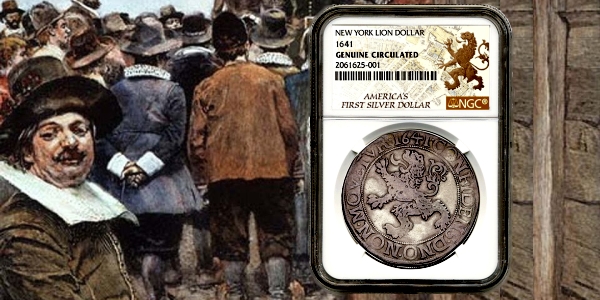
The Lion Dollar: The Silver Coin That Shaped Global Trade and Early America
Few coins in numismatic history carry the global influence, historical weight, and symbolic power of the Lion Dollar, also known as the Leeuwendaalder. Struck by the Dutch Republic beginning in the late 16th century, this silver trade coin became one of the most widely circulated currencies of its era. More importantly, it helped define commerce across continents and left a lasting imprint on early American finance.
The Lion Dollar did more than facilitate trade. It connected empires, stabilized colonial economies, and introduced imagery and monetary concepts that still echo today. When collectors hold one, they hold a coin that truly changed the world.
A Coin Born for Trade
During the late 1500s and early 1600s, the Dutch Republic emerged as a dominant maritime and commercial power. Thanks to its expanding trade networks and naval strength, the Netherlands required a reliable silver coin designed for international acceptance. The solution arrived in the form of the Lion Dollar.
Unlike heavier European thalers that carried higher intrinsic value, the Lion Dollar struck a deliberate balance. It contained less silver than many competing coins, which made it attractive for trade while still trusted for its consistency. Merchants favored it. Governments tolerated it. Trade routes embraced it.
As a result, Lion Dollars traveled extensively throughout Europe, the Mediterranean, the Middle East, Africa, and Asia. Soon after, they crossed the Atlantic into the New World.
The Lion Dollar in Colonial America
By the mid-17th century, the Dutch colony of New Amsterdam, known today as New York City, stood at the center of colonial trade. The settlement occupied the southern tip of Manhattan Island, where Dutch fortifications once rose near what later became Wall Street.
Trade flowed through the harbor, and with it came silver Lion Dollars. Although historians still debate the volume of their circulation in colonial America, documented evidence confirms their economic importance. In fact, the first paper money issued in New Amsterdam listed Lion Dollars as a unit of account. That decision helped anchor trust in the colony’s fledgling financial system.
At a time when inflation threatened colonial currencies, the Lion Dollar provided stability. Its reputation for consistency allowed commerce to function when other monetary experiments faltered. That reliability explains why the term “dollar” endured long after the coin itself disappeared from circulation.
Iconic Design with Purpose
The Lion Dollar carries symbolism that spoke directly to power, independence, and confidence, qualities the Dutch Republic wanted the world to recognize.
The obverse features a bold rampant lion, known as the “King of Beasts.” This image represented courage, sovereignty, and national pride. The lion also appeared on Dutch coats of arms, reinforcing the authority behind the coin.
On the reverse, an armored knight stands resolute while holding a shield emblazoned with the Dutch heraldic lion. This figure conveyed defense of liberty and strength through unity, themes that resonated deeply during the Dutch struggle for independence.
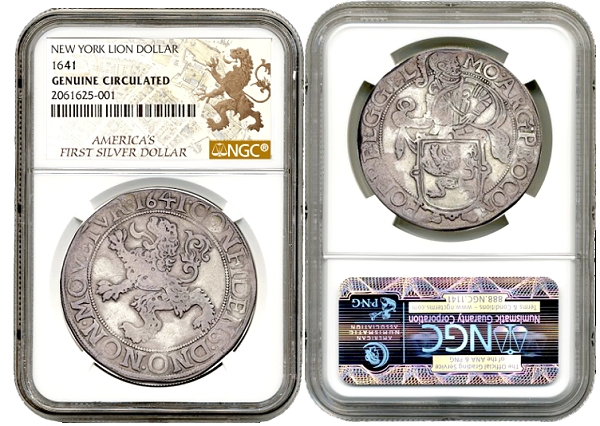
Latin inscriptions surrounded both designs, reinforcing legitimacy while transcending language barriers. Every visual element served a purpose. Together, they projected trust in a world driven by trade.
Technical Specifications
The Lion Dollar combined symbolism with practical standards that merchants valued.
- Metal: Silver
- Fineness: .750 fine silver
- Weight: Approximately 27.6 grams
- Diameter: About 40–43 mm
- Edge: Plain
- Issuing Authority: Provincial mints of the Dutch Republic
Copper formed the primary alloy, which improved durability for heavy circulation. While purity mattered, consistency mattered more, and the Lion Dollar delivered both.
Why the Lion Dollar Matters Today
The Lion Dollar occupies a unique place in monetary history. It served as a true international trade coin long before globalized finance existed. It helped stabilize early American commerce. It also inspired the very word “dollar,” which later defined the United States monetary system.
Collectors prize original examples not only for rarity, but for relevance. These coins connect Renaissance Europe, colonial America, and modern global finance in a single artifact. Few numismatic issues can claim such reach.
Moreover, the Lion Dollar represents an early lesson in monetary trust. Its success proved that a widely accepted standard could transcend borders, politics, and languages. That lesson still applies today.
A Silver Legacy That Endures
The Lion Dollar did not survive because it carried the most silver. It survived because people trusted it. Merchants accepted it. Colonies relied on it. Empires recognized it.
That combination makes the Lion Dollar one of the most important coins ever struck. It shaped commerce, influenced language, and helped lay the groundwork for modern monetary systems.
For collectors and historians alike, the Lion Dollar stands as proof that a single coin can change the course of economic history, and still command awe more than 400 years later.
* * *







That’s a historic coin!
If only my budget were bigger!
Lets see if they start pulling silver out of the mint coins soon.