By Michael T. Shutterly for CoinWeek …..
What is the Roman denarius and where did it come from? How did it change over the nearly 500 years of its production?
Part I | Part II | Part III | Part IV
* * *
The Glorification of Rome: 214 BCE – 154 BCE
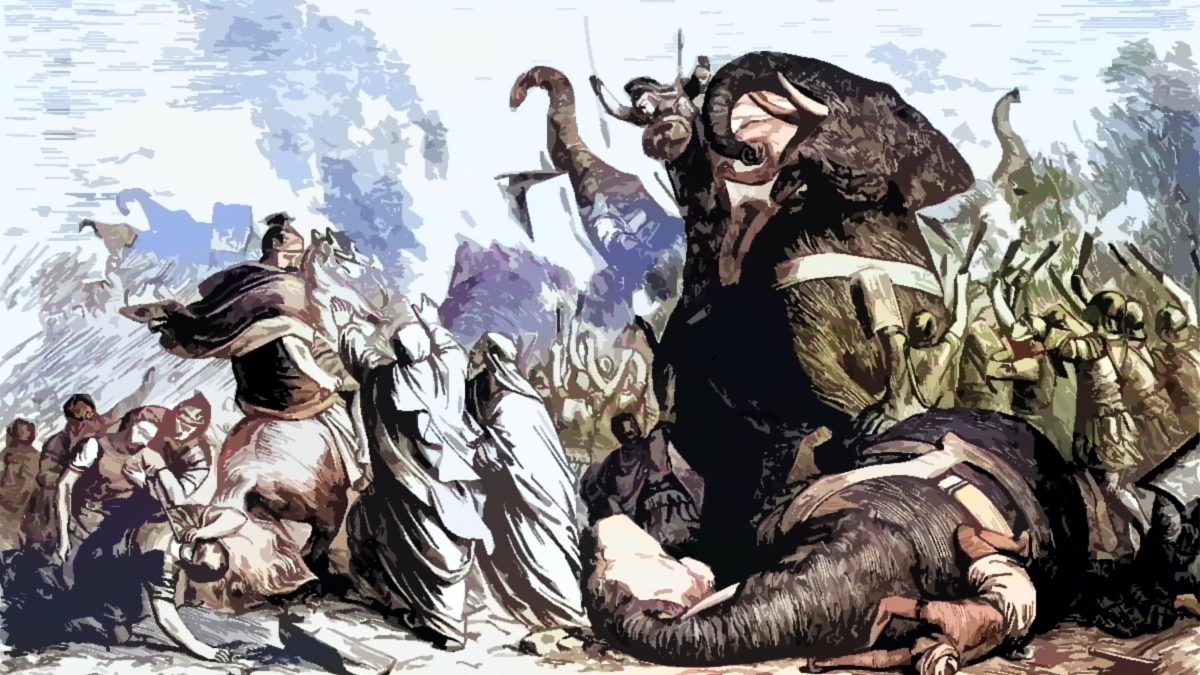
The early years of the Second Punic War (218–202 BCE) were disastrous for Rome. The Carthaginian general Hannibal ravaged Italy for years after crossing the Alps into that country in November 218 BCE, destroying every Roman army he encountered. By 214, Rome’s economy was in shambles.
The Romans fared much better outside Italy, largely because there was only one Hannibal. Roman armies in Spain captured silver mines under Carthaginian control and seized booty from the armies that Hannibal had left behind; other Roman forces seized treasure from Carthaginian allies in Greece. In or around 214 BCE, the Romans used this loot (as well as precious metal levied from wealthy individuals in Rome) to create a new economic system based upon the silver denarius. It would serve the Roman economy for almost half a millennium.
The denarius evolved in tandem with the Roman Republic, financing not only the destruction of Carthage but also Rome’s emergence as the pre-eminent power in the Western world. Surviving examples of these coins provide snapshots of Rome’s transformation from an anti-monarchical Republic, which elected its leaders, to the autocratic Roman Empire, ruled by absolute monarchs.
The World’s First Decimal Currency

The early designs of the denarius focused on expressing the ideals, goals, and aspirations of Rome.
The obverse of the first denarius depicted Roma wearing a winged helmet with the letter X behind her, while the reverse depicted the mounted Dioscuri with the inscription ROMA below them. Roma was the female personification of Rome, and the Dioscuri were the mythological twins Castor and Pollux (aka the Gemini), who came to Rome’s rescue in times of crisis. This coin sold for $450 against a $300 estimate at an auction in September 2016.
The X on the obverse is the Roman numeral “10” and served as the coin’s mark of value: the denarius was worth 10 bronze asses (the as was a once-large bronze coin on which the Romans based their economy before the Second Punic War). This gave the denarius its name, which comes from deni – meaning “containing ten” or “by tens”. The denarius was thus the world’s first decimal currency.
The first denarii were minted in nearly pure silver and generally weighed about 4.55 grams or 1/72 of a Roman pound. In about 206 BCE, the Romans reduced the weight of the coin to 3.9 grams (1/84 of a Roman pound), but they left the fineness of the silver unchanged. The denarius would continue to be struck to this new standard for more than 200 years, well into the early years of the Empire.


Various symbols, initials, and monograms began to appear on the reverse of the coin around 206 BCE, about the same time that the weight of the denarius was reduced. The meaning of the earliest of these design elements is not entirely certain, though the monogram probably identified the official responsible for minting the coins. Some of the symbols and initials may also have identified mint officials, or they may have signified mint locations or the purpose of a particular mintage. By circa 189 BCE, the names of mint officials began to appear in fuller form.
Rome entrusted the management of the mint to a board of three men who were elected (or sometimes appointed) to one-year terms of office. These men were popularly known as the tresviri monetales or triumviri monetales (“monetary triumvirate”); today they are generally known as “moneyers”. Moneyer was a low-ranking position in the Roman hierarchy, but it often served as the first stepping-stone to power for an ambitious young man.
Significant Design Change for the Roman Denarius
![Rome: Republic. Anonymous moneyer. 189-180 BCE. AR Denarius (19mm, 3.89g, 12h). Rome mint. Obverse: Helmeted head of Roma right; X behind. Reverse: Diana Lucifera (or Luna) driving a biga (two-horse chariot) right; [ROMA] in partial tablet in exergue. This coin sold for $575 against a $200 estimate at an auction in May 2018.](https://coinweek.com/wp-content/uploads/2024/05/06-Luna-reverse.webp)
![Rome: Republic. Anonymous moneyer. 189-180 BCE. AR Denarius (19mm, 3.89g, 12h). Rome mint. Obverse: Helmeted head of Roma right; X behind. Reverse: Diana Lucifera (or Luna) driving a biga (two-horse chariot) right; [ROMA] in partial tablet in exergue. This coin sold for $575 against a $200 estimate at an auction in May 2018.](https://coinweek.com/wp-content/uploads/2024/05/07-Victory-on-rev.webp)
The first significant change in the design of the denarius came about c. 194 BCE, when an image of the moon goddess Luna driving a two-horse chariot known as a biga, first replaced the Dioscuri on the reverse. For the next 35 years or so, the reverse of the denarius would display the image of either Luna or the Disocuri; the reason why one was used rather than the other for a particular coinage is not known.
Images of Victory driving a biga began to appear from time to time on the reverse beginning c. 157 BCE. For the next several decades the Dioscuri, Luna, and Victory would take turns appearing on the obverse of the denarius.
* * *
Sources
Albarède, F., Blichert-Toft, J., Rivoal, M. and Telouk, P. “A Glimpse into the Roman Finances of the Second Punic War Through Silver Isotopes”, Geochemical Perspectives Letters 2, 2. (April 2016)
Crawford, Michael H. Roman Republican Coinage. 2 Volumes. Cambridge. Cambridge University Press. (1974)
Harl, K.W. Coinage in the Roman Economy, 300 B.C. to A.D. 700. Johns Hopkins University Press. (1996)
Sear, David R. Roman Coins and Their Values: Volume I: The Republic and The Twelve Caesars 280 BC-AD 96. London. Spink. (2000)
Woytek, B.E. “The Denarius Coinage of the Roman Republic”, The Oxford Handbook of Greek and Roman Coinage (W.E. Metcalf, Ed.). pp. 315-334. Oxford University Press. (2012)
Images of coins are all courtesy and copyright of Classical Numismatic Group (CNG) LLC – www.cngcoins.com.
Image of Hannibal in the public domain, courtesy of Wikimedia Commons.
* * *