


Collecting Shipwreck Coins: History, Grading Standards, and Provenance
By Rick Bretz for CoinWeek
Shipwreck coins occupy a distinctive niche within numismatics. They combine historical documentation, rarity, and a tangible connection to maritime commerce. Thanks to a fellow pedigree collector, I recently added shipwreck coins to my own collection. That experience highlighted just how much research and storytelling surround each wreck.
In many cases, the documented history of a shipwreck rivals that of any land-based hoard. For collectors who value provenance, that context is often as compelling as the coins themselves.
Defining a Shipwreck Coin Collection
One advantage of pedigree collecting is flexibility. Collectors can establish their own criteria and boundaries.

For example, some collectors pursue a single representative coin from multiple shipwrecks. Others focus on one wreck and attempt to acquire as many dates, denominations, or die varieties as possible. Still others blend approaches, selecting coins that align with specific historical interests.
In my case, I limit my collection to one coin per shipwreck, and only coins struck by United States mints qualify. That approach keeps the scope manageable while preserving historical depth.
With that framework in mind, it is useful to step back and examine shipwreck coins as a broader collecting specialty.
How Shipwreck Coins Are Graded and Certified
Grading shipwreck coins presents unique challenges. Prolonged exposure to saltwater often alters surfaces in ways unrelated to circulation or handling.
To illustrate how the industry addresses these issues, Numismatic Guaranty Company (NGC) provides a useful model. According to NGC’s published standards, shipwreck coins are evaluated with environmental exposure clearly identified, while still maintaining consistent attribution and grading practices.
NGC explains its full methodology in a dedicated article outlining how environmental effects are assessed without obscuring authenticity or provenance.
Gold vs. Silver: Material Matters
One important distinction involves metal composition. Silver coins recovered from shipwrecks are more susceptible to corrosion and surface disruption. As a result, they often receive an “Environmental Damage” designation rather than a numeric grade.
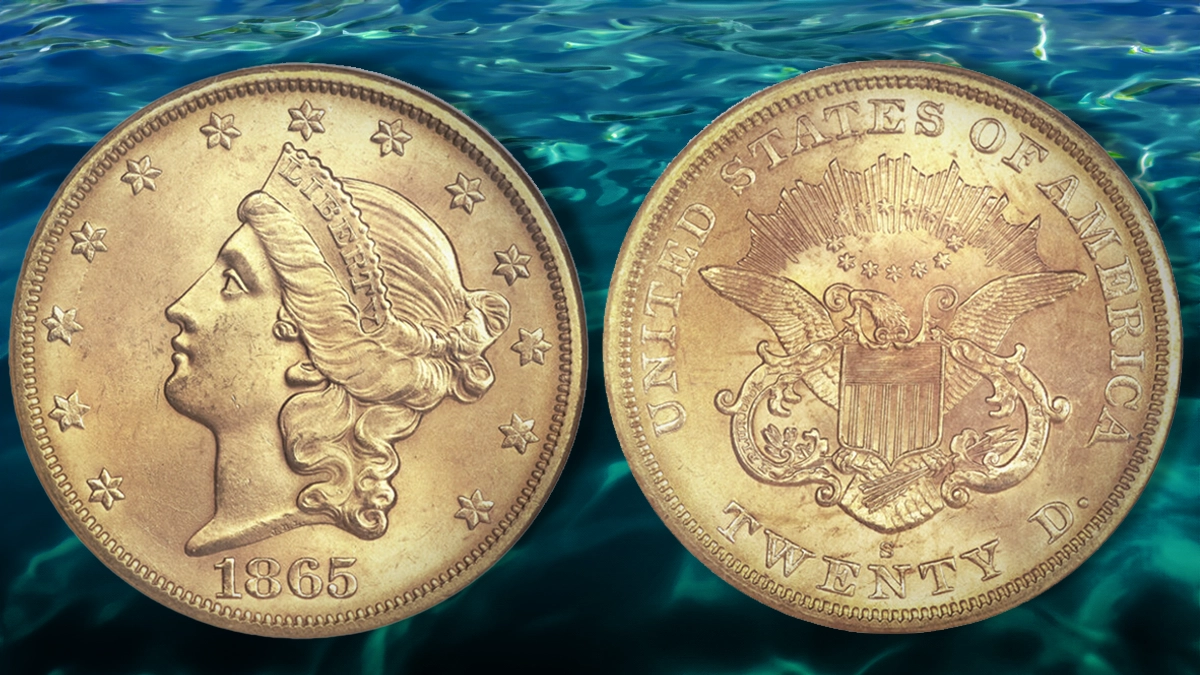
Gold coins, by contrast, are chemically more stable. When surface preservation allows, gold shipwreck coins may receive standard numeric grades, even after long submersion.
NGC Shipwreck Effect Designations
NGC uses the following classifications when describing shipwreck-related surface conditions:
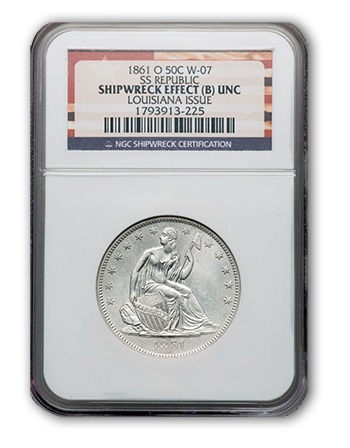
- Shipwreck Effect A: Minimal surface disturbance from saltwater exposure. These coins display superior eye appeal for shipwreck artifacts.
- Shipwreck Effect B: Light surface disturbance with limited moderate areas. Central design elements remain unaffected, and eye appeal is above average for recovered coins.
- Shipwreck Effect C: Moderate surface disturbance from saltwater exposure. The coin remains fully attributable, with average eye appeal for a recovery specimen.
- Shipwreck Effect (Unlettered): Heavy to severe disturbance, including metal loss affecting the design. While attribution may still be possible, original surface characteristics cannot be conclusively determined.
(Source: NGC)
Notable Shipwrecks Containing U.S. Coins
With assistance from a fellow pedigree collector, I compiled the following overview of historically significant shipwrecks that yielded United States coins authenticated by NGC and/or PCGS.
SS New York (1846)
The SS New York was a side-wheel steamship operating routes between Galveston, New Orleans, and New York City. Between September 5 and 7, 1846, the vessel encountered a powerful hurricane in the Gulf of Mexico after departing Galveston and was lost at sea.
Its cargo included U.S. gold and silver coins, along with foreign issues. Gold coins recovered in 1990 were initially believed to be from the wreck, but confirmation was not finalized until 1994. These coins have been authenticated by NGC.
SS Central America (1857)
The SS Central America operated between New York and San Francisco, transporting passengers and cargo via the Isthmus of Panama, not the modern Panama Canal, which did not yet exist.
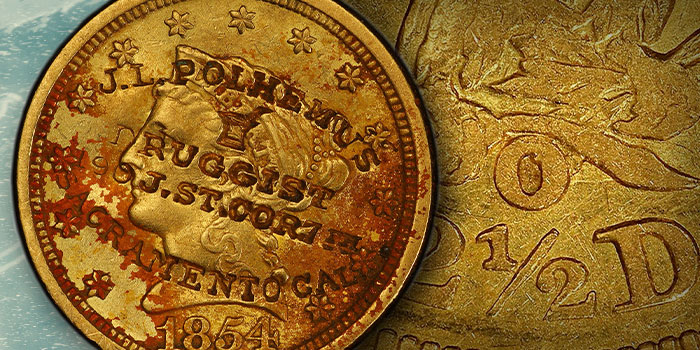
On September 12, 1857, the ship was caught in a hurricane off the coast of South Carolina and sank. At the time, it was carrying a substantial shipment of U.S. gold coins, along with smaller quantities of silver and foreign coinage.
The wreck was located in 1988. Subsequent legal proceedings delayed recovery, and salvage operations have occurred in multiple phases since discovery. Coins from the SS Central America have been authenticated by both PCGS and NGC.
SS Brother Jonathan (1865)
The SS Brother Jonathan was a paddle steamer that sank during severe storms off the coast of California on July 30, 1865. The ship was transporting a large quantity of U.S. gold coins at the time of its loss.
The wreck was located in October 1993. Coins recovered from the site have been authenticated by PCGS.
SS Republic (1865)
The SS Republic was a Civil War-era side-wheel steamship operating between New York and New Orleans. It was lost in a hurricane on October 25, 1865.
The ship carried a significant shipment of gold and silver coins intended to support post-Civil War reconstruction efforts in New Orleans. The wreck was discovered in 2003 off the Georgia–South Carolina coast. Coins recovered from the SS Republic have been authenticated and graded by NGC.
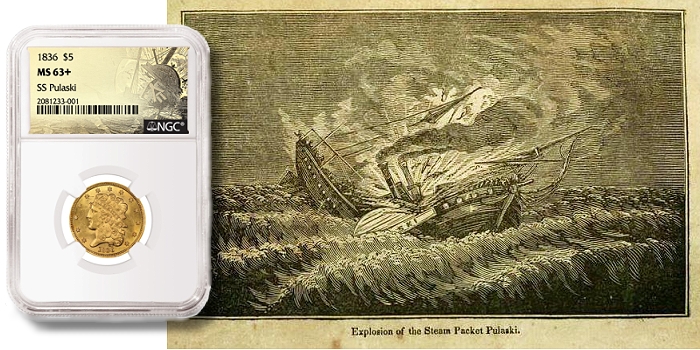
SS Pulaski (1838)
The SS Pulaski shipwreck occurred on June 14, 1838, off the North Carolina coast when a boiler exploded on the luxury steamship. This terminal event causing the ship to sink rapidly, killing about two-thirds of its 200-plus passengers and crew, including wealthy Southerners escaping summer heat.
Survivors drifting for days on wreckage before rescue.
Nicknamed “Savannah’s Titanic,” the wreck was located in 2018, revealing valuable artifacts like coins and jewelry, and is known for dramatic survival stories, including a sea-bound engagement.
Collecting Strategies and Specialized Sets
As with other hoard or pedigree material, shipwreck coins lend themselves to focused collecting strategies.
One particularly instructive example involves 1861-O Seated Liberty half dollars recovered from the SS Republic. During that year, the New Orleans Mint operated under three successive authorities: the United States federal government, the State of Louisiana following secession, and finally the Confederate States of America.
Because of the large number of half dollars recovered from the wreck, specialists were able to identify die cracks and other diagnostics unique to each issuing authority. That research helped clarify mint attribution for one of the most complex transitional years in U.S. numismatics.
Finding Shipwreck Coins at Major Auctions
Finding shipwreck coins in online auctions takes persistence and strategy. Fortunately, experience across major venues reveals clear patterns that can help collectors search more effectively.
First, at Heritage Auctions, the default search function scans listing titles only. Because Heritage applies pedigree and shipwreck information inconsistently in titles, collectors often miss relevant material. However, expanding searches to include full descriptions dramatically improves results. In one April 2015 test search, a title-only query for “shipwreck” returned three active listings. When the search included descriptions, the results increased to twenty-one, an additional eighteen coins that otherwise would have gone unnoticed.
Next, eBay presents even greater inconsistency. Sellers may reference shipwreck coins by vessel name, by date and mint, or only indirectly. As a result, no single keyword strategy captures all relevant listings. Successful searches require multiple keyword combinations and repeated refinements. In this environment, persistence directly affects success.
By contrast, GreatCollections applies consistent pedigree standards. When a coin carries a shipwreck pedigree, GreatCollections reliably includes that information in the listing title. As a result, targeted searches on this platform prove far more efficient.
Additional Research Resources
Beyond auction platforms, collectors benefit from authoritative reference material. In particular, the work of Daniel Frank Sedwick stands out within the field of shipwreck and treasure coins. His research, catalogs, and publications provide essential historical and numismatic context for many recovered coinages.
Final Thoughts
Ultimately, shipwreck coins offer more than surface appeal. They combine documented provenance, historical significance, and direct connections to maritime commerce. For collectors who commit to careful research and disciplined searching, this specialized area of numismatics consistently rewards both curiosity and effort.




I take it the last grade for SHIPWRECK EFFECT is supposed to be “D”? Or maybe it is as stated, and there is no alphabetic designation attached to such a coin.
Shipwrecks are hiding a bunch of our history and untold wealth and fortune in my opinion. So much yet to be found like these coins and more. Stolen of course.
Only thing better than collecting these would be discovering them myself.
Fascinating article!
Neat.
I would love to eventually own a shipwreck coin, it would be a great piece of history!
I find it so interesting shipwrecked coins. Not only the history and the stories but how its recovered and salvaged.
I have two coins that were recovered from two different shipwrecks.
Finding shipwreck coins are the dream of every metal-detecting enthusiast. Thank you for the explanation of rating these coins and the value in authenticating the pedigree of its historical journey.
Great article. Learned alot about shipwreck coins.
The only shipwreck coin that I have been able to handle was in pretty rough shape due to it being silver and in warm water for a couple hundred years. Still kind of cool.
I have a couple of shipwreck cons, but have not seen these grading standards before. Very useful guidance.
Shipwreck coin definitely in top 5 of my bucket list!
I read the book on the USS Central America history, and it was very captivating. A 1857 S Double Eagle is one of my most desired coins to have.
This is very educational. I think this a greater topic to get children and newcomers more involved and/or curious. Treasures from the bottom of the Sea!!!
Great history lessons.
One has to wonder how many coins have fraudulently been sold as a shipwreck recovery coin.
Very interesting article
Looking for shipwreck coins would be a dream come true. thanks