


Few American coins command universal reverence. Fewer still exist at the intersection of artistic ambition, presidential will, and numismatic rarity. The MCMVII (1907) Ultra High Relief Saint-Gaudens Double Eagle with Sans Serif (Gothic) Edge Lettering of 1906 stands firmly in that narrow space.

Offered in Stack’s Bowers Galleries’ February 2026 Showcase Auction – Session 3 (U.S. Coins), this remarkable gold issue represents one of only two confirmed survivors from an original striking of just three pieces. Even among Ultra High Relief double eagles, already icons of American numismatics, this coin occupies a category entirely its own.
It is not simply rare. It is foundational.
A Coin Born from Conflict and Vision
The story of the Ultra High Relief Saint-Gaudens Double Eagle begins not at the Mint, but in the White House. In late 1905, Theodore Roosevelt confronted what he saw as a national embarrassment: the artistic mediocrity of American coinage.
European and ancient Greek coins, with their sculptural depth and classical beauty, stirred Roosevelt’s imagination. American coins, by contrast, struck him as flat, timid, and uninspired. He wanted change, dramatic change, and he knew exactly whom to call.
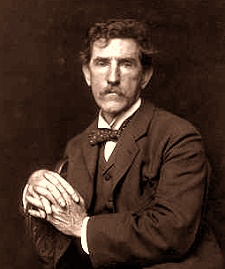
That man was Augustus Saint-Gaudens, the most celebrated sculptor in America and a master of high relief. Roosevelt invited Saint-Gaudens to redesign the nation’s gold coinage, igniting one of the most consequential artistic collaborations in U.S. history.
Yet this partnership faced a powerful adversary.
Barber vs. Saint-Gaudens: A Battle at the Mint
Inside the Philadelphia Mint stood Charles E. Barber, Chief Engraver since 1879 and a fierce defender of Mint orthodoxy. Barber believed circulating coins must strike easily, stack cleanly, and conform strictly to mechanical limits. Saint-Gaudens believed coins should inspire.
Their philosophies collided immediately.
Barber resisted high relief designs with every bureaucratic tool available. He delayed dies, challenged feasibility, and questioned authority. Saint-Gaudens, already gravely ill with cancer, nevertheless pressed forward. He insisted that at least one coin should be struck exactly as he envisioned it, fully sculptural, uncompromised, and eternal.
That insistence gave birth to the Ultra High Relief Double Eagle.
Why “Ultra High Relief” Truly Means Ultra
Saint-Gaudens’ design pushed beyond anything previously attempted by the U.S. Mint. Liberty strides forward in full figure, torch raised, olive branch extended, backed by a radiant Capitol and rising sun. On the reverse, a powerful eagle soars across the field.

This depth could not strike in a single blow.
Instead, Mint technicians used up to nine separate impressions under immense hydraulic pressure, slowly forcing gold into every recess of the dies. The result resembled a medal more than a coin. It was breathtaking, and utterly impractical for circulation.
That impracticality mattered little. Roosevelt wanted greatness, not convenience.
The Forgotten Detail That Changed Everything: The Edge
Most collectors know the Ultra High Relief by its towering design. Fewer understand that the edge lettering tells an even rarer story.
Before the Mint prepared the standard Roman-style serif edge used on later Ultra High Reliefs, Barber had already created a segmented collar for his own 1906 experimental double eagle. That collar impressed the motto:
E✶P✶L✶U✶R✶I✶B✶U✶S✶U✶N✶U✶M
The lettering appeared in small, sans serif characters, separated by stars. Today, numismatists refer to it as Gothic lettering, and it never appeared on any regular-issue U.S. coin.
When the first Ultra High Relief double eagles were struck in February 1907, the Mint used Barber’s 1906 collar out of convenience. That brief decision created one of the greatest rarities in American numismatics.

Only Three Struck—But How Many Survive?
Historical records confirm that three Ultra High Relief double eagles received the Gothic edge.
However, survival tells a different story.
Two examples have surfaced in the modern numismatic era. The third, believed to be the specimen loaned to Saint-Gaudens himself, remains untraced. Scholars suspect it entered Barber’s private holdings and later disappeared.
As of today, only two specimens are positively confirmed.
The coin offered here, graded Proof-58 by Professional Coin Grading Service, stands as the first discovered example and the most thoroughly documented of the pair.
A Coin That Was Never Meant to Circulate, Yet Tells a Human Story
Interestingly, both known Gothic-edge Ultra High Reliefs show light impairment. Evidence suggests they spent time as pocket pieces, carried by proud early custodians who understood their significance.
These marks do not detract. Instead, they humanize the coin. They remind us that this object once lived outside a cabinet, handled, admired, and treasured in an era when American coinage reached its artistic peak.
Why the Date Reads “MCMVII”
The Roman numeral date, MCMVII, reflects Roosevelt’s classical sensibilities and Saint-Gaudens’ reverence for antiquity. Roman numerals reinforced the coin’s timeless character, aligning American ideals with ancient democratic traditions.
Although critics objected, Roosevelt prevailed. The date remained, another example of vision triumphing over resistance.
A Singular Position in American Numismatics
The Ultra High Relief Saint-Gaudens Double Eagle consistently ranks among the greatest U.S. coins ever struck. Yet this Gothic-edge variant occupies an even higher plane.

It represents:
- One of the very first Ultra High Reliefs struck
- A prototype edge never used again
- A tangible artifact of Roosevelt’s reform crusade
- A coin Saint-Gaudens lived to see completed
Few coins can claim even one of these distinctions. This coin claims all of them.
Why This Coin Matters, Now More Than Ever
Collectors often chase rarity. Advanced collectors chase meaning.
This Ultra High Relief with Gothic edge lettering offers both in unmatched concentration. It is a coin that changed American coinage forever, proving that beauty belonged on everyday objects, even if only briefly.
Its appearance at auction does more than offer ownership. It offers stewardship of a national masterpiece.
Auction Information
This extraordinary example [Lot 25165] will cross the block during Stack’s Bowers Galleries’ February 2026 Showcase Auction – Session 3 (U.S. Coins), presenting a once-in-a-generation opportunity to acquire one of the rarest and most historically charged coins in American numismatics.





Now one of these beauties would be wonderful to have for my collection.